Updated September 29, 2026 · ZEERA WIRELESS
Quick Answer
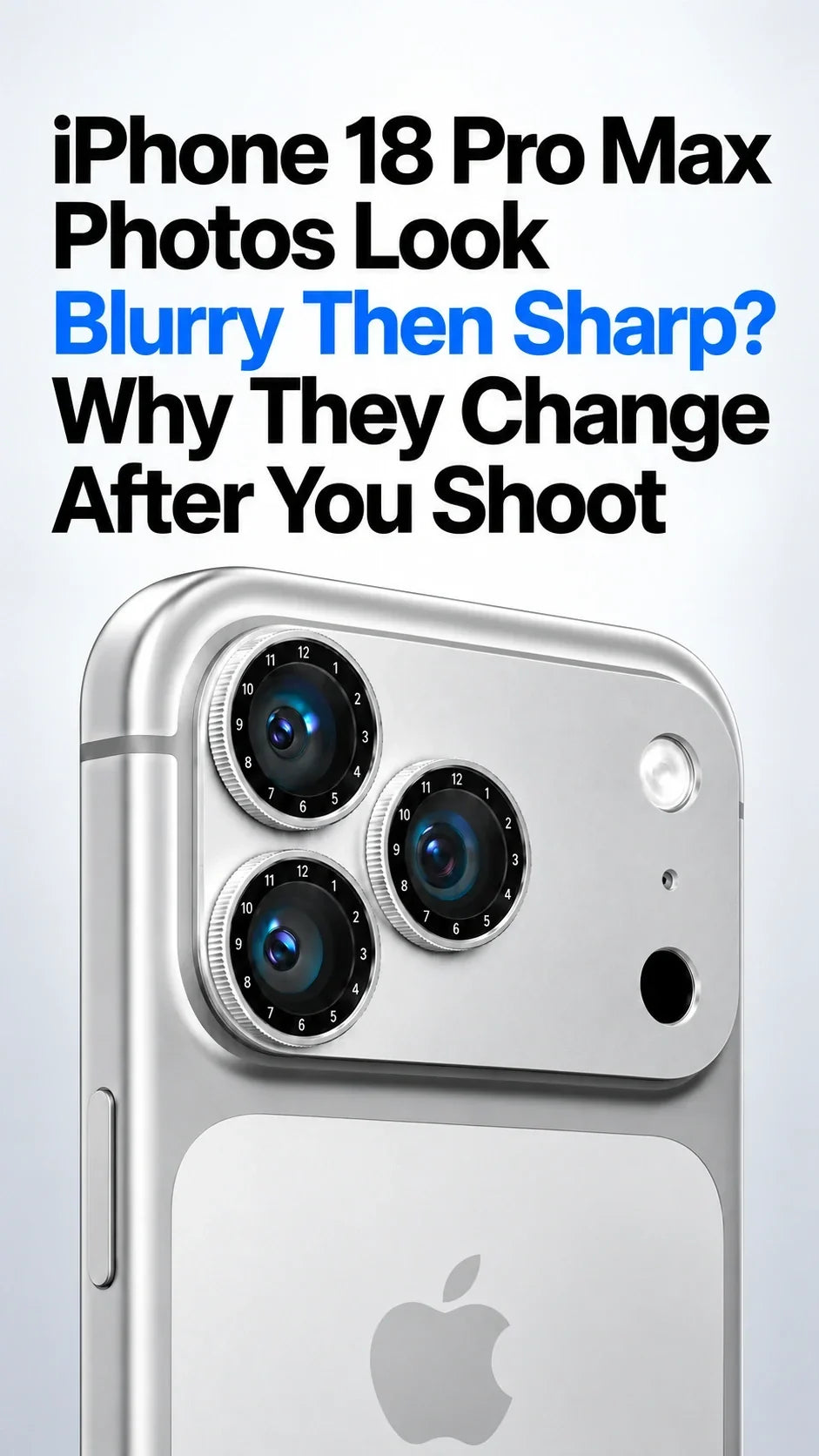
If an iPhone 18 Pro Max photo looks soft immediately after capture and then sharpens in Photos, the brief change alone does not prove a camera defect.
Apple confirms that its new Main-camera computational imaging pipeline produces sharper, more detailed photos. A temporary preview can differ from the finished image, but Apple has not documented a universal one-second “Photo Refinement” delay.
You cannot switch off all of Apple's normal photo processing with one setting. Setting Photographic Styles to Standard removes a selected style or texture effect; it is not a master processing switch.
If the final photo remains blurry in good light, compare lenses and settings, clean the lens, and seek support if the issue repeats.
Why does my iPhone 18 Pro Max photo look blurry and then suddenly sharp?
A user in r/iphone18pro described a soft image immediately after shooting that becomes much sharper about a second later. That is a firsthand report, not evidence that every iPhone 18 Pro Max behaves identically.
Apple says the iPhone 18 Pro and Pro Max use a new computational imaging pipeline for more detailed Main-camera images. The most plausible explanation for a brief soft-to-sharp change is that the image you see at first is not yet the final rendered version. The exact on-screen timing and rendering stages in this Reddit case have not been confirmed by Apple.
The image settles quickly and the final file is sharp at normal and zoomed viewing sizes. This alone is not a sign of broken camera hardware.
The finished image is still soft, smeared or unable to focus, especially in daylight. Test it further instead of assuming processing will fix it.
Is the one-second sharpness change normal or a camera problem?
The important question is what remains after the photo finishes rendering. A momentary difference between the first view and the final image is plausible. A blurry final image is a separate issue.
Do not judge sharpness only from the tiny Camera thumbnail, a screenshot of its preview, or a heavily zoomed crop. Compare the actual photo in Photos under the same viewing conditions.
Can you turn off iPhone 18 Pro Max photo refinement?
There is no Apple-documented master switch that disables the entire standard computational imaging pipeline. Apple's Photographic Styles controls change the look of a shot, and the 18 Pro series adds texture and grain options. Those controls do not establish that all behind-the-scenes processing can be turned off.
Standard can remove a chosen texture treatment. It may change whether a photo looks oversharpened or softened, but it does not promise to eliminate the brief transition on screen. Apple also lets you edit supported Photographic Style values afterward in Photos. See Apple's Photographic Styles instructions.
What if the finished photo is too sharp or looks processed?
Check whether the effect is most obvious on faces, hair, foliage or fine textures. Compare the same subject with a Standard style and any Soft Skin, Glow, Film or Grain treatment you selected. Keep the lens, distance and light similar so you are testing the look rather than a different shot.
Check Styles and Texture first. A softer-looking style may be intentional, and Apple's controls allow you to return to Standard.
View the finished file at a normal size. If the treatment still bothers you, compare a controlled shot with the same scene in a different capture format or app; expect differences in processing and file handling.
The new pipeline and texture controls are related to the final image's appearance, but Apple has not said that Photographic Styles specifically cause the Reddit user's one-second display change. For camera settings and what's new, see ZEERA's iOS 27 and iPhone 18 Pro camera controls guide.
What should you check if photos stay blurry?
- Clean the lenses. Gently wipe the rear camera glass with a microfiber cloth and retake the same shot. Apple specifically recommends this for blurry photos.
- Remove a removable camera filter or lens cover for one test. Keep the same light and framing. If the final image improves, inspect the accessory's cleanliness, fit and optical effect.
- Test 1× in bright light with a stationary subject. Tap the subject to focus and hold the phone steady. Then compare another lens. This helps separate movement, missed focus and low-light effects from a persistent single-camera issue.
- Return to Standard style and automatic settings. If you changed shutter speed or aperture with Pro controls, return to a simple baseline before comparing results.
- Restart and check for an iOS update. If finished images remain blurry across repeated tests, contact Apple Support or arrange an inspection, especially if one lens cannot focus.
Apple's camera troubleshooting page recommends lens cleaning, removing accessories that may affect the camera, restarting, updating iOS and seeking service if the problem continues. For a separate glare issue around lights, see ZEERA's camera reflections guide; flare and post-capture sharpening are different symptoms.
Does the variable aperture cause the photo to sharpen after capture?
There is no evidence that the visible one-second transition comes specifically from the variable-aperture mechanism. Aperture changes light intake and depth of field at capture; Apple's processing determines part of the final image's rendering. They are different parts of the camera experience.
ZEERA's variable-aperture real-world test goes deeper into when aperture choices help or hurt image quality.
ZEERA's take: when should you worry?
Do not treat a single early Reddit report as a confirmed widespread defect. The report describes a visual change that is consistent with a preview-to-finished-image difference, and Apple's new pipeline makes post-capture rendering relevant. Its exact cause on that phone remains unverified.
What warrants action is a repeatable problem in the finished file: details remain blurry in good light, one camera repeatedly fails to focus, or the result has unusual artifacts after the same simple test. Save a few examples and note the lens, lighting and iOS version before contacting support.
FAQ
Why does my iPhone 18 Pro Max photo change after I take it?
A brief change may reflect the first on-screen view giving way to the finished photo. Apple confirms a redesigned computational imaging pipeline, but has not specified a fixed delay for this effect.
Is “Photo Refinement” an official setting I can disable?
Apple does not document a master setting with that name for switching off all normal photo processing. You can reset Photographic Styles and Texture to Standard to compare the look.
Does this mean my iPhone 18 Pro Max camera is defective?
Not from a brief sharpening transition alone. Repeatedly blurry final photos in good light, especially from one lens, deserve troubleshooting and possibly service.
Will a CPL filter fix the soft-to-sharp change?
No. A CPL filter can change reflections in a scene, but it cannot turn off the camera's image processing. Remove any filter temporarily when diagnosing persistently blurry photos.
Related ZEERA guides
- iPhone 18 Pro Max variable aperture: real-world test
- Variable aperture explained: four settings and practical use
- iPhone 18 Pro camera flare at full aperture
- Five ways to reduce camera glare and reflections
- How to fix iPhone 18 Pro lens flare
- iPhone 18 Pro Max vs. 17 Pro Max camera upgrade
- iOS 27 and iPhone 18 Pro camera controls
Sources and reporting note
- r/iphone18pro: firsthand soft-then-sharp report
- Apple: iPhone 18 Pro camera announcement
- Apple: Photographic Styles guide
- Apple: blurry photo troubleshooting
ZEERA has not measured the transition time or verified the Reddit user's device. This guide distinguishes documented camera features from a reader report and practical inference.