Quick Answer
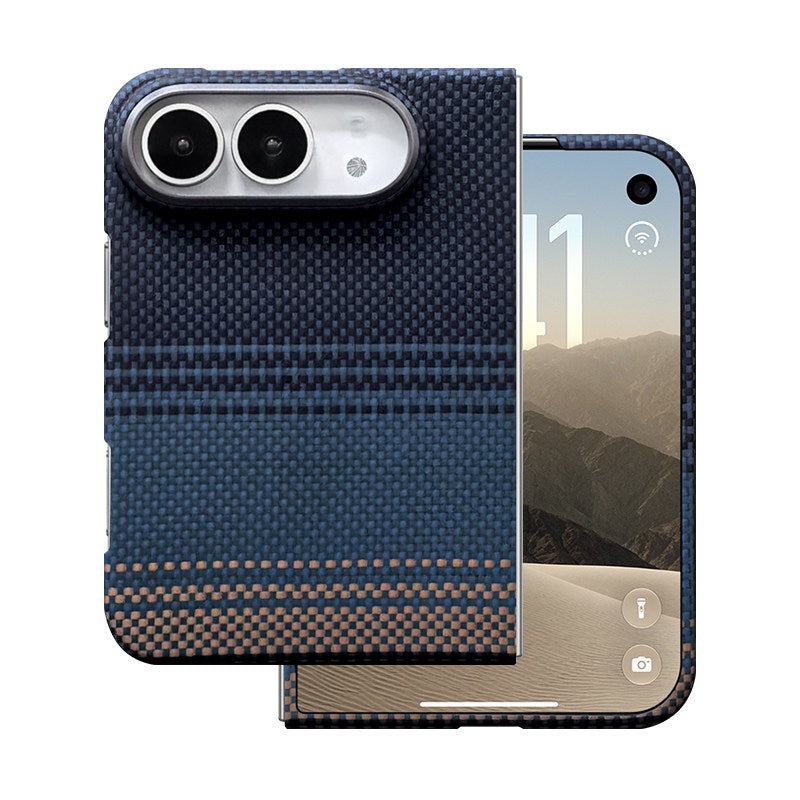
After more than 451,000 folds, CNET’s iPhone Duo still worked and its inner screen showed no visible cracks, although the hinge had loosened.
By about 440,300 folds, the machine was starting the next closing cycle while the phone was still slightly short of flat. It could still be opened all the way by hand.
The November 13 update records how one device held up under repeated machine folding. It gives no estimate of how long a typical iPhone Duo will last, and the cause of any early cracked screen needs evidence from that individual phone. MacRumors’ report on the CNET test
When Did the iPhone Duo Hinge Start to Loosen?
At around 390,000 folds, CNET’s sensor data and footage showed the first changes in how much force it took to open the phone and how the hinge moved. The hinge started to feel looser and its opening snap weakened. The rig could still unfold the phone flat at this stage. CNET’s lab report, republished by Yahoo
Could the iPhone Duo Still Open Flat?
440,300 folds · The rig no longer reached flat in time
The rig’s wire pulls the phone open and lets momentum finish the last part of the motion. At about 440,300 folds, the machine began closing the phone before that final movement could finish. The hinge had lost its usual snap, and the screen stopped roughly 5–10 degrees short of flat during the cycle. It still opened fully by hand and held other screen positions. CNET’s description of the rig
451,000+ folds · The inner screen was still working
The phone remained operational with no visible cracks reported on the inner display. The hinge still showed wear during opening, and CNET was continuing the test. November 13 test coverage
What Does One Fold Test Tell Us About Early Screen Cracks?
A machine repeats the same motion at a fixed pace. A phone used day to day goes through different opening angles, handling and environments. Dividing 451,000 by a daily fold count gives an arithmetic conversion with no reliable estimate of an owner’s service life. Estimating how often hinges or screens fail would take a larger sample and longer field data.
Some launch buyers reported cracks or bright lines near the fold. A photo shows where the damage appeared. Finding the cause takes an inspection of that device. CNET’s test tracks wear on its own unit and cannot establish what caused the early cases. Reuters’ coverage of the early reports · ZEERA’s iPhone Duo screen-crack guide
Is the iPhone Duo Easier to Recommend Now?
Later production batches
ZEERA’s latest supply-chain feedback indicates that the screen and hinge issues seen around launch are now uncommon in the later batches covered by that feedback. Contacts report more consistent assembly as manufacturing processes and production lines mature and workers gain experience, alongside higher manufacturing yields. Those yields describe how many units pass production checks. The rate of failures after purchase remains unknown.
iOS updates and app support
Recent iOS releases have addressed a range of software bugs, and the software experience has become more stable as those updates have rolled out. Apple lists general bug fixes and security updates for iOS 27.2.1. App makers have moved quickly, too. Google Maps 26.44.4 fills both Duo displays, and Zoom and several Microsoft apps have gained Duo optimizations. Apple’s iOS 27 release notes · MacRumors’ app compatibility coverage · ZEERA’s Google Maps layout guide
More consistent production and better app layouts make the Duo easier for us to recommend to more buyers than it was at launch, especially if you’ll use the inner screen regularly for maps, documents or video calls.
Related Reading
- CNET’s earlier iPhone Duo durability checkpoint at 139,000 folds
- What happened in a separate iPhone Duo reverse-bend test
- What to know about iOS 27.2.1 on the iPhone Duo
- Apps optimized for the iPhone Duo
- iPhone Duo review hub, known issues and test results
FAQ
What would make CNET stop the iPhone Duo fold test?
CNET’s failure criteria include the phone losing power, its sensors failing to recognize the screen position, or the display going black. That is why hinge wear could appear while the test kept running. Reported test criteria