Respuesta Rápida
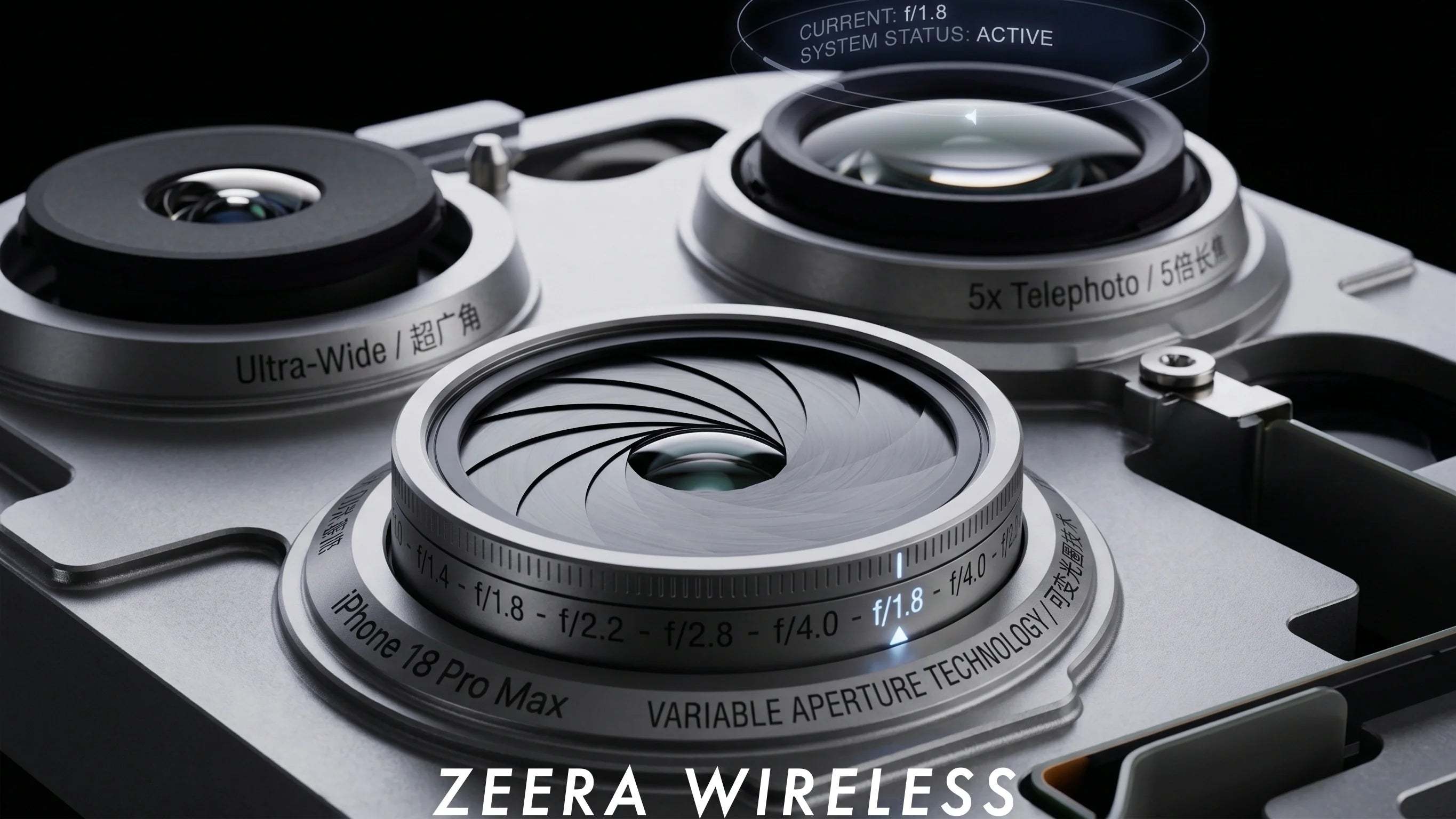
Una cámara de apertura variable puede cambiar físicamente el tamaño de la abertura dentro del objetivo. Piensa en ello como la pupila de tu ojo: puede abrirse más o hacerse más pequeña dependiendo de la escena.
En el rumoreado iPhone 18 Pro Max, esto podría dar a la cámara principal un mejor control sobre la luz y sobre cuánto de una foto permanece enfocado. Los beneficios prácticos pueden incluir retratos de aspecto más natural, fotos de grupo más nítidas y videos diurnos más controlados.
Sin embargo, no garantiza automáticamente fotos drásticamente mejores. Los resultados finales también dependerán del sensor, la lente, el procesamiento de imágenes y cómo Apple permita a los usuarios controlar la función.
Estado del rumor: Apple no ha confirmado oficialmente la apertura variable para el iPhone 18 Pro Max. Informes anteriores de la cadena de suministro apuntaban a ambos modelos de iPhone 18 Pro, mientras que informes más recientes sugieren que la función podría ser exclusiva del Pro Max. Este artículo se actualizará después de que Apple confirme las especificaciones finales de la cámara.
¿Qué es una cámara de apertura variable?
La apertura es una pequeña abertura dentro del objetivo de una cámara. La luz pasa a través de esta abertura antes de llegar al sensor de la cámara.
Una abertura más grande permite que entre más luz en la cámara. Una abertura más pequeña permite que entre menos luz.
La forma más fácil de entenderlo es pensar en tus ojos. Tus pupilas se agrandan en una habitación oscura para que puedas ver con mayor claridad. Con luz solar brillante, se hacen más pequeñas para controlar la cantidad de luz que entra en tus ojos.
Una cámara de apertura variable hace algo similar. Puede ajustar físicamente la abertura de la lente para que coincida con la escena.
¿Cómo se diferencia de la cámara actual del iPhone?
La cámara principal del actual iPhone 17 Pro utiliza una apertura fija de ƒ/1.78. La abertura física se mantiene del mismo tamaño cuando tomas una foto.
El iPhone aún puede hacer que una imagen sea más brillante u oscura cambiando la velocidad de obturación, la sensibilidad del sensor y el procesamiento computacional. Lo que no puede hacer es reducir físicamente esa abertura de lente fija.
Una apertura variable añadiría otra forma de control. En lugar de resolver cada situación de iluminación con software y ajustes de exposición, la cámara también podría cambiar la cantidad de luz que pasa a través de la lente misma.
Apertura más amplia
Una abertura más amplia permite que más luz llegue al sensor. También puede ayudar a separar un sujeto cercano del fondo.
En fotografía, una abertura más amplia se representa con un número f más bajo.
Apertura más estrecha
Una abertura más estrecha reduce la luz entrante y puede mantener más distancias en la escena aceptablemente nítidas.
Se representa con un número f más alto.
La parte confusa es que un número f más pequeño significa una abertura más grande. No necesitas memorizar los números para usar la cámara, pero esta regla ayuda al leer las especificaciones.
¿El iPhone no tiene ya un control de apertura?
Algunos iPhones existentes muestran un control de estilo de apertura en el modo Retrato o modo Cine. Ese control principalmente cambia la intensidad de un efecto de profundidad de campo simulado.
En otras palabras, el software identifica el sujeto y difumina digitalmente partes de la imagen. Apple también permite a los usuarios ajustar este desenfoque de fondo después de capturar fotos de Retrato compatibles.
Una apertura física variable es diferente. Pequeñas partes mecánicas dentro de la cámara cambiarían la apertura real de la lente antes de que se capture la foto o el video.
Los dos sistemas aún podrían trabajar juntos. La óptica física podría crear parte del efecto de profundidad, mientras que el software de Apple refinaría la detección del sujeto, las transiciones de enfoque y la separación del fondo.
¿Por qué importaría la apertura variable en el iPhone 18 Pro Max?
1. Los retratos podrían parecer más naturales
El modo Retrato puede producir un atractivo desenfoque de fondo, pero el software no siempre comprende perfectamente los bordes difíciles. El cabello, las gafas, los dedos y los objetos transparentes a veces pueden desenfocarse incorrectamente.
Una apertura física más amplia puede crear una separación óptica real entre un sujeto cercano y el fondo. Esto puede dar a los retratos una transición más natural de las áreas nítidas a las borrosas antes de que se añada el procesamiento computacional.
No esperes el mismo desenfoque de fondo que una cámara profesional grande. Un iPhone todavía tiene un sensor mucho más pequeño y una distancia focal física corta, por lo que el efecto óptico puede ser sutil en muchas situaciones.
2. Las fotos de grupo podrían mantener más caras enfocadas
Un desenfoque de fondo fuerte no es deseable en todas las fotos.
Si varias personas están a diferentes distancias de la cámara, una apertura más estrecha puede aumentar la profundidad de campo. Eso significa que un área más grande —desde las caras más cercanas hasta las personas más alejadas— puede permanecer aceptablemente nítida.
Esto podría ser útil para fotos familiares, retratos de grupo, fotografía de alimentos y tomas de productos en primer plano.
3. El vídeo diurno brillante podría tener un aspecto más controlado
La luz solar brillante puede obligar a una cámara a usar una velocidad de obturación extremadamente rápida. Esto evita la sobreexposición, pero el movimiento puede parecer más nítido y menos natural en el vídeo.
Al reducir el tamaño de la abertura del objetivo, una apertura variable podría darle al iPhone otra forma de controlar la luz entrante. Esto podría ayudar a Apple a mantener velocidades de obturación más apropiadas y un movimiento de aspecto más suave en escenas exteriores brillantes.
Los creadores de vídeo profesionales aún pueden usar filtros de densidad neutra en condiciones exigentes, pero una apertura variable podría reducir la frecuencia con la que se necesita un filtro adicional.
4. Las fotos de primeros planos podrían tener un enfoque más útil
Cuando la cámara está muy cerca de alimentos, flores o un producto pequeño, solo una pequeña parte de la escena puede aparecer perfectamente nítida.
Una apertura más estrecha puede aumentar el área enfocada. Esto podría facilitar la fotografía de una comida, un reloj, un accesorio o un documento sin que una parte parezca nítida y otra se vuelva inesperadamente suave.
5. La cámara podría adaptarse de forma más natural
La verdadera ventaja no es un modo de fotografía especial. Es la flexibilidad.
El iPhone podría usar una abertura más amplia para un retrato oscuro en interiores, y luego elegir una abertura más pequeña para un paisaje soleado o una foto de grupo. La mayoría de los usuarios quizás nunca necesiten pensar qué ajuste está activo.
Si Apple gestiona bien el sistema, la apertura variable podría funcionar automáticamente en segundo plano, al igual que lo hacen hoy el autoenfoque, la exposición y la estabilización de imagen.
¿Mejorará las fotos nocturnas?
La apertura variable por sí sola no significa automáticamente fotos nocturnas más brillantes.
El rendimiento en condiciones de poca luz depende de la apertura más amplia disponible. Si el iPhone 18 Pro Max puede abrirse más que la cámara principal actual, podría capturar más luz y usar una velocidad de obturación más rápida en escenas oscuras.
Eso podría reducir el desenfoque de movimiento al fotografiar niños, mascotas o personas que no están completamente quietas.
Sin embargo, si su apertura máxima es similar a la apertura fija actual, el mecanismo variable podría ofrecer poca ventaja directa en condiciones de poca luz. Principalmente añadiría la capacidad de hacer la apertura más estrecha en otras situaciones.
El rango exacto de apertura no ha sido confirmado oficialmente, por lo que las afirmaciones sobre una mejora específica en la fotografía nocturna deben tratarse con precaución.
¿Significa la apertura variable que todas las fotos serán mejores?
No. La apertura es solo una parte de un sistema de cámara.
La calidad de la imagen seguirá dependiendo de:
- El tamaño y diseño del sensor de la cámara
- La nitidez del objetivo y la calidad óptica
- El autoenfoque y la estabilización de imagen
- La velocidad de obturación y la sensibilidad del sensor
- El HDR de Apple, la reducción de ruido y el procesamiento de imagen
- La rapidez y precisión con que responde el mecanismo de apertura
Una apertura más estrecha puede aumentar la profundidad de campo, pero hacerla demasiado pequeña en una cámara compacta también puede reducir el detalle fino debido a la difracción. Apple tendrá que equilibrar estos factores automáticamente.
La pregunta importante, por lo tanto, no es simplemente si el teléfono tiene apertura variable. Es si el sistema completo de la cámara la utiliza en el momento adecuado.
¿Los usuarios tendrán que ajustar la apertura manualmente?
Apple no ha explicado cómo se controlaría la función.
El enfoque más probable para los principiantes sería el funcionamiento automático. La aplicación Cámara podría seleccionar una apertura basada en la luz, la distancia del sujeto y el tipo de escena.
Apple también podría ofrecer control manual o semi-manual para usuarios de ProRAW y video profesional, pero eso sigue siendo especulación hasta que el teléfono y la aplicación Cámara sean demostrados oficialmente.
Para la mayoría de las personas, tomar una foto debería seguir siendo tan simple como abrir la aplicación Cámara y presionar el botón del obturador.
¿Debería la apertura variable afectar su decisión de compra?
La apertura variable podría ser significativa si tomas retratos, grupos, productos en primer plano o videos al aire libre con regularidad. Proporciona a la cámara un mayor control físico en lugar de depender completamente del software.
Sin embargo, no debería ser la única razón para elegir el iPhone 18 Pro Max.
Espere las pruebas reales de la cámara que comparen sujetos en movimiento, detalles de los bordes, tonos de piel, rendimiento con poca luz y exposición de video. Un nuevo mecanismo de cámara solo es útil cuando produce resultados consistentemente mejores fuera de una hoja de especificaciones.
En resumen: La apertura variable se entiende mejor como una herramienta adicional para la cámara. Puede abrir o cerrar la lente según lo que estés fotografiando.
Para los usuarios cotidianos, el beneficio potencial es no tener que aprender configuraciones de cámara profesionales. Es darle al iPhone más formas de crear la foto correcta automáticamente.
Preguntas frecuentes
¿Está confirmada la apertura variable para el iPhone 18 Pro Max?
Todavía no. Múltiples informes de la cadena de suministro apuntan a la función, pero Apple no ha confirmado oficialmente las especificaciones de la cámara del iPhone 18 Pro Max.
¿El iPhone 18 Pro normal también tendrá apertura variable?
Informes anteriores sugerían que ambos modelos Pro podrían recibirla. Informes más recientes dicen que podría ser exclusivo del