Quick Answer
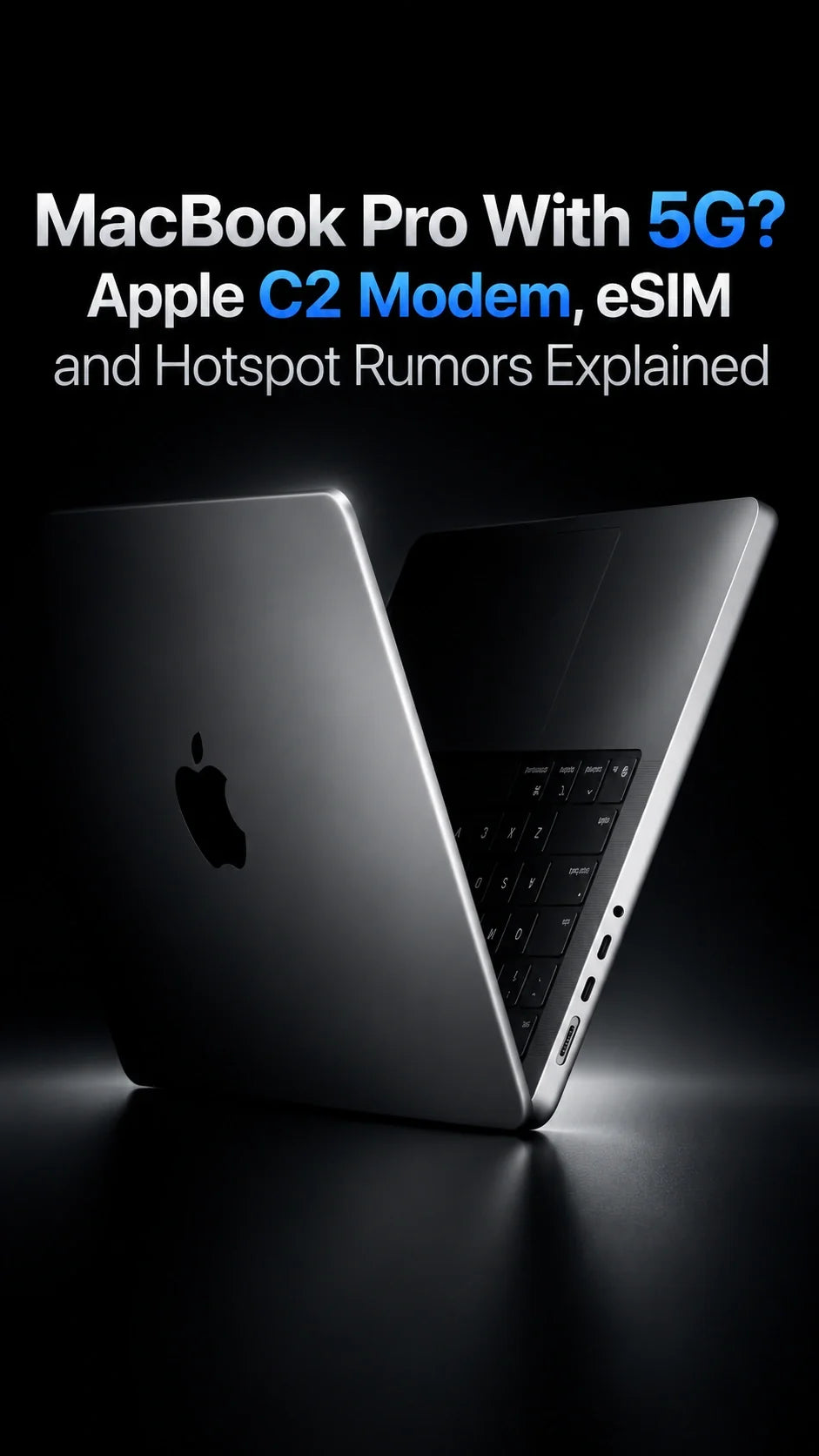
Apple has reportedly considered a cellular MacBook, but a MacBook Pro with built-in 5G is not confirmed.
A C2 modem is one possible route; earlier reports also mention C1X.
With suitable hardware and an active data plan, a cellular Mac could connect independently of an iPhone hotspot.
Mac eSIM support, carrier pricing, battery life and satellite features remain unannounced.
For now, current MacBook Pro models can get mobile internet through an iPhone hotspot or USB tethering.
Updated October 1, 2026 · Reporting review and practical analysis by ZEERA. This is a guide to a possible future feature, not a hands-on test of a cellular Mac.
Does MacBook Pro Have 5G or Built-In Cellular Today?
No. Current MacBook Pro models do not offer built-in cellular data. Apple’s current MacBook Pro specifications list Wi-Fi and Bluetooth, with N1 networking on some models, but no cellular configuration or Mac eSIM activation option.
Cellular MacBook Pro: the status at a glance
- Built-in 5G today
- Not available on current MacBook Pro models.
- Possible modem
- C1X or C2 has been mentioned in reporting; no Mac configuration is confirmed.
- eSIM and carriers
- No announced Mac support list or data-plan pricing.
- Release window
- The high-end redesign has been reported for late 2026 or early 2027; cellular timing is unresolved.
- Price and battery life
- No confirmed cellular premium or 5G battery-life figures.
A Mac using your iPhone’s 5G connection is still tethering. The phone supplies the cellular connection, while the Mac joins through Wi-Fi or USB. Native cellular would put that connection in the laptop itself.
Will Apple Add a C2 Modem to MacBook Pro or “MacBook Ultra”?
MacRumors’ December 2024 coverage of Gurman’s report described Apple as investigating a modem-equipped Mac, citing Bloomberg’s Mark Gurman. MacRumors’ July 22, 2026 report later listed cellular connectivity as a possibility for the redesigned high-end laptop, with C1X or C2 as potential modems.
A newer launch rumor does not confirm 5G
MacRumors’ September 14, 2026 update shifted the reported OLED laptop timetable toward late 2026. That update discussed testing, displays and positioning, without establishing that cellular connectivity would ship alongside the redesign. The “MacBook Ultra” name also remains unconfirmed.
The safe conclusion is that a cellular Mac remains a reported possibility, and C2 remains a possible implementation. A redesign could launch first, with cellular arriving later—or the feature could stay in development.
C2, N1 and M-series chips have different jobs
C2 is the modem name discussed in cellular-Mac reporting. N1 handles local wireless networking such as Wi-Fi and Bluetooth on supported products. An M-series chip powers the Mac’s computing workloads. Finding N1 or a newer M-series chip in a Mac does not mean it has a built-in mobile-data connection.
The proposed connection is 5G/LTE. Earlier modem reporting also linked Apple’s second-generation design to mmWave 5G. That does not establish which bands a future Mac would support: its final radio design, regional models and carrier compatibility would still need confirmation.
ZEERA’s assessment after reviewing the reporting is that independence from the phone would matter more than the modem’s name. A laptop that stays online when your iPhone is unavailable solves a practical problem; an unverified peak-speed claim does not tell buyers how it will perform.
How Would Cellular MacBook eSIM and Data Plans Work?
An eSIM is a digital SIM used to activate a cellular plan without inserting a physical SIM card. Apple’s iPhone eSIM guide explains the existing iPhone process. Applying that model to a Mac is a reasonable possibility, but Apple has not published a Mac activation workflow.
What an independent connection would require
A future Mac would need cellular hardware, suitable antennas, software support and an active compatible carrier plan. eSIM support alone cannot add 5G to a laptop that lacks the necessary radio hardware.
Would you need to pay for another line?
Budget for a potential extra data-plan charge until carriers announce otherwise. A connected-device add-on, standalone laptop plan or shared-data option is possible. Your existing iPhone subscription should not be assumed to include a future Mac line.
US, UK and European carrier questions
- Does the carrier explicitly support the Mac model, rather than merely offering eSIM?
- How much high-speed data is included, and what happens after the allowance?
- Are laptop plans, roaming and international use included in the advertised price?
- Can a travel eSIM be activated on that device in the destination country?
There are no confirmed MacBook cellular plans from AT&T, Verizon, T-Mobile or European operators in the sources reviewed here. For an existing phone connection problem, see our iPhone 18 Pro Max AT&T eSIM and No Service guide.
Cellular MacBook Pro vs iPhone Hotspot: What Would Change?
The main change would be removing the phone from the connection. The comparison below describes the potential workflow, not measured performance of an unreleased Mac.
Built-in cellular: useful when the phone cannot help
With its own active plan and network coverage, a cellular Mac could work while the iPhone is out of battery, left elsewhere or being used by another person. That would be useful for field work, travel and people who repeatedly move between unreliable Wi-Fi networks.
iPhone hotspot: often enough for occasional use
You can use the phone and plan you already have if the carrier includes hotspot service. Apple’s Instant Hotspot instructions cover password-free connections with the same Apple Account and supported Family Sharing setups. Convenience is already good for many users; the phone still needs to be nearby and online.
Speed and reliability: wait for real comparisons
A built-in modem removes the local phone-to-Mac link, but it cannot remove weak coverage, congestion or carrier restrictions. There is no basis yet to promise that a C2 MacBook would beat an iPhone hotspot for downloads, uploads, latency or reception.
For regular mobile work, compare the full cost: any cellular hardware premium, the recurring plan and the value of staying connected without your phone. For a few emails away from home each month, hotspot may remain the better-value solution.
Can a Current MacBook Pro Get Internet Without Wi-Fi?
Yes—USB tethering can provide mobile internet without a Wi-Fi link between the Mac and iPhone. It still uses the phone’s cellular connection and a plan that supports Personal Hotspot.
Use an iPhone hotspot over Wi-Fi
- Make sure the iPhone has cellular data and a carrier plan that supports Personal Hotspot.
- Keep the devices nearby with Wi-Fi and Bluetooth on.
- For Instant Hotspot, use the same Apple Account or a supported Family Sharing setup.
- On the Mac, open the Wi-Fi menu and select the iPhone.
Use USB when you want a wired connection
- On the iPhone, open Settings > Personal Hotspot and enable Allow Others to Join.
- Connect the iPhone to the Mac with a data-capable USB cable.
- Allow the accessory on the Mac and tap Trust on the iPhone if prompted.
- Disconnect the cable or turn off hotspot when finished.
These steps follow Apple’s Personal Hotspot guide. A portable cellular router is another option if you want a separate mobile connection today; check its Mac connectivity method, carrier support and plan terms before buying.
Also separate “without Wi-Fi” from “without internet.” Local documents and downloaded media can work offline. Web services and cloud-only files still require an internet connection. Before a trip, our guide to downloading iCloud photos and videos to a computer can help you prepare local copies.
Would a 5G MacBook Drain More Battery or Support Satellite Internet?
Battery: the workload moves to the Mac
With built-in cellular, the laptop would power its own cellular radio instead of relying on the phone to supply the connection. That could reduce the phone’s hotspot workload, but it would not automatically increase the combined battery life of both devices. No cellular Mac battery benchmarks are available.
Apple’s battery guidance for iPhone and iPad says signal quality affects energy use and recommends Wi-Fi when available on those devices. That is useful context, not a measured prediction for a future Mac. Laptop antenna design, network conditions and workload would all need testing.
Satellite: do not infer it from a C2 rumor
A cellular modem does not, by itself, establish that a Mac will support Apple satellite services or general satellite broadband. Apple’s Emergency SOS via satellite guide describes an iPhone service for reaching emergency help outside normal coverage. It is not evidence that a future Mac could browse, upload large files or join video meetings over satellite.
For mobile work today, keep the iPhone charged and distinguish slow uploads from charging heat. Our iPhone 18 Pro Max 15W vs 25W MagSafe charging guide addresses the power side of that setup.
Why Has Apple Not Made a Cellular MacBook Yet?
Apple has not given a definitive explanation. Gurman’s reporting connects the possibility to Apple’s own modem development, but that does not establish a single reason for the long wait.
Engineering and support questions Apple would need to solve
A modem-equipped laptop needs more than a chip: antenna placement, radio integration, power management, carrier certification and a usable activation experience. These are practical design considerations, not disclosed reasons for Apple’s decisions.
The existing hotspot alternative affects its value
Instant Hotspot already gives many Mac owners a simple mobile connection. To justify native cellular, Apple would need to offer enough convenience and reliability for buyers to accept the hardware cost and any extra subscription. That is ZEERA’s product assessment, rather than a claim about Apple’s internal strategy.
Should You Wait for a Cellular MacBook Pro?
Consider waiting if independent mobile data is essential
If your current Mac still meets your needs and phone-independent internet is a major priority, waiting for official specifications would let you judge whether the next laptop actually delivers it. Look for a cellular configuration, supported carriers, activation details and real battery tests—not just a C2 mention.
Buy around a current need if hotspot already works
If you need a Mac for work now, assess the available models against your software, memory, storage and display needs. An unconfirmed radio feature is a weak reason to postpone necessary work. Try USB tethering before deciding that your present connection workflow is inadequate.
If most of your work happens at a fixed desk, a desktop is also worth comparing before paying for a premium travel laptop. A separate Mac mini workstation can use your normal home or office network; its enclosure and cooling accessories serve that desktop setup.
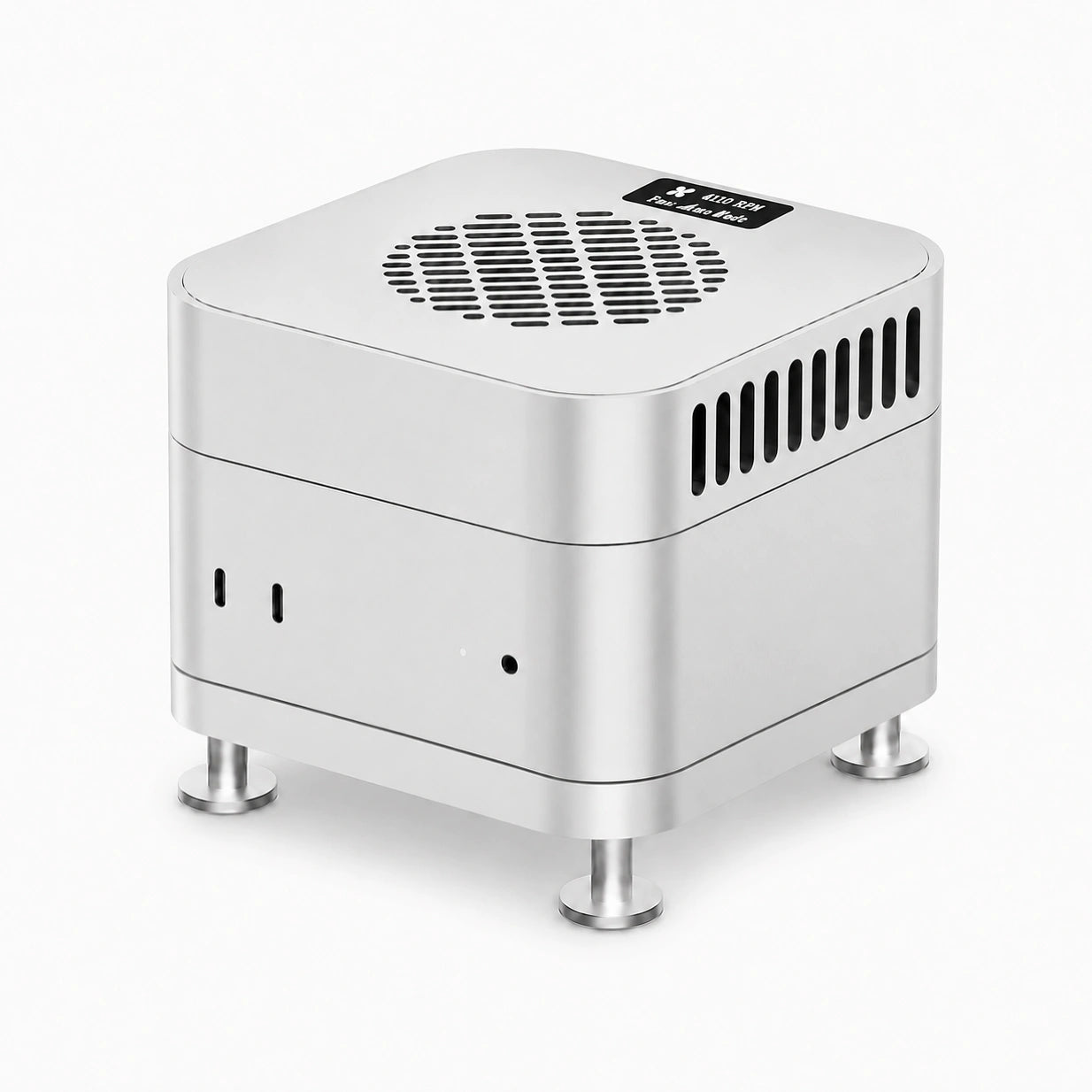
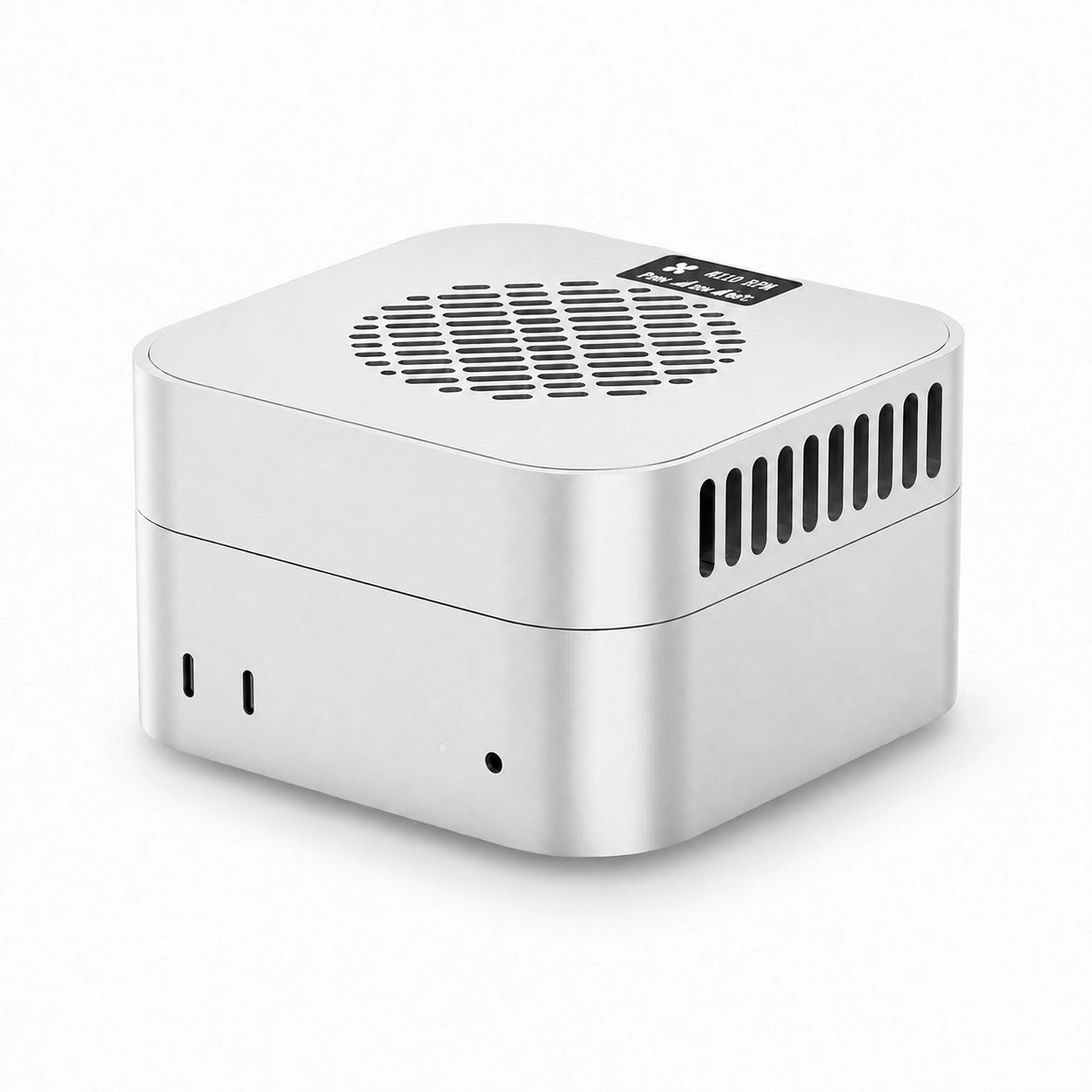
For that home-workstation route, choose cooling according to sustained workloads such as exports, rendering and builds. MacFrost Pro below is a Mac mini accessory; it is not a cooling solution for a future cellular MacBook.
FAQ
Can I add an eSIM to my current MacBook Pro?
No native cellular eSIM option is available on current MacBook Pro models. An eSIM installed on your iPhone can supply internet to the Mac through Personal Hotspot, subject to carrier support.
Can a macOS update add built-in 5G to an existing Mac?
Software alone cannot add the missing cellular modem and radio hardware. Current Macs can use tethering or an external connectivity device instead.
Would a cellular Mac work without an iPhone?
That would be the purpose of an independent cellular connection, provided the Mac had compatible hardware, an active data plan and network coverage. Apple has not confirmed such a model.
Would “unlimited” iPhone data mean unlimited Mac hotspot data?
Not necessarily. Check the plan’s separate hotspot allowance, speed restrictions and roaming rules with your carrier.
Would built-in 5G let a MacBook make normal mobile phone calls?
Not automatically. A data connection does not establish support for carrier voice calls. Apple has not announced cellular calling features for a Mac.
Would every redesigned MacBook Pro include C2?
No such configuration has been confirmed. A redesigned display or chassis is not evidence that every model will include a cellular modem.
Related ZEERA Guides
- iPhone 18 Pro Max SOS / No Service on AT&T: eSIM fixes
- iPhone 18 Pro C2 vs iPhone 17 Pro: signal and speed comparison
- iPhone 18 Pro Max MagSafe: 15W vs 25W charging
- Download iCloud photos and videos for local storage
- Build a Mac mini M6 desk setup
- Mac mini M6 pros, cons and buying considerations
- Mac mini M6 for music production and coding
Sources and scope: Linked Apple documentation supports current product specifications and existing connection methods. Future-Mac reporting is attributed to MacRumors’ coverage of Bloomberg’s Mark Gurman; it is not an Apple announcement. Plan scenarios and buying guidance are ZEERA’s analysis. No unreleased cellular Mac was tested.