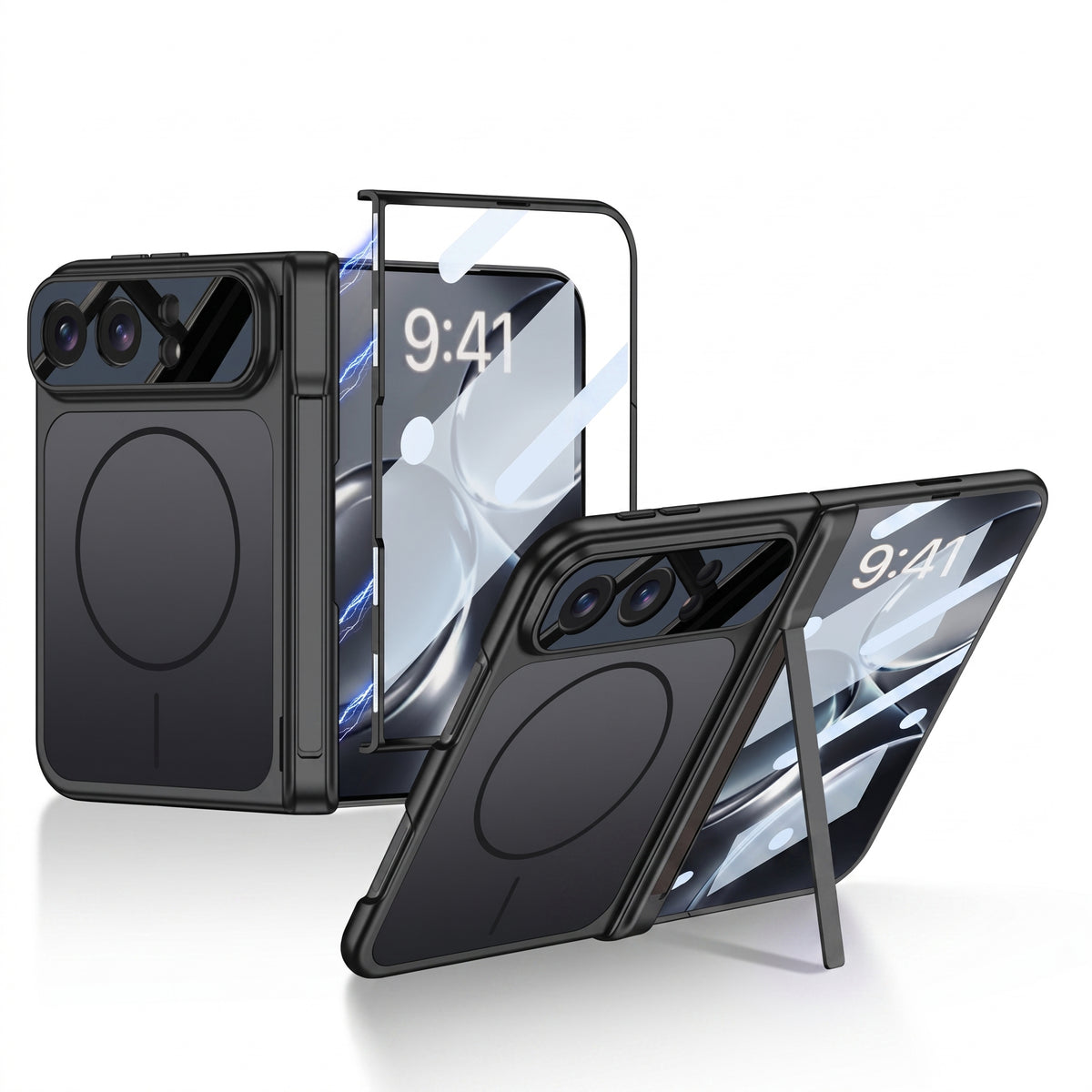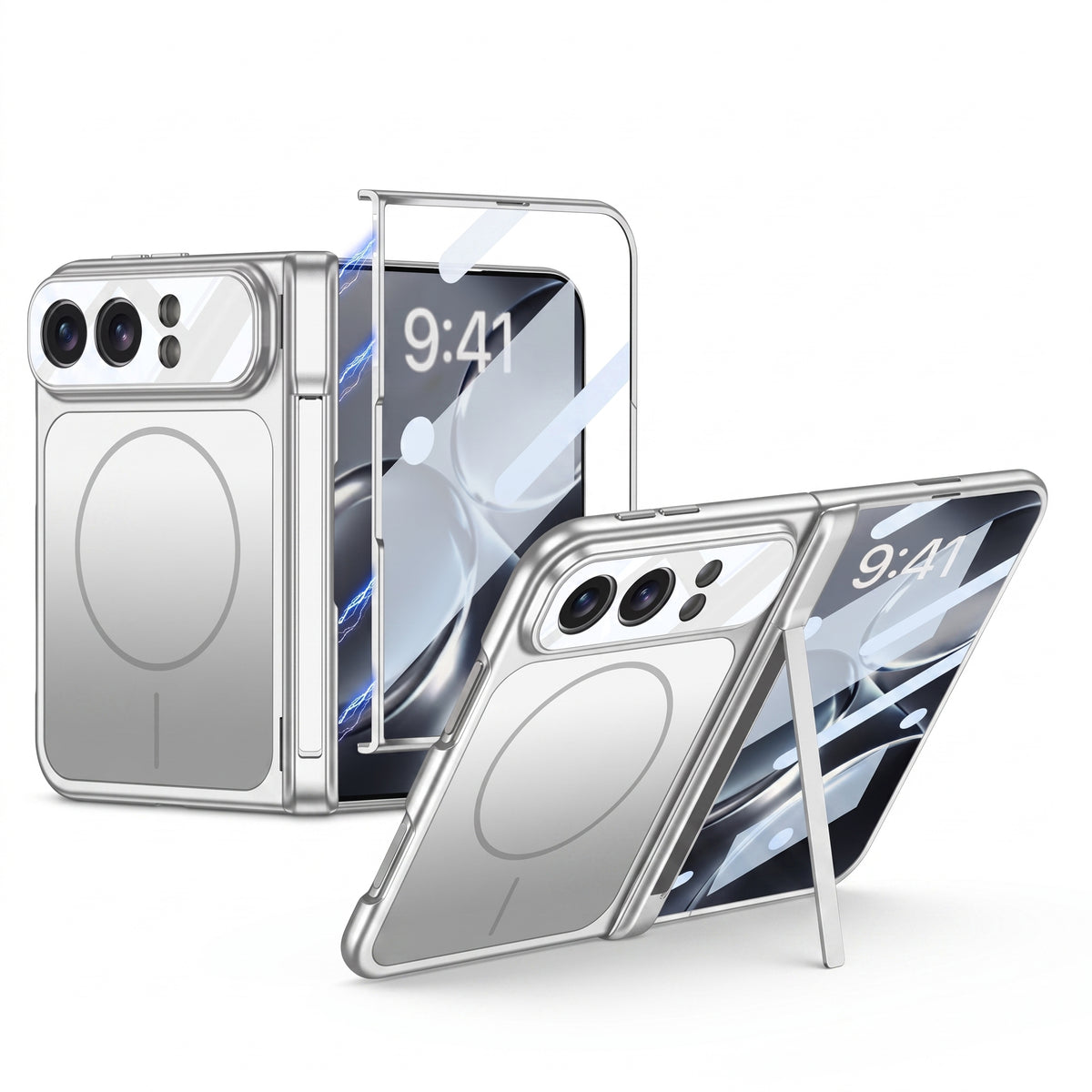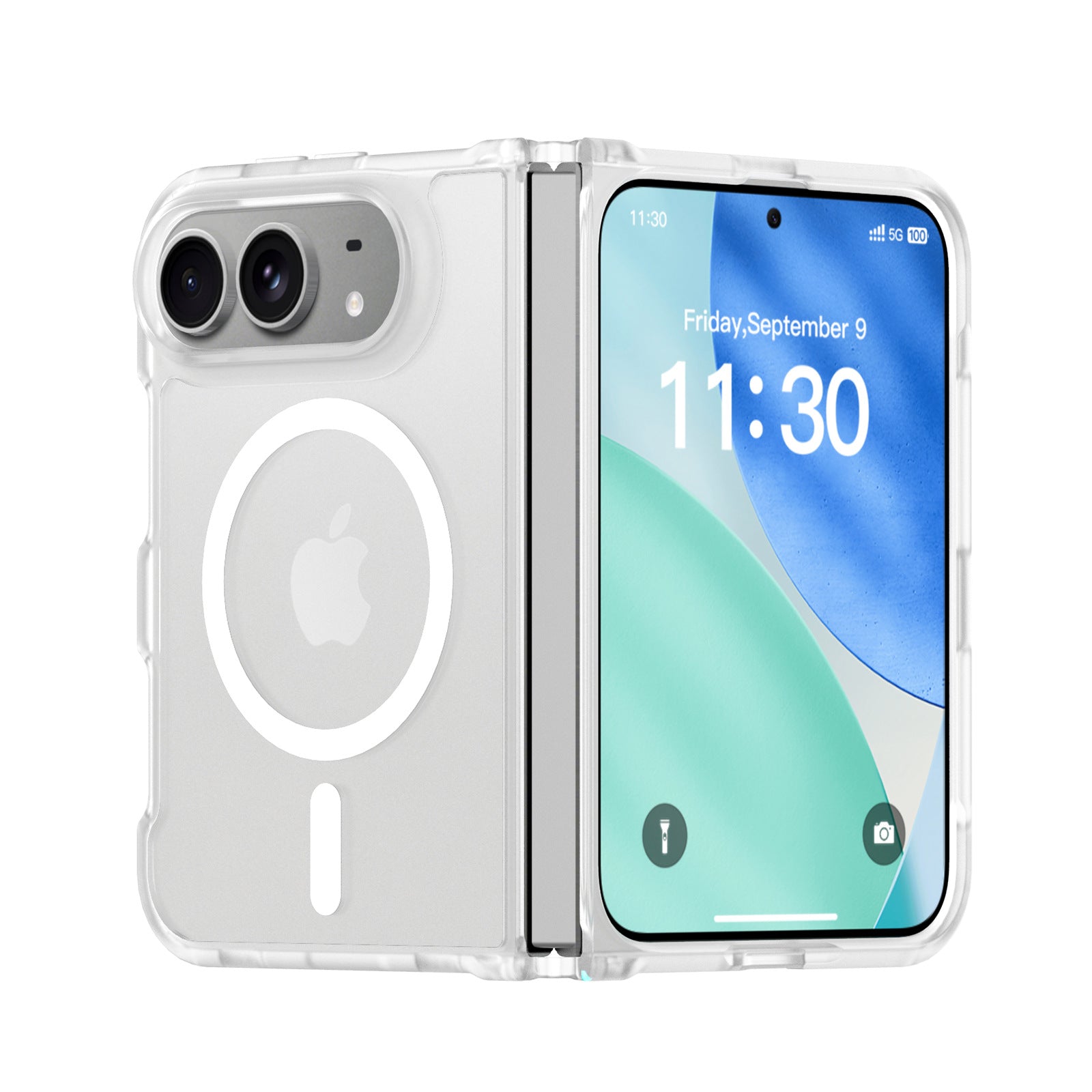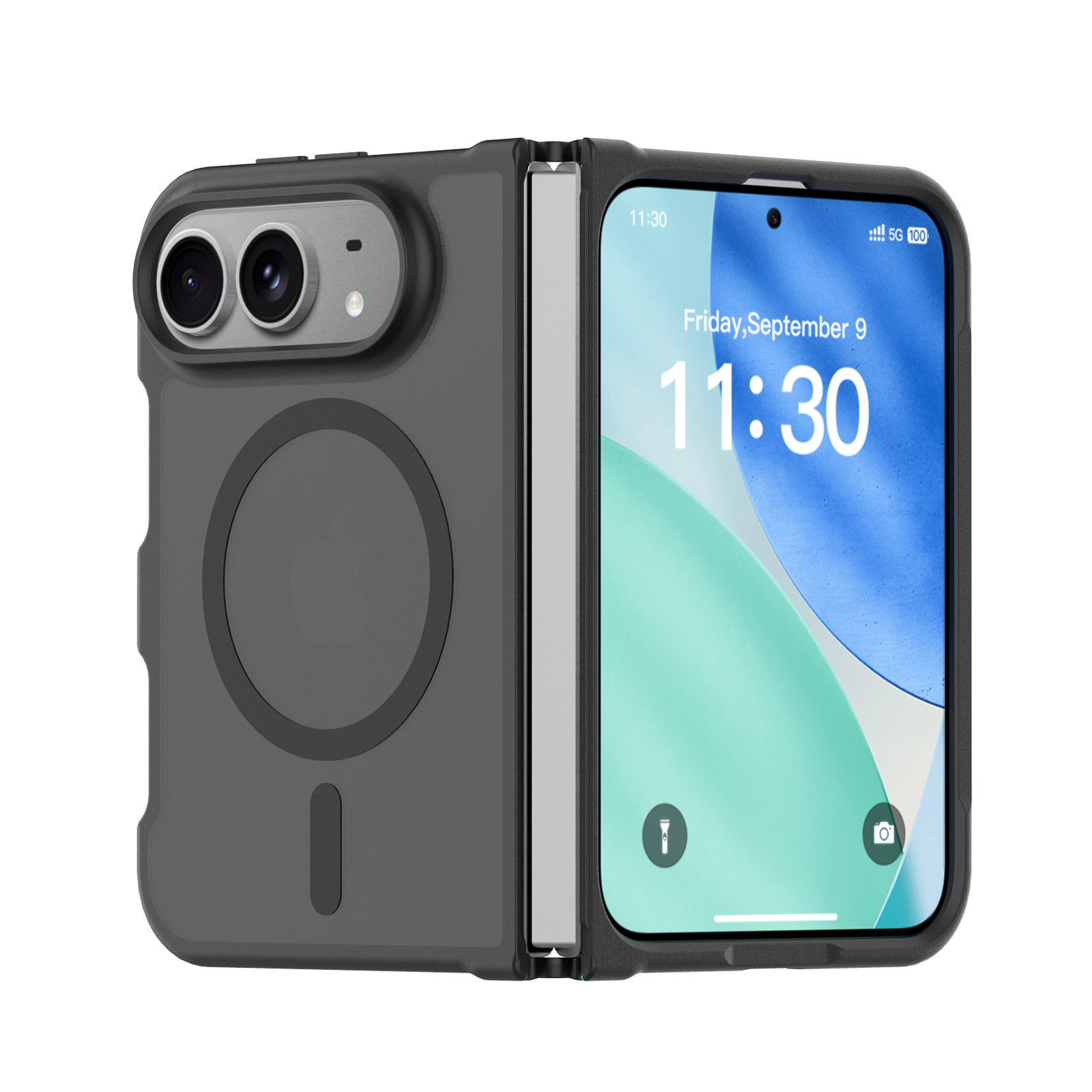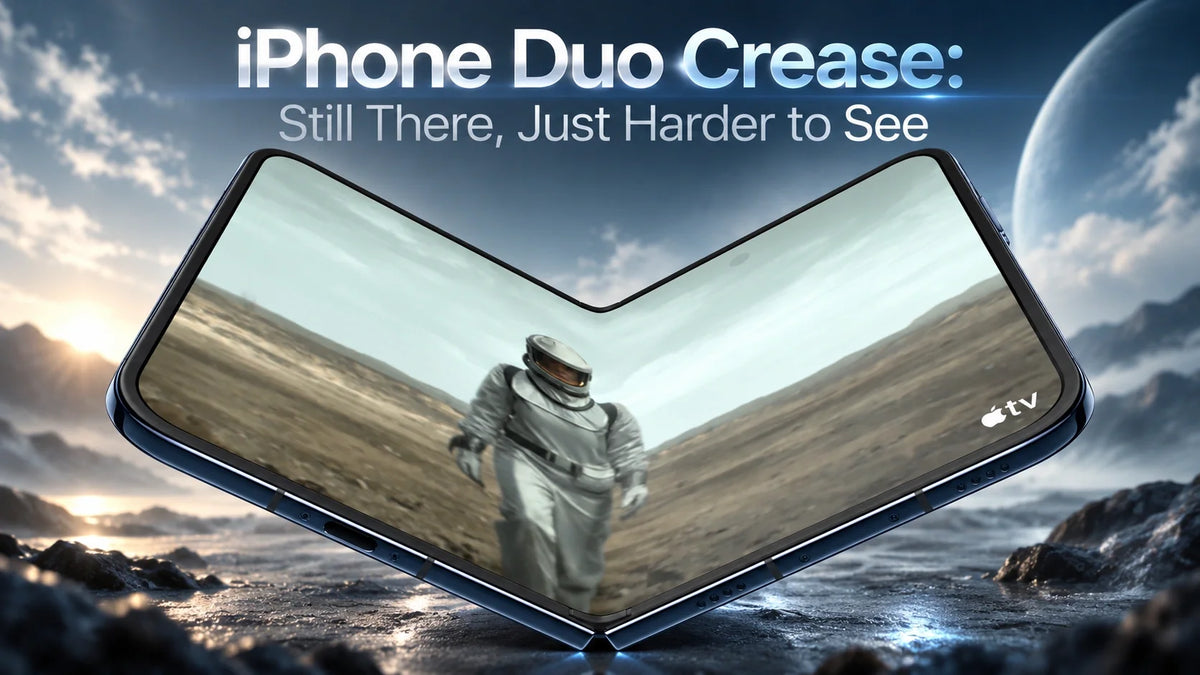
Does the iPhone Duo have a crease? Yes. The crease is still physically present where the inner display folds.
Apple has made it harder to notice by keeping the opened display flatter and using a matte nano-texture surface that reduces glare and reflected highlights.
The result is not a crease-free foldable iPhone. It is a foldable whose crease is less visually distracting in normal use.
At sharp angles, under directional light, or when the screen is off, you may still see—and possibly feel—the iPhone Duo crease.
The biggest misunderstanding about the iPhone Duo crease can be summed up in one sentence:
Apple did not repeal the physics of a folding OLED panel. It changed how the crease interacts with light—and therefore how prominently your eyes perceive it.
That distinction matters because “no visible crease” and “no physical crease” are two very different claims.
Apple itself says the iPhone Duo’s nano-texture finish creates a matte surface that minimizes crease visibility. It does not say that the fold has been completely removed.
Why does the iPhone Duo crease look less visible?
A foldable phone crease becomes especially obvious when overhead lighting reflects from the curved area in the middle of the display. The uneven reflection forms a bright or dark line that draws your attention directly to the fold.
The iPhone Duo attacks that visual problem in several ways.
A flatter opened display
The precision hinge supports the center of the inner display when the phone is opened. This reduces the deep valley effect commonly associated with older foldable phones.
Layers that can move
Custom adhesives allow the display layers to glide relative to one another during folding. This relieves bending stress and helps the panel return to a flatter position.
Nano-texture reduces glare
The matte surface diffuses reflected light instead of returning one sharp reflection. That makes the center fold less likely to produce an obvious highlight.
Your eyes stop chasing the fold
When reflections become softer across the whole screen, the crease attracts less attention—even though the underlying fold has not disappeared.
This is why photos and hands-on videos can appear contradictory. One angle may make the iPhone Duo inner display crease look almost invisible, while another exposes it immediately.
When can you still see the iPhone Duo crease?
The crease should be least distracting when you look straight at the illuminated display indoors. It can become easier to spot when light hits the screen from the side or when dark content reveals surface reflections.
- Screen turned off Reflections can reveal the physical contour of the folding area.
- Strong overhead lighting Lamps and ceiling lights may create a visible line across the center.
- Viewing from an angle Side viewing makes changes in the display surface easier to detect.
- Dark images or video Reflections become more noticeable when the OLED content is mostly black.
- A finger moving across the center Even when the fold is difficult to see, it may still be possible to feel it.
- Direct photography Camera exposure and lighting can exaggerate—or hide—the crease compared with what your eyes see.
In other words, the answer to “Is the iPhone Duo crease visible?” depends heavily on the lighting, viewing angle and content shown on the display.
Did Apple sacrifice display clarity to hide the crease?
The nano-texture surface does not reduce the iPhone Duo’s native display resolution. Text, photos and interface elements are still rendered using the full resolution of the inner Super Retina XDR display.
However, a matte display can look different from a glossy OLED.
A glossy screen delivers sharp reflections, deeper-looking blacks and more visual “pop” in controlled lighting. A matte surface scatters ambient light, which can make the image appear slightly softer or less glass-like—particularly beside the glossy outer screen or an iPhone 18 Pro Max.
More visual punch
Colors may appear more saturated, blacks look deeper and fine details can feel closer to the glass surface.
Better visibility in reflections
Glare is reduced, fingerprints can be less distracting and the crease is harder to notice in more lighting conditions.
This is a trade-off between glossy clarity and matte visibility, not proof that the iPhone Duo display is blurry.
Some buyers will prefer the richer appearance of the outer display. Others may find the paper-like inner screen more comfortable for reading, multitasking and using the phone under bright lights.
Is nano-texture the real reason Apple’s crease looks better?
No single component deserves all the credit.
If Apple had applied a matte finish over a deeply recessed fold, the crease would still be obvious. The improved result comes from the combination of the hinge, center support, flexible display stack, custom adhesives and nano-texture cover layer.
The hardware makes the fold flatter. The nano-texture surface then makes the remaining contour harder to see.
That also explains why calling the iPhone Duo “crease-free” is inaccurate. Apple has improved both the physical structure and its optical presentation, but the display still bends at the same location every time the device closes.
Exclusive: Android foldable makers are already responding
ZEERA has learned through supply-chain contacts that multiple Android foldable phone manufacturers have accelerated research into matte, nano-texture-like surface treatments for future folding displays.
The objective is similar to Apple’s approach: reduce direct reflections, make the fold line less visually prominent and improve readability under strong ambient light.
The technologies being evaluated should not automatically be described as identical to Apple’s nano-texture layer. Different manufacturers may use different polymers, coating processes, surface structures and protective-layer suppliers to achieve a comparable optical result.
According to the current supply-chain indications available to ZEERA, the earliest commercial foldable phones using these new matte display treatments could appear in early 2027.
No specific Android model or launch date has been confirmed, and development schedules can change. Still, the direction is meaningful: the next foldable display race may focus less on claiming that the crease has vanished and more on controlling how users perceive it.
Will matte inner screens become the next foldable trend?
They could—but manufacturers will need to solve more than glare.
A successful matte foldable display must reduce reflections without making text look grainy, weakening perceived contrast or creating an obvious visual difference around an under-display camera.
It must also resist scratches, skin oils and repeated folding. A foldable screen is touched more frequently than a laptop or desktop monitor, so durability and cleaning behavior matter just as much as the initial appearance.
Less visible creases
Diffused reflections prevent the folding line from becoming the brightest feature on the screen.
Lower glare
Large inner screens become easier to use near windows, under ceiling lights and outdoors.
Less glossy contrast
Some users may prefer the deeper blacks and saturated appearance of a traditional glossy OLED.
Long-term surface wear
Real-world testing will show how the matte layer handles fingerprints, cleaning, scratches and years of folding.
Should you put a screen protector over the matte inner display?
Do not assume that a conventional glossy screen protector will improve the iPhone Duo inner display.
A third-party film could change the surface texture, restore sharp reflections and make the crease easier to see again. It could also interfere with touch feel or place additional stress on a display stack designed to move as the phone folds.
Buyers should follow Apple’s official care instructions and avoid removing any factory-applied inner-display layer. Only use a protector specifically approved for the iPhone Duo folding screen.
Should the crease stop you from buying iPhone Duo?
Probably not by itself.
The more useful question is whether you notice the crease while reading, watching video, gaming or multitasking—not whether a camera can reveal it under carefully chosen lighting chosen lighting.
If you expect a perfectly rigid, glass-like surface, the iPhone Duo cannot deliver that. It remains a flexible display that folds through the center.
If your priority is a large inner screen with reduced glare and a less distracting fold line, Apple’s approach may be one of the most convincing solutions yet.
Apple did not eliminate it. Apple combined a flatter display structure with nano-texture light diffusion so that the remaining crease is less likely to interrupt what you are viewing.
iPhone Duo crease FAQ
Does the iPhone Duo have a crease?
Yes. The folding area still has a physical crease, but its flatter structure and matte nano-texture surface make it harder to notice.
Is the iPhone Duo crease completely invisible?
No. It can still appear when the screen is off, under directional light, from side angles or while displaying dark content.
How does nano-texture hide a foldable screen crease?
The matte surface diffuses reflected light. This reduces the sharp highlights and shadows that normally make a fold line stand out.
Does the nano-texture display look blurry?
It does not lower the display’s resolution, but it may look softer and less glossy than the outer screen because ambient light is scattered across the surface.
Can you feel the iPhone Duo crease?
Potentially, yes. Reduced visual visibility does not mean the physical transition at the center of the display has disappeared.
Will Android foldables copy Apple’s matte display?
ZEERA’s supply-chain sources indicate that multiple Android manufacturers are researching similar anti-glare treatments. The earliest products could arrive in early 2027, although no models are confirmed yet.
Should I install a screen protector on the iPhone Duo inner screen?
Only use a protector specifically approved for the folding inner display. A conventional glossy film may reduce the nano-texture’s anti-glare effect and make the crease more visible.
Will the iPhone Duo crease get worse over time?
Long-term behavior is not yet established. Repeated folding, heat, pressure and surface wear could affect how the crease looks, so extended real-world testing will be important.
Source note: Apple confirms that the iPhone Duo inner display uses a nano-texture finish to reduce glare, reflections and crease visibility. Information regarding future Android foldable display treatments is based on ZEERA supply-chain sources and remains subject to development and launch-plan changes.