Quick Answer
The best way to protect iPhone 18 Pro Max battery health is to prevent heat, especially while charging. Avoid wireless charging in a hot car unless the charger includes effective active cooling. Wireless CarPlay, GPS, a bright display, direct sunlight and wireless charging can heat the phone at the same time. At home or while traveling, do not play demanding games while charging if the iPhone is already warm. Keeping the battery cooler can matter more than obsessing over a small difference in cycle count.
A battery is a consumable component, so some capacity loss is unavoidable. The goal is not to keep an iPhone at 100% battery health forever. It is to avoid the repeated high-temperature sessions that accelerate chemical aging.
That distinction matters for iPhone 18 Pro Max owners. A phone can have a relatively low cycle count and still lose battery health faster than expected if much of its charging happens in a hot car, under direct sunlight or during demanding gaming sessions.
Heat Is the Biggest Battery-Health Problem You Can Control
Battery cycle count gets most of the attention, but it is only one part of battery aging. Temperature history, charging habits, time spent at a high state of charge and everyday workload all influence how quickly maximum capacity declines.
Apple says iPhone is designed for use in ambient temperatures from 0°C to 35°C, or 32°F to 95°F. It also warns that using or charging an iPhone in very hot conditions can permanently shorten battery life. Apple separately lists wireless charging and graphics-intensive apps or games among the activities that can make an iPhone warmer.
At elevated temperatures, iOS may dim the screen, reduce performance, slow or stop charging, or display a temperature warning. These protections help prevent an immediate thermal problem, but they do not make repeated heat exposure harmless.
Why Wireless Charging in a Car Creates a Worst-Case Heat Stack
A car can combine several heat sources that rarely occur together on a desk or bedside table.
- Cabin heat and direct sunlight: a dashboard or windshield mount may sit in the hottest part of the interior.
- Wireless charging losses: not all transferred energy reaches the battery, and part of it becomes heat.
- Wireless CarPlay: the phone maintains active wireless connections while handling audio, calls, messages and app data.
- Navigation: GPS, cellular data and continuous map processing remain active for long periods.
- A bright display: automatic brightness may increase under strong daylight.
- A case around the phone: some thick cases can slow the release of heat during charging.
This is why an ordinary magnetic car charger can perform well in a cool cabin but struggle during a summer drive. Phone temperature can climb past 40°C and reach 45°C or higher depending on the cabin, sunlight, workload, case and charger. In more extreme conditions, the iPhone may pause charging or show the “iPhone needs to cool down” warning.
Our recommendation is direct: do not wirelessly charge your iPhone in a hot car unless the charging setup actively manages heat. If active cooling is unavailable, use a wired USB-C connection when necessary, keep the phone out of direct sun and avoid charging when the device is already hot.
What ZEERA Observed in a 10-Person Battery-Health Survey
ZEERA conducted a small observational survey involving 10 iPhone users. Most participants used their phones heavily in cars and regularly combined wireless charging with Wireless CarPlay, navigation or other sustained tasks. Several also reported playing demanding games while charging.
Across this group, users who frequently charged or used their iPhone while it was hot generally showed lower battery-health readings than users with fewer overheating situations. The difference was commonly linked to a battery-capacity loss that was about 30% to 50% greater over a similar period of use.
For example, a more typical user might still show 90% battery health after the same period, meaning a 10-point loss from new. An iPhone repeatedly used in high-heat conditions might show 85% battery health, a 15-point loss. The displayed battery-health difference is five percentage points, but the amount of capacity lost is 50% greater: 15 points instead of 10.
| Observed usage pattern | Main heat sources | Battery-health observation |
|---|---|---|
| Frequent in-car wireless charging | Hot cabin, sunlight, CarPlay, GPS and charging | Faster capacity decline despite moderate cycle counts |
| Gaming while charging | High processor and graphics load plus charging heat | Repeated warmth or overheating correlated with greater wear |
| Lower-heat everyday use | Shorter charging sessions and fewer hot environments | Battery health generally declined more slowly |
Important context: this was a 10-person observational survey, not a controlled laboratory study. Phone models, age, software, charging patterns and environmental conditions varied, so the results show a useful pattern rather than a universal prediction.
Our Own CarPlay iPhone Lost 15% With Only About 100 Cycles
One phone used by the ZEERA team provides a clear example of why cycle count cannot tell the entire story. The device was used primarily for Wireless CarPlay, and most of its active time was spent inside a car.
After approximately one year, its maximum capacity had fallen by 15 percentage points even though the battery had completed only around 100 cycles. The phone was not being deeply discharged and recharged every day. Its more consistent stress was frequent use and charging in a high-temperature environment.
This does not prove that every iPhone used with CarPlay will lose 15% in a year. It shows why a low cycle count does not automatically equal gentle battery use. One hundred relatively hot cycles can be more stressful than a larger number of cooler, lighter charging sessions.
Is Losing 10% Battery Health in One Year Normal?
For a new iPhone, a battery-health reading around 90% or higher after the first year can still fall within normal real-world variation. Around 300 charge cycles is also a common annual figure for users who charge most days, but neither 10% nor 300 cycles is an official Apple pass-or-fail threshold.
Apple says the exact maximum-capacity percentage depends on how the iPhone is regularly used and charged. For reference, Apple states that iPhone 15 batteries are designed to retain 80% of original capacity at 1,000 complete cycles under ideal conditions. A complete cycle is cumulative: using 50% one day and 50% the next adds up to one cycle.
The important words are under ideal conditions. A phone used in a cool office, charged with good alignment and rarely pushed hard while charging may age very differently from a phone mounted against a hot windshield for hours each week.
Seven Ways to Protect iPhone 18 Pro Max Battery Health
1. Keep the phone out of direct sunlight while charging
Move the mount away from the windshield when possible. Cool the cabin before starting a long charging session, and do not leave the iPhone in a parked car.
2. Use active cooling for in-car wireless charging
A fan-only design may move air, but a semiconductor cooling surface can actively draw heat away from the phone. This is especially useful when CarPlay, GPS, cellular data and charging are running together.
3. Stop charging if the iPhone is already hot
If the phone feels unusually hot, disconnect it. Close demanding apps, move it to a cooler location and allow the temperature to fall naturally. Do not place a hot iPhone in a refrigerator or against ice, because rapid temperature changes can create condensation.
4. Avoid demanding games while charging
Gaming can place a sustained load on the processor and graphics system. Adding fast charging at the same time creates heat from both directions. If you must play while connected, reduce graphics settings, remove an overly insulating case and stop if the phone becomes hot.
5. Use a properly aligned magnetic charger
Poor coil alignment can reduce efficiency and increase wasted heat. A stable magnetic connection helps keep the phone centered on the charging area.
6. Use a charge limit when a full battery is unnecessary
If your iPhone offers a Charge Limit setting, consider 80% for routine days when you do not need maximum range. Spending less time at a very high state of charge can reduce battery stress, but temperature control should remain the first priority in hot environments.
7. Check the trend, not every one-point change
Battery-health estimates do not always decline smoothly. Watch the trend across several months and compare it with your cycle count and heat exposure. A single one-point change is less informative than a consistent pattern of rapid decline.
Does Active Cooling Completely Eliminate Battery Heat?
No charger can cancel every source of heat. An iPhone can still become warm when the cabin is extremely hot, sunlight is hitting the display, the cellular signal is weak or navigation and other demanding apps are running continuously.
What active cooling can do is address the charging surface directly and reduce one of the most important thermal bottlenecks. That can create better conditions for more stable wireless charging and fewer heat-related slowdowns.
Think of cooling as part of a complete setup: active thermal management, correct magnetic alignment, sufficient power input, shade and reasonable phone workload. If the iPhone displays a temperature warning, disconnect it and let the device cool regardless of which charger you are using.


Final Verdict
The best way to preserve iPhone 18 Pro Max battery health is not a complicated charging schedule. It is avoiding repeated exposure to heat.
Do not routinely combine a hot car, direct sunlight, Wireless CarPlay, GPS and an ordinary wireless charger. Do not make gaming while fast charging a daily habit. When wireless charging is the most convenient option, use a well-aligned charger with active cooling and stop the session if the phone remains hot.
Cycle count still matters, but temperature history explains why two iPhones with similar age—or even very different cycle counts—can show very different battery-health results.

Recommended for Mac mini
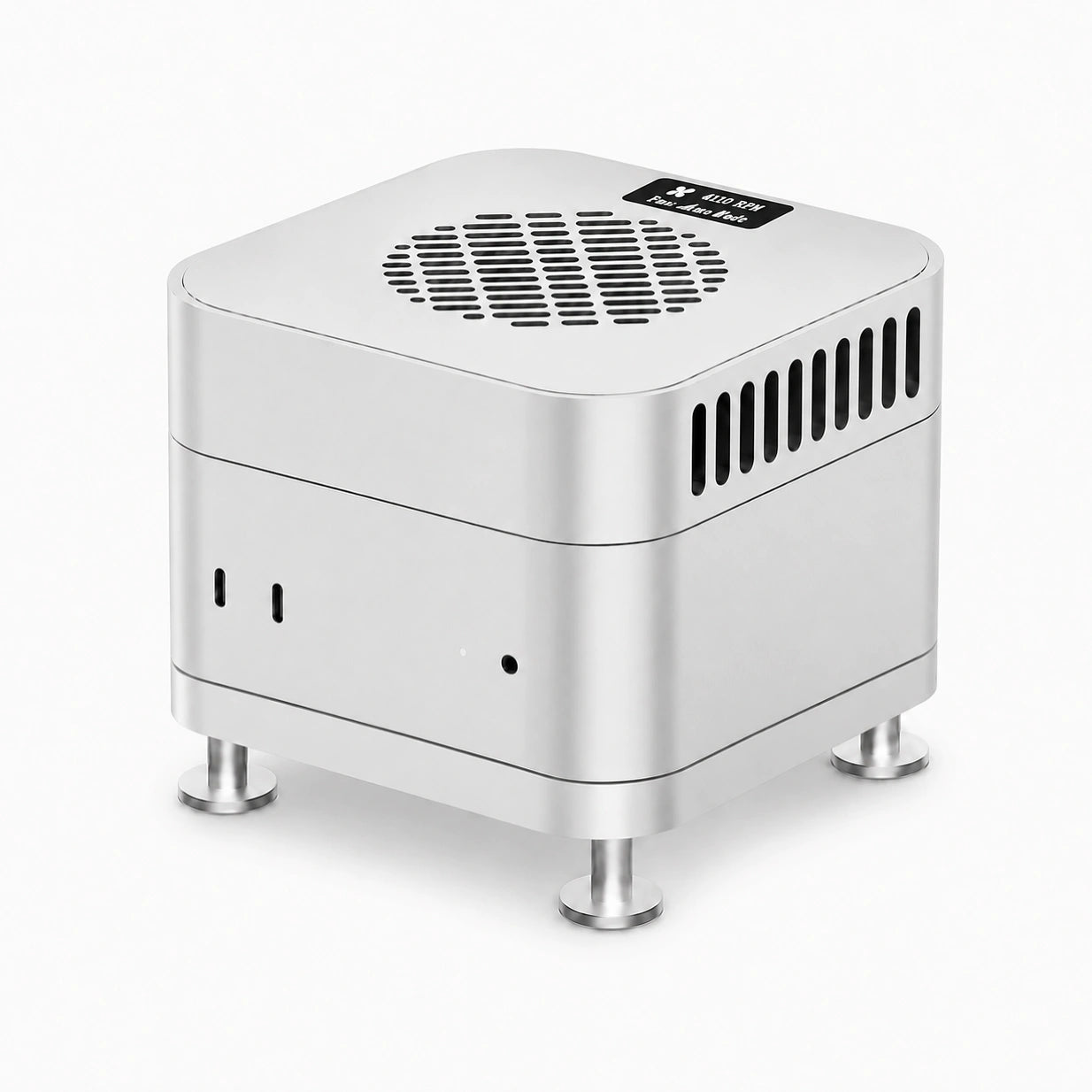
ZEERA MacFrost Pro: 30W Thermoelectric Active Cooler + Aluminum Stand for Mac Mini M6, M5 Pro & M4
Built for sustained workloads, the ZEERA MacFrost Pro combines a 30W thermoelectric active cooler with a CNC aluminum stand to give Mac mini more thermal headroom while improving airflow underneath. It is designed for demanding tasks such as long video exports, local AI workloads, 3D rendering and large code builds.
Shop NowFAQ
What is the best way to protect iPhone 18 Pro Max battery health?
Prevent repeated heat exposure, especially while charging. Keep the phone out of direct sunlight, avoid demanding games while charging and use active cooling for long wireless-charging sessions in a car.
Does wireless charging damage iPhone battery health?
Wireless charging is supported by iPhone and is not inherently harmful. The concern is excess heat. Poor alignment, a hot environment and demanding phone use during charging can raise temperature and accelerate battery aging over time.
Is Wireless CarPlay bad for iPhone battery health?
Wireless CarPlay itself is not inherently bad for the battery. The risk increases when it is combined with navigation, direct sunlight, high cabin temperature and wireless charging for long periods.
Is 40°C or 45°C too hot for an iPhone battery?
Those readings indicate a hot charging environment and should not become routine. Apple recommends using iPhone where ambient temperature is no higher than 35°C. Internal or surface temperature is not the same as ambient temperature, but repeated readings in the 40°C to 45°C range are a sign to reduce heat and pause charging.
Is a 10% battery-health drop after one year normal?
It can fall within normal real-world variation, depending on cycle count, temperature history and charging habits. It is not an official Apple threshold. A faster decline with a low cycle count may point to frequent heat exposure or another usage factor.
Why is my iPhone battery health low with only 100 cycles?
Cycle count is only one factor. High-temperature charging, gaming while plugged in, prolonged time near full charge and natural chemical age can all contribute to capacity loss.
Should I use the 80% Charge Limit?
It can help reduce the time the battery spends at a high state of charge, particularly if you do not need 100% every day. However, keeping the iPhone cool is still essential because an 80% limit does not prevent heat from aging the battery.
Battery and temperature guidance: Apple Support: If your iPhone or iPad gets too hot or too cold, Apple Support: iPhone battery and performance, and Apple: Maximizing Battery Life and Lifespan.