Updated: September 6, 2026
Quick Answer
A MagSafe car mount is worth it if you want fast one-handed mounting and a clear view of navigation without using clamp arms. But not every MagSafe mount charges: a magnetic holder only holds the phone, while a MagSafe or Qi2 car charger also supplies wireless power.
For navigation, Wireless CarPlay and long drives, look beyond magnet strength. The best setup also needs stable vehicle attachment, correct coil alignment, enough input power and heat control.
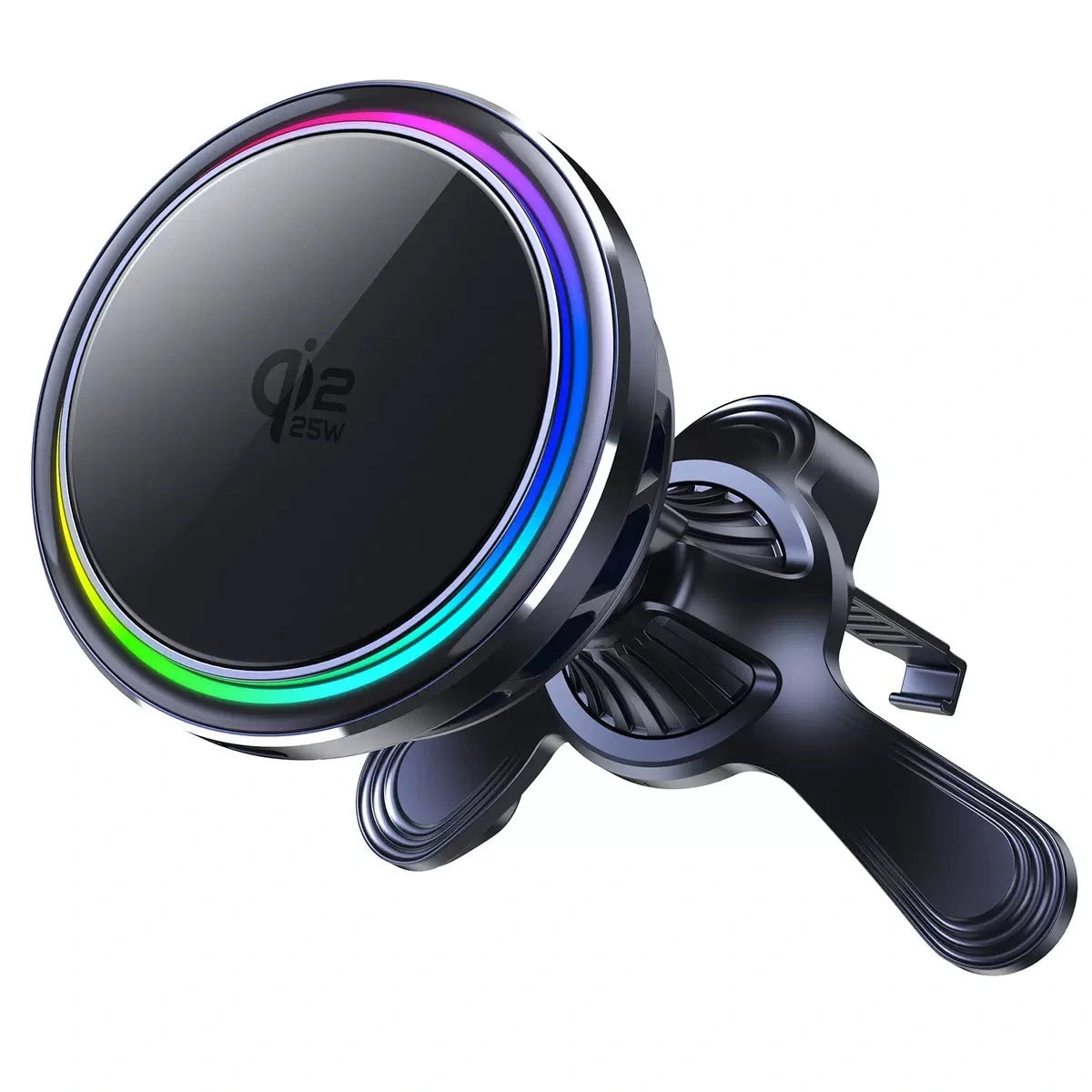
The ZEERA SuVolt Gen5 combines magnetic mounting, Qi2 or Qi2.2 charging, semiconductor active cooling and a reinforced three-point vent mount. It is a strong choice for drivers whose iPhone gets hot or gains battery slowly while navigation is running.
Search for a MagSafe car mount and you will see products that look almost identical but do very different jobs.
Some are simple magnetic phone holders. Some add wireless charging. Better models also address the two problems that appear only after you start driving: movement on rough roads and heat during navigation.
This guide explains how to choose the right magnetic car phone mount for your iPhone, what Qi2 changes, which mounting style fits your vehicle and when active cooling is genuinely useful.
What Is a MagSafe Car Mount?
A MagSafe car mount uses a circular magnetic array to align and hold a compatible iPhone. You place the phone against the mount and remove it with one hand, without opening a mechanical clamp.
That magnetic alignment is also useful for wireless charging because it helps center the phone over the charging coil. Consistent alignment can improve charging reliability compared with a loose phone on an ordinary charging pad.
However, “MagSafe car mount” is a broad shopping term. It can refer to three different products:
| Product type | Holds the phone | Charges the phone | Best for |
|---|---|---|---|
| Magnetic car mount | Yes | No | Short trips or drivers who prefer a cable |
| MagSafe-compatible car charger | Yes | Yes, but speed varies | Convenient everyday wireless charging |
| Qi2 / Qi2.2 car charger | Yes | Yes, up to the supported rate | Standardized magnetic alignment and faster compatible charging |
Buying rule: if a listing only says “magnetic mount,” do not assume it includes wireless charging. Look for a stated wireless output, a USB-C input and clear phone compatibility.
Does Every MagSafe Car Mount Charge Your iPhone?
No. Magnets and wireless charging are separate features.
A magnetic-only mount can hold an iPhone without any electrical connection. A MagSafe car mount charger adds a charging coil and must be connected to a suitable power source.
The term “wireless” only describes the connection between the mount and the phone. The charger itself still needs a cable running to a car USB port or power adapter.
If charging is important, check all four parts of the setup:
- Phone support: the iPhone determines the maximum charging rate it can accept.
- Charger output: look for the stated Qi, Qi2 or Qi2.2 output.
- Car power source: an underpowered built-in USB port can limit the charger.
- Cable: use a USB-C cable rated for the power required by the charger.
Which iPhones Work With a MagSafe Car Mount?
iPhone 12 and later MagSafe-equipped models can normally attach directly to a compatible magnetic mount. Apple’s exact wireless charging rate varies by iPhone model, charger, adapter and operating conditions.
Older iPhones do not have the built-in MagSafe magnetic array. They may attach with a correctly positioned magnetic case or ring, but adding a ring does not increase the phone’s native wireless charging limit.
Future models should be checked individually after their official specifications are available. A product labeled for a newer iPhone should still be evaluated for magnetic position, charging protocol and case fit—not just the model name in the title.
Will a MagSafe car mount work with Android?
It can. Android phones with Qi2 magnetic alignment can use compatible Qi2 mounts directly. Other Qi-capable Android phones may need a magnetic case or adhesive ring positioned around the charging coil.
Again, the ring only creates a magnetic connection. It does not give the phone Qi2 charging speed if the phone itself does not support it.
Can You Use a MagSafe Car Mount With a Case?
Yes, but the case should contain a correctly aligned magnetic ring. Apple MagSafe cases and well-designed MagSafe-compatible cases usually provide the most reliable hold.
A thick non-magnetic case increases the distance between the phone and mount. The phone may still attach, but the grip can become weaker and charging can become slower or intermittent.
Remove these items before wireless charging:
- Magnetic wallets
- Metal plates used by conventional car mounts
- Finger rings or kickstands that sit over the charging area
- Cards, keys or other foreign objects between the phone and charger
If your iPhone attaches but repeatedly starts and stops charging, test it without the case. If the problem disappears, case thickness, ring position or trapped heat is likely affecting performance.
Is a MagSafe Car Mount Strong Enough for Bumpy Roads?
A strong magnetic ring helps, but magnet strength is only one part of stability.
The entire mounting chain has to remain secure:
- The case must stay firmly attached to the iPhone.
- The phone must stay magnetically attached to the charger.
- The adjustable ball joint must resist unwanted rotation.
- The vent hook, dashboard adhesive or suction cup must stay attached to the car.
A powerful magnetic face cannot fix a weak vent clip. This is especially important with heavier Pro Max phones, thick protective cases and rough roads.
For vent mounting, a reinforced hook and multiple support points generally control wobble better than a short friction clip hanging from one vent slat. SuVolt Gen5 uses a three-point vent structure and a universal 17mm ball joint, making the mount easier to stabilize and adapt.
Is a Vent Mount or Dashboard Mount Better?
The best position depends on your car interior, vent design and local visibility rules.
Choose an air vent mount when:
- You want a compact installation close to the center console.
- Your vent has strong horizontal slats that can support the phone.
- You want the phone near conditioned cabin airflow.
- You frequently move the mount between vehicles.
Choose a dashboard or suction-cup mount when:
- Your vents are circular, vertical, motorized or unusually narrow.
- The vent slats are fragile or cannot support a heavy phone.
- You need more control over viewing height and angle.
- You have a clean, smooth surface that can hold the base securely.
Do not place the phone where it blocks the road, instrument panel, controls or airbag deployment area. A technically secure mount is still a poor choice if it creates a visibility hazard.
Why Does an iPhone Get Hot on a MagSafe Car Charger?
A car combines several heat sources in one small space.
Wireless charging creates some heat. Navigation keeps GPS, map rendering, the display and cellular data active. Wireless CarPlay uses additional wireless connections. Sunlight and a hot cabin add heat from outside the phone.
Apple says wireless charging can make an iPhone feel warm. It also states that charging can slow or stop when the device becomes too warm, and that extended GPS or navigation use in hot conditions can change iPhone performance.
This explains a common driver complaint: the charging icon is visible, but the battery percentage barely rises—or continues to fall.
usable charging power minus the phone’s active power consumption equals the actual battery gain.
If navigation, screen brightness, cellular data and CarPlay consume most of the available power, very little remains for the battery. If heat causes the phone to reduce charging further, the battery can become power-negative.
For a deeper diagnosis, see why wireless charging slows down in the car and why an iPhone can lose battery while charging in the car.
Does Active Cooling Really Help a MagSafe Car Mount Charger?
Active cooling is most useful when heat—not the charger’s peak specification—is limiting sustained charging.
A basic fan moves cabin air. A semiconductor cooling system actively draws heat away from the phone-facing charging surface. That can create more thermal headroom during navigation, long commutes and hot-weather driving.
Cooling does not force an unsupported iPhone to charge faster. It cannot cancel intense sunlight or the temperature inside a parked car. What it can do is reduce one major source of heat while the cabin is at a reasonable temperature.
This matters for battery care as well. Apple states that using an iPhone in very hot conditions can permanently shorten battery life. No charger can stop normal battery aging, but reducing repeated charging heat is a sensible way to reduce avoidable thermal stress.
What Is the Difference Between 15W and 25W Qi2 Car Charging?
The original Qi2 standard introduced magnetic wireless charging at up to 15W. The Wireless Power Consortium later introduced Qi2 25W, based on Qi v2.2.1, with nearly 70% more available power than original Qi2.
That does not mean every phone will receive 25W. Actual power depends on the iPhone model, battery level, temperature, charger, cable and input adapter.
Apple’s own charging guidance also shows why model-specific checking matters: supported iPhones can reach different peaks even when they use the same 25W-capable MagSafe charger.
Who should choose 15W?
Choose a Qi2 15W mount for compatible phones limited to 15W, normal daily commutes or situations where the fastest possible in-car charging is not a priority.
Who should choose 25W?
Choose a Qi2.2 25W model if your phone supports the higher rate and you regularly run navigation, Wireless CarPlay and a bright display for long periods. The extra charging headroom is most valuable when the phone is also consuming significant power.
In either case, use a suitable USB-C power adapter. A low-output factory USB port can prevent a fast car charger from reaching its rated performance.
What Should You Look for Before Buying a MagSafe Car Mount?
Use this checklist instead of choosing by wattage or magnet claims alone:
- Clear product type: magnetic holder or wireless car charger.
- Phone compatibility: verify your exact iPhone and its supported charging rate.
- Case compatibility: use a properly aligned MagSafe-compatible case.
- Mounting stability: inspect the phone connection, joint and vehicle attachment separately.
- Heat management: consider active cooling for navigation, CarPlay and long drives.
- Power requirements: confirm the adapter and cable needed for full output.
- Placement: choose vent, dashboard or suction mounting to fit the actual vehicle.
- One-handed use: the phone should attach easily without the whole mount moving.
Why ZEERA SuVolt Gen5 Is Our MagSafe Car Mount Pick
SuVolt Gen5 is designed around the three real-world problems a simple magnetic holder does not solve: maintaining useful charging power, managing heat and keeping a heavy phone stable.
It combines Qi2 15W or Qi2.2 25W charging with semiconductor active cooling, strong magnetic alignment and a reinforced three-point air-vent mount. The upgraded mount also uses a universal 17mm ball joint, while an optional 360° suction-cup base adds more placement choices.
The 25W version makes the most sense for compatible newer phones and drivers who depend on navigation or Wireless CarPlay. The 15W version remains suitable for models that do not support the higher charging rate.
SuVolt is not a substitute for basic heat precautions. Cool a very hot cabin first, keep the phone shaded and stop charging if an iPhone displays a temperature warning.
FAQ
Does a MagSafe car mount charge your phone?
Only if the mount includes a wireless charging coil and is connected to power. A magnetic-only car mount holds the phone but does not charge it.
Are MagSafe car mounts safe for iPhone?
A properly installed compatible mount is generally safe for normal use. Keep metal objects and cards away from the charging area, use a stable vehicle attachment and follow Apple’s heat warnings.
Will a MagSafe car mount work with a phone case?
Yes, when the case has a correctly aligned MagSafe-compatible magnetic ring. Thick non-magnetic cases, wallets and metal plates can weaken the hold or interrupt charging.
Why does my iPhone get hot on a MagSafe car mount?
Wireless charging, GPS, screen use, cellular data, Wireless CarPlay, sunlight and cabin temperature can add heat at the same time. Active cooling, shade and a suitable power setup can improve sustained charging conditions.
Why is my iPhone charging but still losing battery in the car?
The phone may be using more power than it is receiving. Navigation, CarPlay and high screen brightness increase consumption, while heat, poor alignment or a weak USB source can reduce charging power.
Is a vent or dashboard MagSafe mount better?
A vent mount is compact and can sit near cabin airflow, but it requires strong compatible vent slats. A dashboard or suction-cup mount is better for circular, vertical, motorized or fragile vents.
Can a MagSafe car mount damage an air vent?
A poorly fitted clip can place too much leverage on a thin vent slat. Use a supported multi-point mount, avoid overtightening and choose a suction-cup option if the vent is fragile or unusually shaped.
Do you need a special car adapter for a 25W MagSafe charger?
You need an adapter and cable that meet the charger’s stated input requirements. Many built-in vehicle USB ports cannot supply enough power for maximum wireless output.
Bottom Line
The best MagSafe car mount is not simply the model with the strongest magnet or largest wattage number. It must hold the phone and the vehicle connection securely, match your iPhone and case, receive enough input power and manage heat during the way you actually drive.
A magnetic-only holder is enough for short trips. For navigation, Wireless CarPlay and regular in-car charging, a Qi2 car charger is more useful. If heat repeatedly slows charging, an active-cooling model such as ZEERA SuVolt Gen5 provides a more complete solution.
Sources