Quick Answer
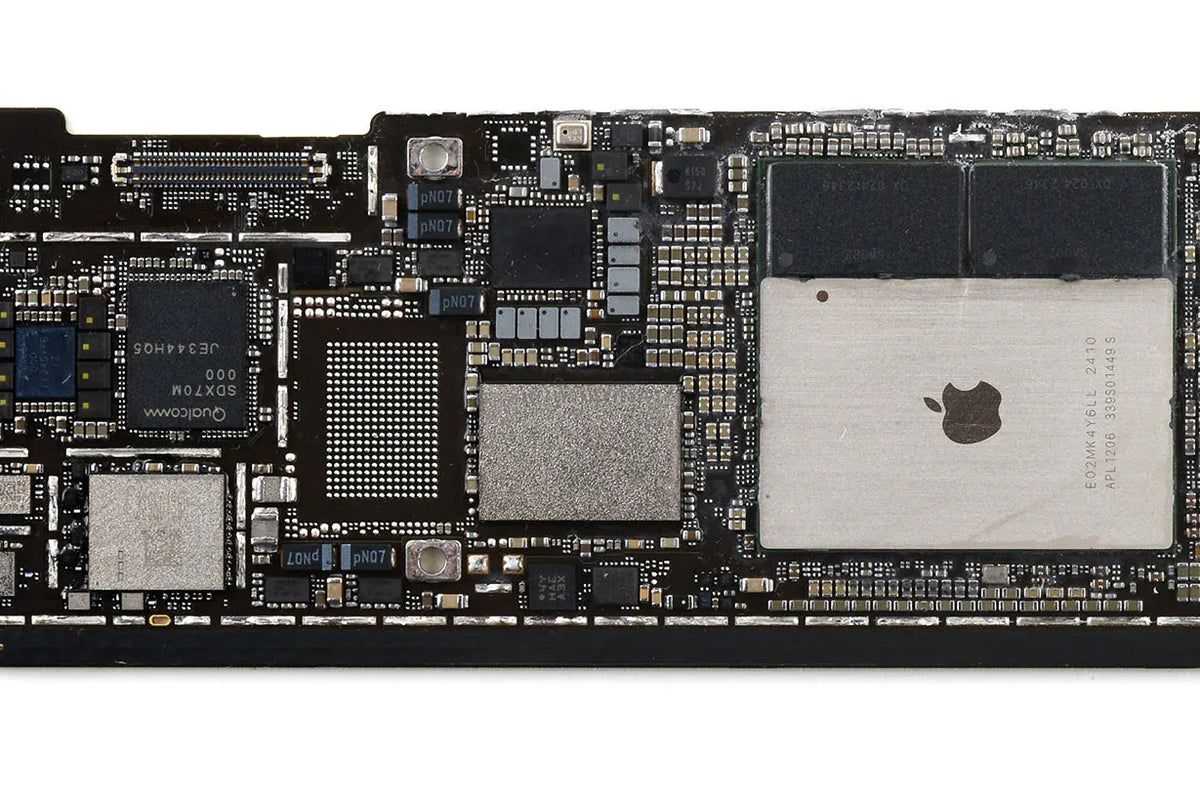
Your 8GB M4 iPad Pro may contain memory packages nominally totaling 12GB. Teardown chip markings sparked the finding in May 2024, but package capacity does not establish that all 12GB is functional and available to the system.
Apple specifies 8GB of RAM for the 256GB and 512GB models, and 16GB for the 1TB and 2TB versions. The intriguing question is why the examined lower-storage boards appear to carry two 6GB packages. Manufacturing economics and product segmentation are possible explanations; the chip markings alone cannot settle the reason or prove a software-only lock.
What RAM does the M4 iPad Pro actually offer?
If you bought a 256GB or 512GB M4 iPad Pro, the memory specification is 8GB. Apple lists 16GB for the 1TB and 2TB configurations, for both the 11-inch and 13-inch models.
That distinction comes directly from Apple's 11-inch M4 specifications and 13-inch M4 specifications. The teardown controversy concerns the packages inside those machines, rather than an advertised 12GB configuration.
Where did the hidden 12GB RAM claim come from?
In a May 18, 2024 MacRumors forum investigation, user layerstack compared RAM markings visible in teardown photographs. The reported code on lower-storage boards was Z8DMS, decoded as Micron MT62F768M64D4AS-026 XT:B, a nominal 48-gigabit package.
The chip-capacity calculation
48 gigabits ÷ 8 = 6 gigabytes
2 × 6GB = 12GB
This is a bits-versus-bytes conversion. It describes the nominal capacity associated with the identified packages, not a measurement showing 12GB usable in iPadOS.
Tom's Hardware covered the finding on May 20, 2024. The original investigation also identified two nominal 8GB packages on an examined 1TB board, consistent with its advertised 16GB. The lower-storage package identification is what made the story interesting.
Why use 12GB of packages in an 8GB iPad?
The tempting answer is that Apple wanted a bigger gap between its cheaper and more expensive iPads. That is a plausible interpretation of the product lineup, but it is not something a photograph of a memory package can prove.
Possible explanation: component economics
The original discussion proposed that available package densities and bandwidth requirements might make two 6GB parts a practical choice. It did not establish that suitable 4GB parts were unavailable to Apple or show that a custom order would cost more.
Possible explanation: keeping a clear upgrade tier
An 8GB-to-16GB jump looks larger than a 12GB-to-16GB jump. That could help distinguish the premium configurations. It remains a commercial inference, rather than evidence of Apple's internal decision.
There is another unresolved possibility: the nominal part identification may not describe the exact usable configuration supplied to Apple. A capacity label does not independently establish how every part of the installed memory is configured or qualified.
Does this prove Apple disabled 4GB of working RAM?
It supports a nominal capacity mismatch on the examined boards. Establishing that four additional gigabytes are fully functional would require more than reading package markings. Identifying how access is restricted would be a separate technical finding.
That matters because “software-locked,” “fused off” and “physically destroyed” describe different mechanisms. The cited investigation does not demonstrate which mechanism applies, or show a working method to unlock the additional capacity.
Why owners find it frustrating
If the full nominal capacity is healthy and could be exposed, leaving it unavailable would feel wasteful. The strongest criticism is that possibility: memory seemingly present in the device, yet outside the configuration the buyer can use.
What this means for 256GB and 512GB owners
Assess the tablet as an 8GB device. A seller describing a lower-storage M4 iPad Pro as “12GB RAM” based solely on this story is conflating nominal package capacity with the supported configuration.
256GB or 512GB
8GB RAM, 9-core CPU and 10-core GPU. Choosing 512GB adds storage; it does not move you to the 16GB memory tier.
1TB or 2TB
16GB RAM, 10-core CPU and 10-core GPU. Both tiers have 120GB/s memory bandwidth, so capacity and bandwidth should not be confused.
The useful buying question is whether your actual work needs the higher supported memory configuration. If you are considering a generation change, continue with our M5 vs M4 iPad Pro comparison. For the broader distinction between memory capacity and an M-series chip name, see our Mac mini M4 RAM guide.
FAQ
Should I open my iPad Pro to check the memory chips?
There is little practical benefit. iFixit's 13-inch M4 teardown explains that access starts through the glued display and risks breaking it. A chip marking would still not reveal whether additional memory is usable.
Does the same claim apply to every device with an M4 chip?
No. The observation concerns the examined iPad Pro boards. The M4 name alone does not identify the memory packages or supported RAM configuration in another product.
Related Reading
iPad Pro M5 vs M4: comparing generations
Is 16GB RAM enough for Mac mini M4?