Quick Answer
Yes—HomePod mini 2 can be the default speaker for a compatible Mac mini.
Apple requires a Mac with Wi-Fi 6E or later for the new Mac speaker feature.
M2/M2 Pro, M4/M4 Pro and current M6/M5 Pro Mac mini models meet that hardware condition.
Use one speaker or a matching stereo pair; an iPhone or iPad is required for initial HomePod setup.
M1 Mac mini does not meet the new feature's hardware requirement. Ordinary AirPlay is a separate option.
Can HomePod mini 2 Be the Default Speaker for Mac mini?
Yes. Apple explicitly announces default Mac speaker support, including audio for movies, games and video calls. The condition is the Mac's wireless hardware: Wi-Fi 6E or newer. Check that specification before ordering a speaker for your desktop.
ZEERA's assessment after reviewing Apple's announcement: this is a useful new buying reason for compatible Mac mini owners. However, selecting a speaker through an app's AirPlay menu does not establish that it is configured as the Mac's default. Source: Apple's October 13 announcement.
Which Mac mini Models Are Compatible?
The table checks the hardware requirement, rather than reporting a hands-on connection test. Software availability and setup still matter.
| Mac mini model | Meets new speaker requirement? |
|---|---|
| Mac mini M6 / M5 Pro | Yes. Wi-Fi 7. |
| Mac mini M4 / M4 Pro (2024) | Yes. Wi-Fi 6E. |
| Mac mini M2 / M2 Pro (2023) | Yes. Wi-Fi 6E. |
| Mac mini M1 (2020) | No. Wi-Fi 6, without the E. |
| Older Intel Mac mini | Outside Apple's supported Mac mini list for this feature. |
Sources: current Mac mini specifications, 2024 specifications, 2023 specifications and M1 specifications. Apple's Wi-Fi compatibility list starts Mac mini support at models introduced in 2023.
Check Apple menu > About This Mac to identify your model, then look up its official wireless specifications. “Apple silicon” alone is too broad a compatibility test.
What Other Macs Support HomePod mini 2 as Speakers?
Apple's hardware list also covers these desktop and laptop families. The introduction year refers to the model, not when you bought it.
- MacBook Pro: models introduced in 2023 or later.
- MacBook Air: models introduced in 2024 or later.
- iMac, Mac Studio and Mac Pro: models introduced in 2023 or later.
- MacBook Neo: included in Apple's Wi-Fi 6E-or-later device list.
This compatibility mapping combines Apple's supported Wi-Fi hardware list with the Mac speaker condition on the HomePod mini 2 product page. It is not a ZEERA test of every Mac listed.
What Do You Need Before Connecting HomePod mini 2?
- Identify the Mac. Confirm its model and wireless specification.
- Prepare an iPhone or iPad. Apple requires one running the latest iOS or iPadOS to set up HomePod. A Mac cannot perform the initial setup.
- Provide power and Wi-Fi. HomePod mini 2 includes a 20W power adapter. Keep the Mac and speaker on the same network for ordinary AirPlay.
- Complete HomePod setup. Plug it in, bring the unlocked iPhone or iPad nearby, and follow the setup prompts.
- Check software and audio routing. Install available stable updates and follow the Mac speaker setup instructions provided for your software version.
Apple's launch materials reviewed on October 13 do not specify a minimum macOS version or a complete menu path for the new default-speaker mode. We therefore do not present an unverified “macOS 27.2 required” claim or a guessed default-audio tutorial.
The Wi-Fi 6E condition describes the Mac's capabilities. Buying a newer router does not upgrade an M1 Mac's built-in wireless hardware. The reviewed Mac speaker footnote does not separately establish that you must buy a Wi-Fi 6E router.
Setup sources: HomePod mini 2 requirements and included adapter and Apple's HomePod setup guide.
Default Mac Audio vs AirPlay: What Is the Difference?
There are three different actions a reader may mean by “connect HomePod to Mac.” Choose the one that matches your goal.
Play music from an app: in Apple Music, click the AirPlay control and select the speaker. This selects playback destinations for that app.
Route current Mac audio: Apple's existing instructions use Control Center > Sound > AirPlay, then select the speaker. This is a documented AirPlay route.
Use the new default-speaker feature: follow the compatible Mac setup flow for HomePod mini 2. Apple's announcement confirms the capability; the older AirPlay instructions alone do not document its persistent default configuration.
For the first two routes, Apple specifies that the Mac and speakers should share a network. Apple Music can select multiple playback destinations, while Mac Control Center does not send AirPlay audio to multiple independent speakers. A configured stereo pair is a different arrangement. Source: Apple's Mac AirPlay instructions.
If you already own the original mini, see our HomePod mini 2 vs HomePod mini upgrade guide. Apple's new Mac speaker footnote covers mini 2 and HomePod second generation; it does not establish the same new mode for the original mini.
Should You Use One HomePod mini 2 or a Stereo Pair?
Start with one if you want a compact speaker for a smaller desk. Choose two if separate left and right channels matter to your music and movie listening.
One speaker: $149 at Apple's announced US price.
Two-speaker stereo pair: $298 before applicable taxes, calculated from two $149 units.
Pairing rule: use two HomePod mini 2 speakers. Apple's stereo requirement calls for matching model and generation, so an original mini plus mini 2 is not a supported stereo pair.
Place a pair on either side of the display with room around each speaker. Avoid hiding one behind the monitor or placing both together at one edge of the desk. Apple's setup guide recommends at least six inches of clear space around a HomePod.
Apple's four-speaker surround feature is specified for the fourth-generation Apple TV 4K with matching front and rear pairs. It does not establish a four-speaker Mac mini surround configuration. Sources: Apple's stereo-pair and surround footnotes and US pricing announcement.
Will HomePod mini 2 Work for Mac Calls, Gaming and Editing?
Apple promotes the new Mac connection for video calls and gaming, and describes improved responsiveness and reliability. Those are Apple's claims; ZEERA has not measured retail-unit latency.
For calls, distinguish the speaker from the microphone. Playing another person's voice through HomePod does not prove that its far-field Siri microphones are exposed as a Mac microphone input. The reviewed materials do not establish that input capability. Check the input selected in your calling app and use a webcam microphone, headset or USB microphone as needed.
For competitive games, recording and precision editing, test your actual workflow. Listen for timing differences during live instrument monitoring, rapid game effects and timeline scrubbing. Wireless convenience is appealing, but “more responsive” is not a measured zero-latency guarantee. Keep a wired monitoring option if timing is critical.
Sources: Apple's Mac audio description and HomePod microphone specifications. Workflow advice is ZEERA's assessment.
Is HomePod mini 2 Worth Buying for a Mac mini Desk?
Consider it if you have compatible hardware, want a compact wireless speaker, and will also use its music or smart-home functions. Choose the single-speaker option first if you are unsure how much you will use it.
Consider wired speakers or a headset if you mainly need live audio monitoring, a guaranteed physical connection, or a complete microphone-and-speaker solution. An older Mac owner who only wants music should check ordinary AirPlay before replacing the computer.
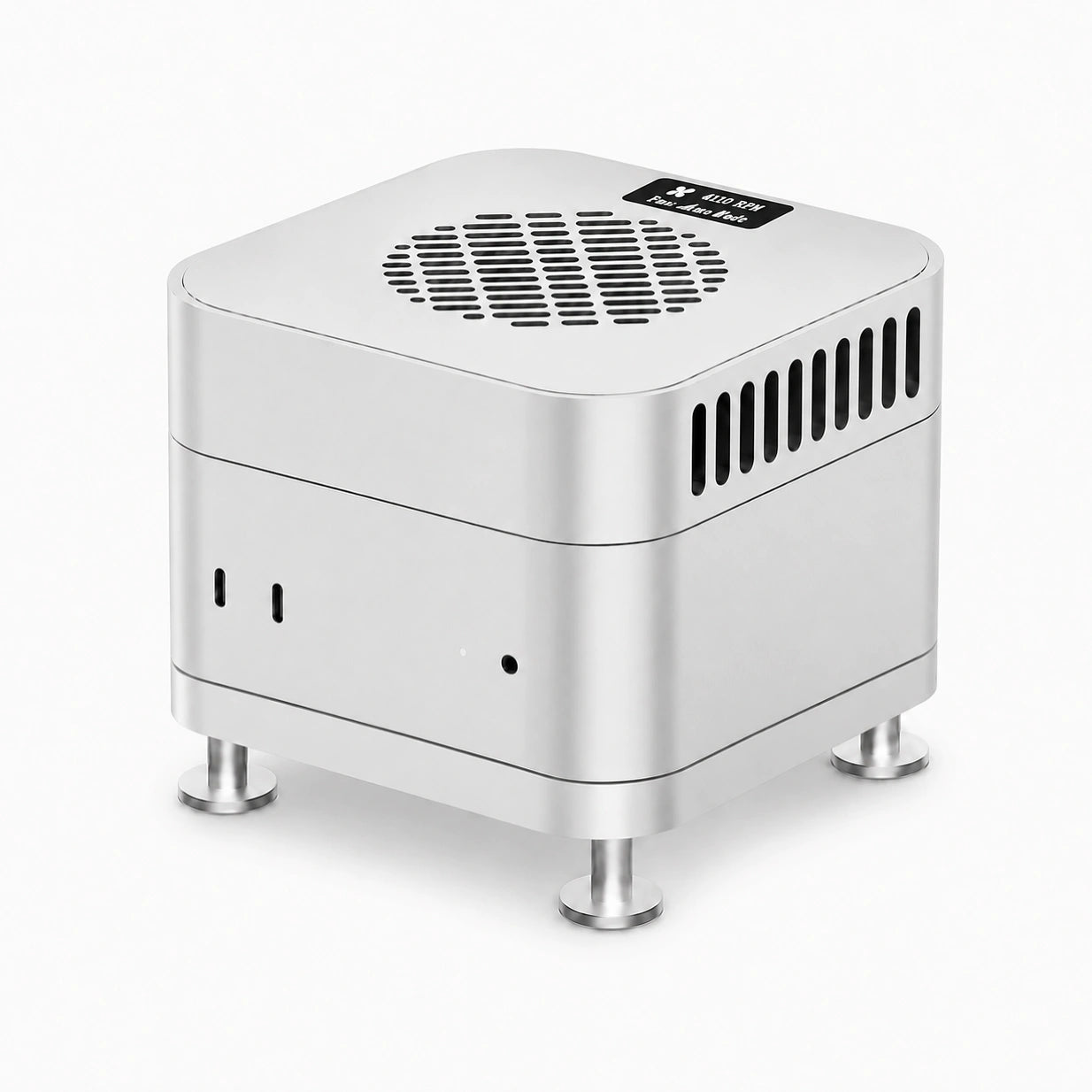
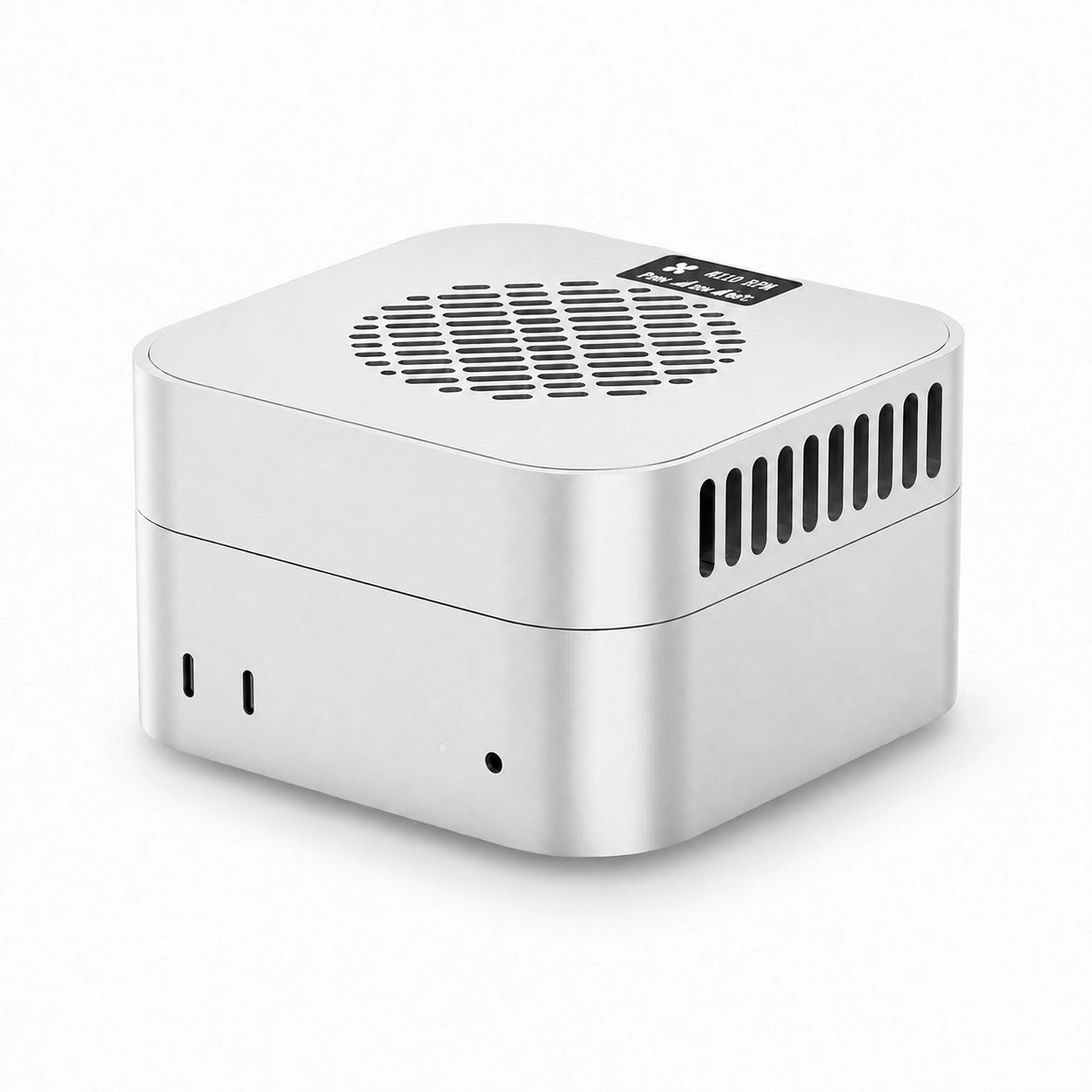
Plan the desk as a whole: speaker space, microphone placement, accessible ports and power routing. Our Mac mini M6 desk setup guide covers the wider workstation layout. For the enclosure or cooling choice, see the Mac mini stand, case and cooler comparison.
Official Sources
Checked October 13, 2026. This is a launch-day compatibility guide based on Apple's published information, with ZEERA's buying assessment clearly identified.
- Apple Newsroom: HomePod mini 2 announcement and Mac default-speaker support
- Apple HomePod mini 2: Mac audio, stereo and surround conditions
- HomePod mini 2 technical specifications
- Apple's Wi-Fi 6E and Wi-Fi 7 device list
- Apple's HomePod setup instructions
- Apple's instructions for streaming audio from Mac
Related Reading
- HomePod mini 2 vs HomePod mini: Official Upgrade Guide
- Mac mini M6 Desk Setup: Build a Mini Mac Pro
- Mac mini Aluminum Stand, Case and Cooler Comparison
- Mac mini M6 4K Scaling: 27-Inch and 32-Inch Settings
- MacFrost Pro: Mac mini Active Cooler and Aluminum Stand
- Mac mini M6, M5 Pro and M4 Accessory Guide
FAQ
Does HomePod mini 2 need Siri AI to play Mac audio?
Apple publishes the Mac speaker capability separately from Siri AI, which is coming in a later update. The Mac audio condition concerns compatible wireless hardware; the reviewed materials do not make Siri AI activation a prerequisite for audio playback.
Can I set up HomePod mini 2 with only a Mac mini?
No. Initial HomePod setup requires an iPhone or iPad. An Apple Intelligence-enabled device is an additional condition for enabling Siri AI later, rather than the basic setup requirement.
Can M1 Mac mini use HomePod mini 2 at all?
It falls outside the new Mac speaker hardware requirement. Apple's separate AirPlay instructions remain the route to check for streaming audio from an older Mac on the same network.
Why is HomePod mini 2 not showing in my Mac audio options?
First confirm HomePod setup is complete, the speaker is powered, and both devices share a network for AirPlay. Then check the Mac model, available software updates and the playback destination in the app you are using. A missing new default option is not proof that ordinary AirPlay is unavailable.
Should I replace my current desktop speakers immediately?
Keep them until you have checked HomePod with your usual calls, games and media apps. That lets you compare connection behavior and timing in your own workspace before committing to the change.