Quick Answer
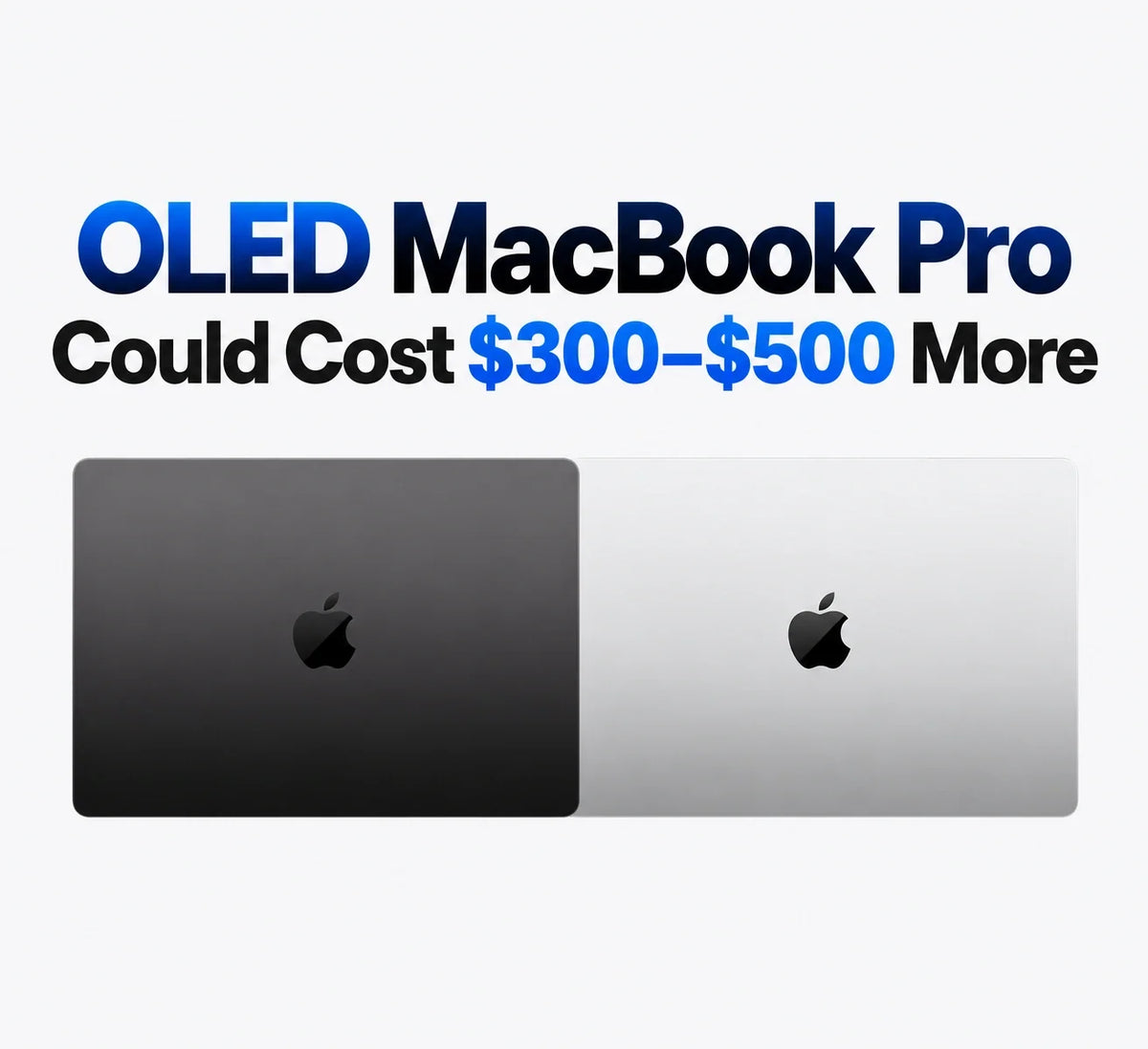
The 14-inch OLED MacBook Pro could start at $2,799–$2,999, according to Counterpoint analyst David Naranjo’s estimate.
That is $300–$500 above the $2,499 mini-LED M5 Pro comparison used in the report.
Mark Gurman’s latest Power On discussion adds an important distinction: the touchscreen model would initially sit above the existing Pro lineup.
As of October 23, 2026, this is a pricing forecast, not an announced Apple price.
How much could the OLED MacBook Pro cost?
In an October 22 Tom’s Guide interview, Counterpoint Research Associate Director David Naranjo put the expected 14-inch starting price at $2,799–$2,999, based on component-cost analysis. The implied premium is approximately 12%–20%.
The comparison is with the M5 Pro configuration, not the cheapest 14-inch MacBook Pro. That distinction matters when comparing headlines about the price increase.
What did Mark Gurman say in Power On?
Yes—the episode with Andru Edwards discusses the OLED MacBook Pro before moving into the iPhone Duo review. During a listener question about Apple’s laptop lineup, Gurman describes the touchscreen model as a more expensive addition above today’s MacBook Pros, with OLED and touch driving its premium positioning.
Three reported MacBook Pro tiers
- Entry 14-inch Pro: a model expected to move to the base M6 chip.
- Existing higher-performance Pro models: the M5 Pro and M5 Max machines.
- OLED touchscreen tier: a more expensive design with touch input, a Dynamic Island and a lighter body.
He also suggests the conventional and OLED touchscreen Pro lines could eventually converge, but sees that taking a few years. This is his longer-term expectation, rather than a published Apple roadmap.
Gurman uses “ultra tier” to describe the positioning and says Apple probably will not call it Ultra. The conversation does not establish that retail name, and it does not give the specific $300–$500 estimate.
Source: Power On with Mark Gurman, October 22 episode with Andru Edwards, during the MacBook lineup discussion near the start.
Why OLED, touch and memory costs matter
Naranjo identifies tandem OLED, touchscreen hardware and rising memory costs as the main pressures. He also argues that premium displays help manufacturers preserve margins when other components become more expensive.
The display upgrade and the cost pressure are separate
Counterpoint’s own notebook display research describes tandem OLED as improving brightness, power efficiency and panel life. Those are meaningful engineering benefits, although a finished laptop’s battery life also depends on its full design and workload.
Our reading: a better display can give buyers a reason to accept a higher price while also giving the manufacturer room to absorb more expensive components. It does not reveal how much profit Apple would make on each laptop.
A projected $500 retail premium is not a claim that the screen itself costs $500 more to manufacture. The final value comparison will depend on the memory, storage and chip included at each starting price.
A new premium tier changes the meaning of “price hike”
The two sources address different questions. Naranjo estimates a possible selling price; Gurman describes where the product would sit. Taken together, they suggest Apple could charge more for the new screen and design while continuing to offer conventional MacBook Pro models below it.
That is our interpretation of the combined reporting. A higher OLED entry price alone would not show that every existing Pro configuration had become more expensive.
Compare the configuration you would actually buy
If you work mainly on the built-in screen, evaluate the OLED image quality and touch controls in person. If you usually connect an external monitor, compare how much of your budget could instead go toward memory and storage. Our OLED MacBook Pro vs M6 MacBook Pro guide explains why the chip tier matters alongside the display.
Could Apple’s move make OLED laptops cheaper later?
Counterpoint forecasts OLED notebook panel shipments rising 50% in 2026, while mini-LED shipments fall 38%. Its research links the shift to expected MacBook Pro adoption, premium PC demand and improving OLED manufacturing economics.
Larger production volumes and more efficient factories could help lower panel costs over time. That supports the possibility of broader OLED adoption in Windows laptops; it does not guarantee a particular retail price or a date when savings will reach buyers.
For anyone considering a purchase now, the useful next step is to compare the announced configurations after the October 28 “Pro and Tell” event. A forecast tells you what budget to prepare; the launch details will show what that budget actually buys.
FAQ
Does the estimate also give a 16-inch OLED MacBook Pro price?
The quoted range applies to the 14-inch model. It should not be treated as a 16-inch forecast or used to assume that both sizes will receive the same dollar increase.
Would a touchscreen make it an Apple Pencil laptop?
Touch input alone does not establish stylus compatibility. If drawing is your reason to upgrade, wait for explicit support details; see our OLED MacBook Pro Apple Pencil support guide.
Related reading
- OLED MacBook Pro vs M6 MacBook Pro: Which Should You Buy?
- Apple’s October 28 “Pro and Tell” Event: What to Expect
- Will the OLED Touchscreen MacBook Pro Support Apple Pencil?
- October 2026 Macs: M6 MacBook Pro, iMac and OLED Rumors
- Cellular MacBook Pro: 5G, eSIM and Hotspot Questions
- OLED Screens Across Apple’s Lineup: iPad mini, iMac and MacBook Air