Quick Answer
If your Mac mini wakes to a login screen and says “Your computer was restarted because of a problem,” it likely experienced a kernel panic.
Back up your data, note the restart time, and check the matching report in Console.
Update macOS, then test sleep with only a display, keyboard and mouse connected.
Reconnect your dock, external SSD and other devices one at a time; use Safe Mode if it still restarts.
If it continues with no peripherals attached, run Apple Diagnostics and contact Apple with the reports.
A restart after sleep can look like a display failure: the monitor goes dark, and the next time you touch the keyboard, you see a login screen. The decisive clue is whether macOS actually started a new session. Apple says the “restarted because of a problem” message indicates an unexpected restart; software and attached devices are common causes. Apple's kernel-panic guidance recommends checking both before assuming the Mac itself is defective.
ZEERA's troubleshooting approach is to record one repeatable symptom and change one variable at a time. A restart that follows an overnight sleep is a different problem from a monitor that loses its signal while the Mac stays awake.
Was it a kernel panic or just a black screen?
Likely a real restart
You see the Apple logo or startup progress, your apps reopen, macOS asks for your password before Touch ID or Apple Watch unlock, and you receive the “restarted because of a problem” alert. One clue alone is imperfect; the alert and a report at the same time make a stronger case.
Likely a display wake issue
The screen says “No Signal,” but audio, network access or another monitor continues working. Reconnecting HDMI or DisplayPort restores the picture without a startup sequence. Follow our Mac mini monitor-not-waking guide instead.
A Mac that shuts off because of a power interruption may also start fresh. If no panic message or corresponding report appears, check the outlet, power strip and power cable before labeling the event a kernel panic.
Where do you find the Mac mini kernel panic report?
Open Applications → Utilities → Console. In the sidebar, inspect the reports near the time of the unexpected restart. Depending on macOS and the event, look for a report containing panic or Kernel near the restart time. A Sleep Wake Failure report may also be relevant, but its name alone does not establish that a kernel panic occurred. Apple's Console guide explains how to browse report categories and reveal the file in Finder.
Save these details before changing anything
Record the date and time, macOS version, connected devices, whether the Mac was entering sleep or waking, the report filename, and the first relevant lines. A process name or “panicString” can be a useful lead, but a single line does not prove that the named accessory or app is faulty. Do not post a full report publicly without checking it for personal information.
No report? The event may have been a display disconnect, a power loss or another shutdown type. Keep the exact on-screen message and timing; do not manufacture a diagnosis from a missing log.
Why can sleep or wake trigger a restart?
During sleep and wake, macOS coordinates storage, USB and Thunderbolt devices, network connections, input devices and displays. A failure that only occurs at that transition can involve software or a connected device even if normal daytime work is stable. The timing narrows the search; it does not identify the guilty component by itself.
External drive, hub or dock
A USB or Thunderbolt chain that drops power or fails to resume is worth isolating. If you also see “Disk Not Ejected Properly,” use our external SSD disconnection guide and back up the drive before changing its setup.
Software loaded at startup
VPN clients, security tools, device utilities and other background components can be involved. A restart that began immediately after an update or installation makes that change worth testing first.
Internal hardware or power
Consider this more seriously when restarts persist on a minimal setup, recur in Safe Mode or appear during ordinary use as well as after sleep. Apple Diagnostics can help identify some internal hardware problems.
How to stop a Mac mini restarting after sleep
Back up important files first, especially if the restarts are frequent. Then test the following steps in order, allowing enough sleep and wake cycles to reproduce your usual failure.
1. Install compatible updates
Go to System Settings → General → Software Update. Also check the vendor's update instructions for your dock, display, external drive enclosure and device utilities. Make a backup before a macOS update. Test sleep again after restarting.
2. Strip the setup down
Shut down. Disconnect external drives, hubs, docks, KVM switches, printers and nonessential USB devices. Leave a directly connected display, keyboard and mouse or trackpad, plus power. Use the Mac long enough for the usual sleep-related restart to occur. Apple recommends this peripheral isolation test.
3. Reconnect one device at a time
If the minimal setup is stable, add back a single device and repeat the sleep test. Put the external SSD directly on the Mac before testing it through a dock. A failure that returns only with a specific chain is a lead to investigate its cable, firmware, enclosure or power, not proof that the Mac mini's port is bad.
4. Try Safe Mode
On an Apple silicon Mac mini, shut down, then hold the power button until startup options appear. Select the startup volume, hold Shift, and click Continue in Safe Mode. If ordinary sleep tests are stable there, investigate recently installed login items, extensions and utilities after restarting normally. A short stable test is a clue, not a definitive fix. Apple's Safe Mode instructions also cover Intel models.
For an Intel Mac mini, Safe Mode uses Shift during startup. Do not begin an Apple silicon Mac mini diagnosis with an old Intel SMC reset recipe. Avoid clearing logs or erasing the Mac before you have saved the evidence.
When should you run Apple Diagnostics or contact Apple?
If restarts continue after updates, a minimal peripheral test and Safe Mode, shut down and disconnect external equipment except the display, keyboard, mouse, power and, if needed, Ethernet. On an Apple silicon Mac mini, hold the power button until startup options appear, release it when you see Options, then hold Command-D until the Mac restarts. Follow the prompts and save any reference code. Intel models use D at startup. See Apple's current Diagnostics instructions.
Evidence to share with support
Provide the Mac mini model, macOS version, approximate event times, whether it restarts with every peripheral disconnected, the relevant panic report and any Diagnostics code. A clean Diagnostics result does not rule out every intermittent software or hardware fault. Apple also lists reinstalling macOS as a later software step; back up first and follow its instructions without erasing the disk unless support specifically directs you to.
If the Mac cannot stay on long enough to back up, repeatedly panics on a bare setup, or shows a Diagnostics reference code, arrange service rather than repeatedly forcing shutdowns.
Will a Mac mini cooler or stand fix kernel panics?
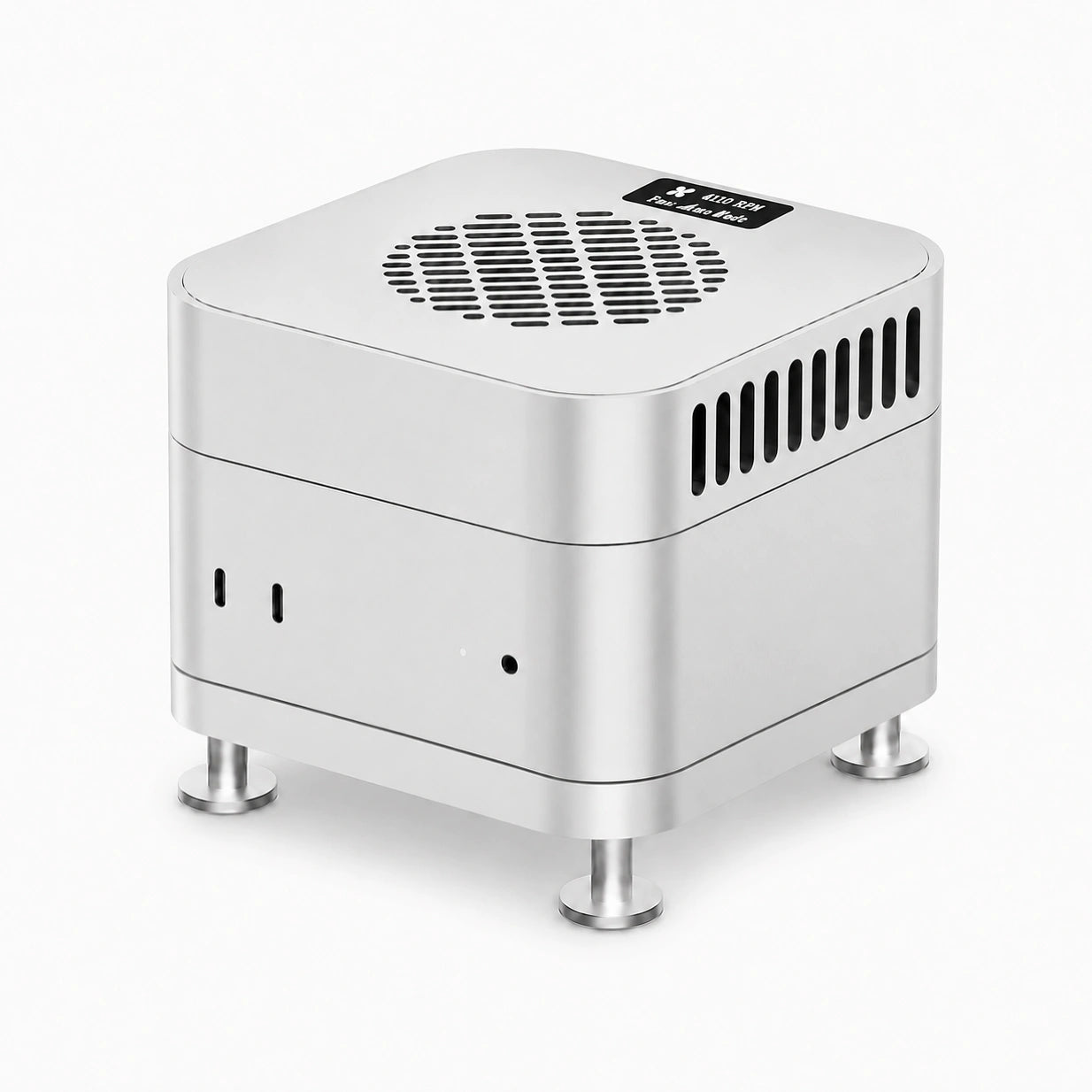
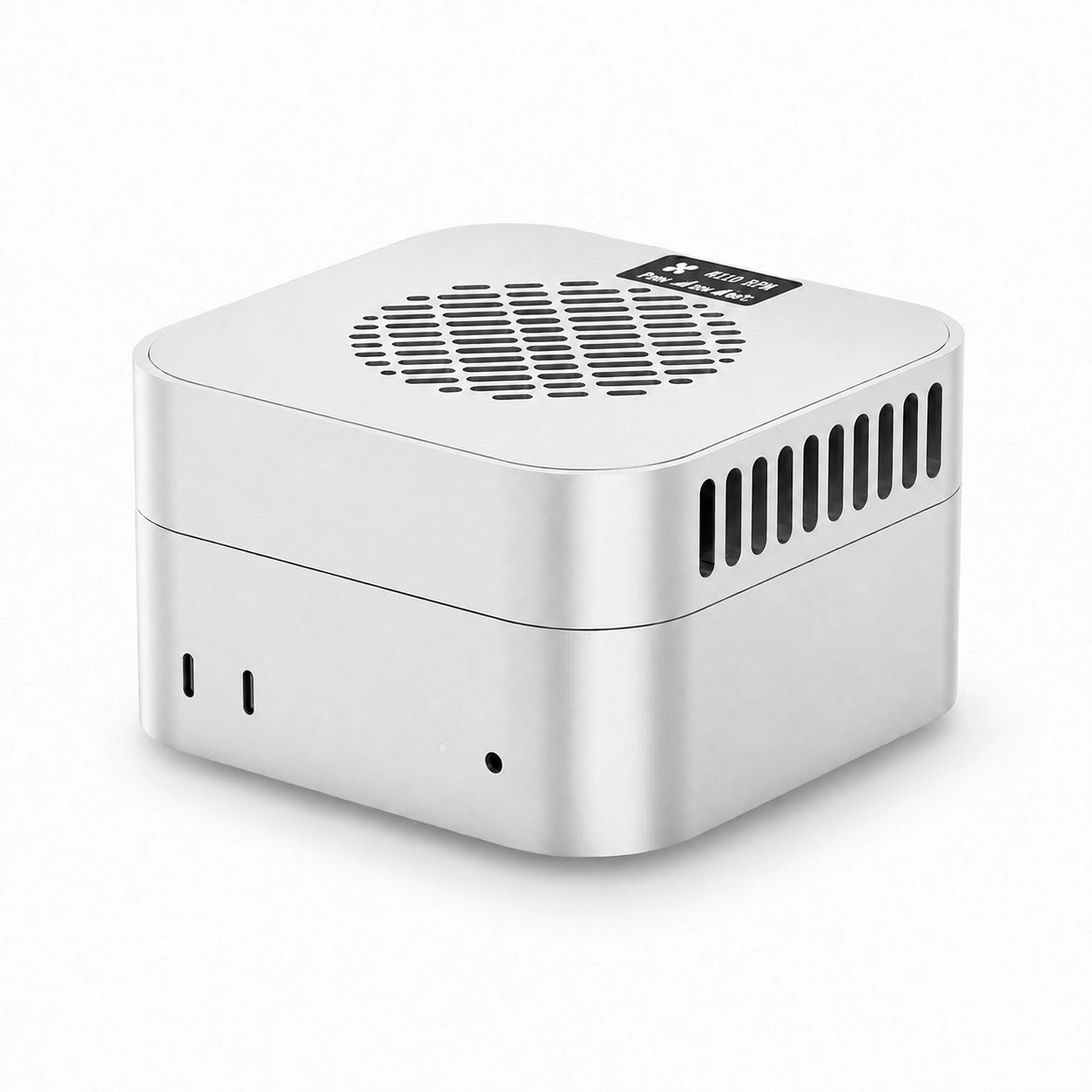
No accessory can repair a failing drive enclosure, software bug, power issue or internal fault. ZEERA's MacForge case and MacFrost cooler are options for desk organization, airflow and sustained-workload thermal management after the system is stable. A restart that happens specifically at sleep or wake needs the diagnostic steps above first. Do not treat an accessory purchase as a substitute for the report, isolation test or Apple service.
FAQ
Is one kernel panic after sleep a sign my Mac mini is defective?
No. Save the report, update software and watch whether it recurs. A repeated restart under the same conditions needs investigation.
Could an external SSD cause a Mac mini sleep panic?
It can be involved, directly or through a cable, enclosure or dock. Test the Mac without it, then reconnect the drive directly and compare. Back up the drive before changing its formatting or setup.
Does turning off sleep solve the problem?
Preventing system sleep may temporarily avoid the triggering transition, but it does not identify or repair the cause and uses more power. Keep your report and complete the isolation steps.
Why is my Mac mini black after sleep but there is no panic report?
The monitor or video path may have failed to wake while macOS kept running. Check for a genuine startup sequence, then test the display connection separately.
Related Mac mini guides
- Mac mini M6 monitor not waking after sleep
- Mac mini M6 external SSD keeps disconnecting
- Mac mini M6 HDMI black screen or flickering
- Mac mini M6 mouse or keyboard lagging
- Mac mini M6 external SSD not showing up
- Mac mini M6 4K monitor scaling guide
Technical references: Apple unexpected-restart guidance, Console reports, Safe Mode and Apple Diagnostics. This is a troubleshooting workflow, not a claim of ZEERA lab testing or a confirmed Mac mini model-wide defect.