Quick Answer
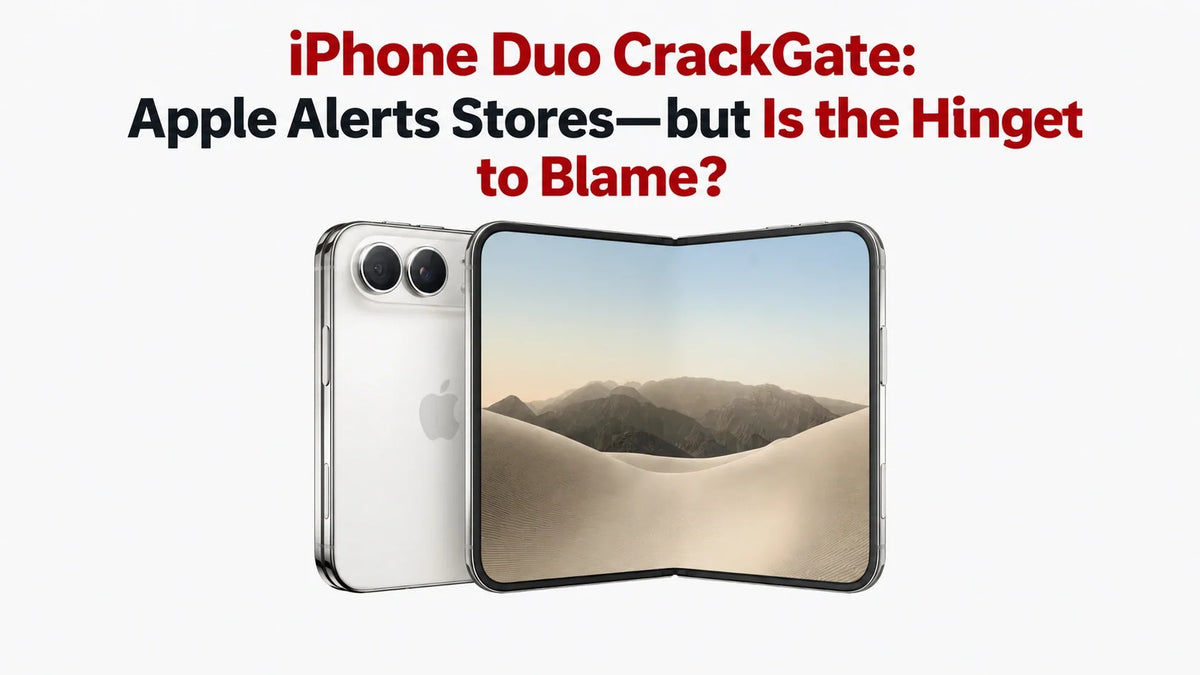
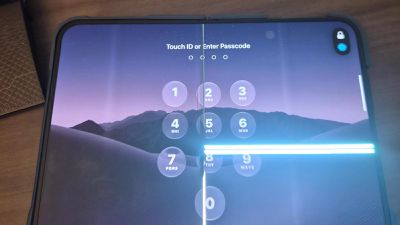
The iPhone Duo inner-display problem is real; “CrackGate” is the online label for it. Apple acknowledged affected units in a statement to MacRumors on October 26, 2026. On October 30, the publication reported an internal memo giving stores diagnostic and service guidance.
iFixit's teardown offers a possible hinge-related explanation. Separately, Jiemian News reported an anonymous Foxconn employee's allegations about relaxed quality checks and replacement production materials.
The missing answers are the measured failure rate, the confirmed root cause and which units are affected. Those gaps matter when judging claims that Apple knowingly shipped defective phones. Owners with abnormal hinge behavior or display damage should seek Apple support rather than repeatedly folding the device to test it.
What changed with Apple's store memo?
MacRumors reported on October 30 that Apple sent stores and authorized service providers guidance to inspect affected phones and arrange repairs or replacements through standard procedures. The report says there is no recall or dedicated public repair program as of that date.
The memo matters because it gives service teams a shared response. It does not provide a failure percentage or establish that every device has the same fault. Our earlier iPhone Duo screen-cracking guide covers the initial reports; this update focuses on the stronger evidence and the quality-control allegations that followed.
What has Apple actually acknowledged?
A real issue, without a published failure rate
In its October 26 statement to MacRumors, Apple described an inner-display issue affecting a small number of units and directed owners to AppleCare for replacement assistance. The accompanying report says affected devices tend to show the problem early.
“Small number” is not a denominator. Without the number of confirmed failures and devices in use, neither a viral collection of photos nor Apple's description gives buyers a numerical risk estimate.
A photo can document a symptom, but it cannot establish the history of that phone. The useful evidence is a documented failure during ordinary use, followed by an inspection and diagnosis. Reposts of the same device should not be counted as additional cases.
Could the hinge be cracking the screen?
iFixit's October 25 teardown compared reported damage with a hinge model informed by teardown footage, patents and CT scans. It identified a potential stress concentration near the transition between the crossing-cable gap and the central support.
The proposed failure mechanism
In one simulation, the center support bar does not drop far enough as the phone closes. The curved display then presses against it. That could explain why damage appears around a similar location on different phones.
This is a plausible explanation to investigate, rather than a diagnosis of every damaged Duo. iFixit also explains that a localized electrical fault can affect an entire row or column of pixels. A long bright line therefore does not necessarily map to a fracture of the same length.
The distinction changes how to read a headline claiming a hinge defect has been “found”: identifying a possible mechanism is a step toward understanding the failures, while proving its prevalence requires examination of affected devices.
Video reference: iPhone Duo CrackGate Issue.
Did Apple lower quality standards to keep supply moving?
The quality-control allegation in the linked X discussion has a traceable reporting source. In an October 26 Jiemian News article, an unnamed Foxconn employee alleged that some inspection standards had been relaxed to maintain supply. The same source said a batch of production materials had been replaced in response to the problems, while production and stocking plans continued.
The article also included a detail missing from many alarming summaries: dealers interviewed by Jiemian said they were not seeing frequent problem units. Those accounts are limited observations, rather than a population-wide reliability study.
The allegation still needs evidence
An anonymous employee's account does not establish which inspection limits changed, who approved the change or whether it allowed the specific failure mechanism to pass inspection. A production-material change could be important, but by itself it does not identify a defective batch or prove the cause.
To establish that Apple knowingly accepted a higher consumer failure rate, we would need evidence connecting the decision, the relevant acceptance criteria and the failures. The sequence of supply pressure followed by screen complaints raises questions; it does not supply that connection.
A 60% production yield is not a 40% consumer failure rate
Even if the circulated figure of roughly 60% factory yield is accurate, it describes a production-stage result. Units that fail inspection can be reworked or rejected before shipment. The percentage of products passing a manufacturing step and the percentage of shipped phones failing in customers' hands measure different things.
For example, 60 units passing an inspection out of 100 assembled does not mean that 40 of the 60 shipped units will fail. It also tells us little about lifetime reliability without knowing the test criteria and subsequent inspection stages.
What should you do if your Duo shows symptoms?
- Stop forcing an abnormal hinge. If it becomes unusually stiff, makes a new cracking sound or is followed by display damage, avoid cycling it repeatedly to reproduce the symptom.
- Record what happened. Photograph the visible condition and note when the behavior started, including any drop or impact history.
- Contact Apple Support. Request an inspection and a written explanation of the proposed service outcome.
- Ask about timing before leaving the phone. Confirm replacement availability, the expected wait and how your data will be handled. Back up accessible data before a service handover when possible.
If a replacement is unavailable, our guide to what to ask AppleCare when Duo replacements are out of stock helps structure that conversation.
ZEERA's view: buyers need a clearer explanation
We would like Apple to explain the affected hardware, whether revised parts are involved and how replacement devices are being checked. A clear service path matters, but buyers also need to understand what changes after a replacement.
A case or external hinge cover cannot correct an internal manufacturing defect. Choose accessories for their actual functions, such as grip, surface coverage or a stand. Treat abnormal hinge movement as a service question.
For a working phone, the buying decision depends on how much value you get from the folding display and how comfortable you are with the remaining uncertainty. If that uncertainty outweighs its daily benefits, our keep-or-return comparison with iPhone 18 Pro Max can help you evaluate the alternative.
FAQ
Can a serial number tell me whether my Duo is affected?
The reports cited here do not identify an authoritative affected serial-number range. A claim that a particular prefix guarantees a safe or faulty unit needs supporting service documentation.
Should I repeatedly open and close a new Duo to check it?
There is no established home folding test that certifies a unit is free of this problem. Ordinary use and prompt attention to abnormal behavior are more useful than trying to reproduce a dramatic online failure.
Can a software update repair an already damaged display?
Software cannot repair a physical fracture or broken electrical connections. Persistent lines, dark patches or visible damage need hardware assessment.
Related Reading
- iPhone Duo Screens Cracking at the Hinge? The Initial Reports
- iPhone Duo Replacement Out of Stock? What to Ask AppleCare
- Should You Keep iPhone Duo or Switch to iPhone 18 Pro Max?
- 7 Types of iPhone Duo Cases Explained
- Aramid Fiber iPhone Duo Cases and External Hinge Coverage
- Best iPhone Duo Cases: Compare ZEERA's Top Picks
By ZEERA WIRELESS · Updated October 31, 2026. Reporting: MacRumors store-memo report, Apple's statement via MacRumors, iFixit teardown and Jiemian News. Apple's current service-program information: Apple Service Programs.