Quick Answer
The iPhone Duo drop test delivers a pleasant surprise: its inner display survives both an unfolded corner drop and an unfolded screen-first drop.
Its titanium corner also shows less visible damage than the iPhone 18 Pro Max’s aluminum frame.
The rear glass and outer-screen glass still crack during the standard rounds.
Repeated hinge-first drops from just under 1.5 meters eventually disable the inner display, while the outer display keeps working.
Verdict: tougher than expected when open, with direct hinge impacts emerging as the biggest concern in this test.
Why This iPhone Duo Drop Test Is a Pleasant Surprise
A folding phone has more places for a fall to go wrong: two displays, a moving hinge and a wide panel when opened. The encouraging result here is that the unfolded Duo keeps working after two drops that look especially uncomfortable for a foldable.
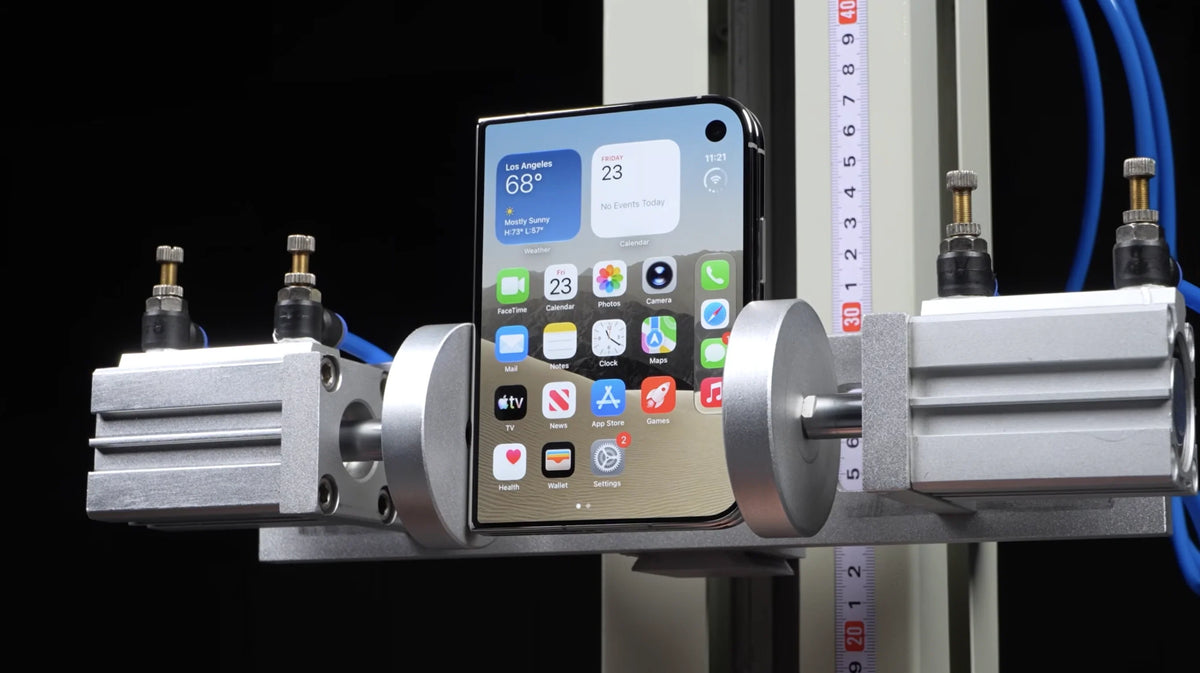
The original iPhone Duo Drop Test! video starts with an iPhone 18 Pro Max comparison, then moves to unfolded drops and repeated hinge impacts. The results below follow that order.
iPhone Duo vs iPhone 18 Pro Max: The Three Standard Drops
1. Back drop from 1 meter: both rear glass panels crack
Neither phone escapes the first back-first drop without broken glass. Cracks spread across a larger area on the Duo’s glass back. On the iPhone 18 Pro Max, the damage stays within its smaller glass section, while the surrounding aluminum picks up scuffs.
2. Corner drop: the Duo’s titanium looks better
Both phones remain fully functional after the corner drop. The Pro Max shows scuffed aluminum, missing finish and a dent in its frame. The Duo’s titanium corner also takes damage, but the reviewer says it is much less noticeable under ordinary lighting.
3. Face drop from 1 meter: the Pro Max wins this round
The Duo’s outer-screen glass cracks, while the iPhone 18 Pro Max’s front glass remains intact. That is an important limit to the positive result: the foldable’s exterior glass still proves vulnerable in this comparison.
The reviewer suggests weight, impact distribution and frame rigidity as possible explanations for the different front-glass outcomes. With one unit of each phone, the test cannot isolate which factor made the difference.
The Unfolded Inner Screen Survives Both Drops
Unfolded corner drop: no reported functional damage
The Duo stays open on impact instead of folding shut. Its inner display does not crack, the struck titanium corner holds up well, and the reviewer reports no affected functions in the 15-point inspection performed after each drop.
Unfolded screen-first drop: no visible cracking or shattering
This is the standout moment. After landing face-first with the large inner display open, the Duo shows no visible cracks or shattered surface. The reviewer describes it as looking almost untouched by that particular drop.
The presenter points to the slightly raised lip around the inner display, which can keep the display surface away from a flat landing surface, and the pre-applied nano-textured protector as possible contributors. The test does not measure how much protection each provides.
Landing on a stone, a sharp edge or an uneven surface could concentrate force directly on the panel. The result is reassuring for the landing shown, without establishing that the inner display is stronger than the outer glass in every situation.
Four Hinge-First Drops Reveal the Main Weak Spot
The final sequence repeatedly drops the closed Duo directly onto its hinge from just under 1.5 meters, or roughly 4.9 feet. The same phone has already been through the earlier rounds, so these impacts add to its accumulated damage.
Hinge drop 1: harder to open, no longer perfectly flat
The exterior initially looks fine, but unfolding requires noticeably more resistance near the end of the movement. The phone no longer opens perfectly flat. Its functions still appear to work, including the hinge-angle animation, indicating mechanical trouble before a major display failure becomes visible.
Hinge drop 2: a large streak beside the fold
A prominent streak appears alongside the folding area. The display still produces an image, but the reviewer reports intermittent ghost touches and brief periods of unresponsiveness. Folding and unfolding temporarily restores response. The inner screen never strikes the surface directly; the damage follows the hinge impact.
Hinge drop 3: little additional visible change
The reviewer sees no major new change after the third direct hinge impact and continues the test.
Hinge drop 4: the inner display becomes unusable
The left side of the inner panel fails completely. The right side still displays an image but no longer responds to touch. The outer display continues working normally, leaving the phone usable in its closed form when the test ends.
The first warning is therefore a change in hinge movement, followed by image and touch problems. A screen can suffer serious damage through an impact elsewhere in the assembly, even when the display itself never touches the ground.
What This Means When Choosing an iPhone Duo Case
The Duo’s performance while unfolded is better than the fragile-tablet scenario many buyers might imagine. But the broken rear and outer glass, followed by the hinge damage, give a clear reason to consider coverage across the back, corners, outer-screen edge and hinge.
When comparing cases, check the actual coverage and fit rather than choosing by material name alone. Our iPhone Duo case buying guide explains the trade-offs between slim designs, grips, stands and hinge coverage. This video does not test a case, so it cannot establish how any particular accessory would change the outcome.
FAQ
Does this test show how the hinge will age after years of use?
It measures impact damage, not long-term folding wear. For the separate question of crease development and hinge feel, see the iPhone Duo 500 vs 10,000 folds comparison.
Should a working outer screen reassure you after a hinge impact?
The final round shows why it is worth checking both screens and the opening movement. The outer screen can remain usable while the inner panel has failed. New resistance, an opening gap, a display streak or unreliable touch deserves attention even if the closed phone still works.
Watch the Original iPhone Duo Drop Test
Related Reading
- Using iPhone Duo Without a Case: AppleCare or a Slim Case?
- iPhone Duo Soft Crease: Screen Wrinkles Explained
- iPhone Duo Reverse Bending Test: Hinge and Screen Flicker
- iPhone Duo Folio Teardown: Hidden Slider and Protection Limits
- iPhone Duo Case Materials: Aramid Fiber, PC and Vegan Leather
- Do All iPhone Duo Cases Need Adhesive?