Quick Answer
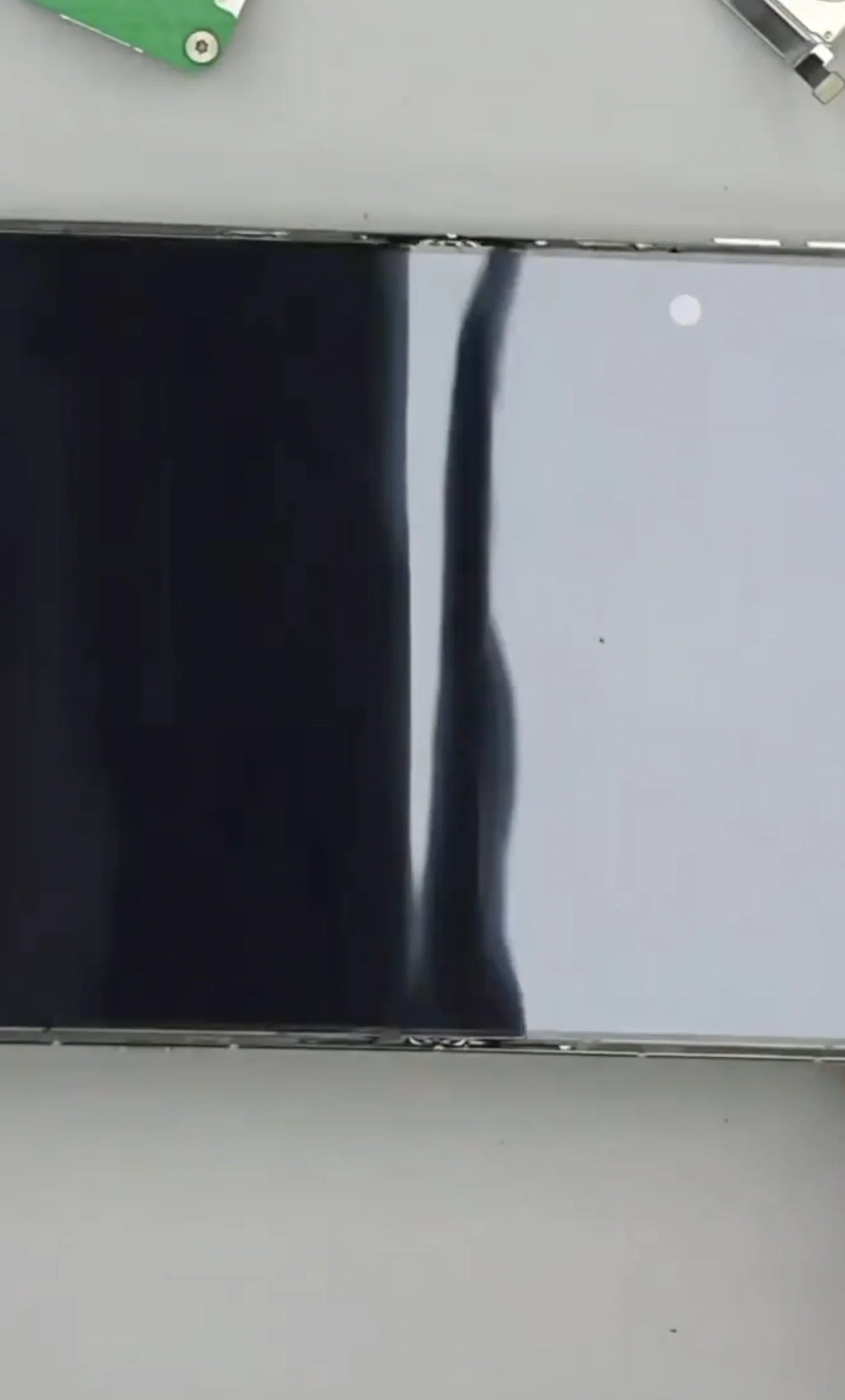
A video shared by Ice Universe shows the iPhone Duo's matte nano-texture cover layer being removed, revealing much stronger reflections and visible surface ripples.
The footage highlights an important part of its low-crease appearance: the factory surface softens the reflections that expose the fold.
ZEERA discussed this optical effect in September, before the new peel-off footage appeared.
The exposed screen looks closer to familiar glossy Xiaomi Fold and Samsung Galaxy Z Fold 8 displays, but the clip does not establish equal crease depth.
What Does the iPhone Duo Nano-Texture Removal Reveal?
The surprising part is how different the display looks once the matte layer is lifted away. In the images below, the removed sheet scatters light, while the exposed screen reflects its surroundings much more sharply. The central reflection bends along an uneven contour.
Ice Universe describes bumps, ripples and wrinkles beneath the film. Peeling can also disturb the display stack, so the footage cannot establish how much of that unevenness existed before removal.
Watch the iPhone Duo Matte Film Peel-Off Video
Video source: Ice Universe (@UniverseIce) on X. The post shares the removal footage; it does not establish who performed the world's first removal.


Is Matte Nano-Texture the Secret to the Less Visible Crease?
It is a major part of the visual effect. A glossy folding screen can look smooth until a window or ceiling light reflects across its center. Even a shallow change in surface angle can bend that reflection and draw attention to the fold.
Why the factory surface matters
The matte texture spreads reflected light across a wider area. Softer reflections make the same surface contour less conspicuous, especially when you move the phone under room lighting.
That is why crease visibility and physical crease depth need separate judgments. A screen can look flatter without every underlying ripple disappearing.
Apple's display description identifies a custom polymer nano-textured cover layer, a center-supporting hinge and adhesives that let layers move during folding. The surface treatment works alongside that structure; removing the cover changes more than its gloss.
ZEERA Explained the Nano-Texture Effect Back in September
Our September 11 article, why the iPhone Duo crease looks less visible, identified the matte finish as a key reason the folding line attracts less attention. The September 15 follow-up, the crease is still there, just harder to see, made the distinction explicit.
The new footage gives readers a striking illustration of that explanation: the finished surface is part of what makes the display look so even. Judging only the hinge misses an important part of the result.
Does It Look Like Xiaomi Fold or Galaxy Z Fold 8 Without the Film?
Visually, the stripped screen brings back the reflective fold and surrounding waviness familiar from glossy Xiaomi Fold and Samsung Galaxy Z Fold 8 displays. This is the sense in which the peeled Duo looks more like its rivals.
The useful comparison: sharper reflections make surface variations easier to notice. Equal crease depth would require intact phones tested under matching lighting, viewing angles and measurement conditions.
Why Other Foldable Brands Are Exploring Similar Surfaces
ZEERA's earlier supply-chain reporting described Android manufacturers investigating matte, nano-texture-like treatments for future folding screens. Our 2027 foldable outlook also highlighted reflection control as a likely area of competition.
The direction is similar: make the remaining fold less distracting. That reporting concerns development work, rather than confirmation that every manufacturer has shipped the same solution. Suppliers can pursue different materials and surface treatments while targeting the same optical benefit.
Should You Remove the iPhone Duo's Factory Cover Layer?
No. Leave removal and replacement to Apple or an authorized service provider. This factory layer belongs to the folding display assembly. A worn surface is a service issue, and peeling it off to get a glossy finish risks damage beneath it.
FAQ
Will removing the matte layer increase screen resolution?
No. Removing a surface layer does not add pixels. A change in glare or perceived sharpness is different from a change in the OLED panel's resolution.
Can an ordinary matte screen protector produce the same result?
A matte protector may soften reflections, but that alone does not establish the same clarity, surface behavior or folding compatibility as the Duo's factory cover. Do not treat it as an interchangeable replacement.
Related Reading
- Why the iPhone Duo Crease Looks Less Visible
- iPhone Duo's Crease Is Still There, Just Harder to See
- iPhone Duo vs Galaxy Z Fold 8: Crease Comparison
- Why the iPhone Duo Screen Can Wrinkle When Pressed
- Should You Add an iPhone Duo Inner-Screen Protector?
- The iPhone Duo Effect on 2027 Foldable Phones
By Guichang Chen · ZEERA WIRELESS · October 22, 2026