Quick Answer
A Mac mini that feels warm or hot during gaming, video exports, 3D rendering, code builds or local AI work is not automatically overheating. Its aluminum enclosure can spread internal heat to the surface, while the fan increases airflow when the workload becomes demanding.
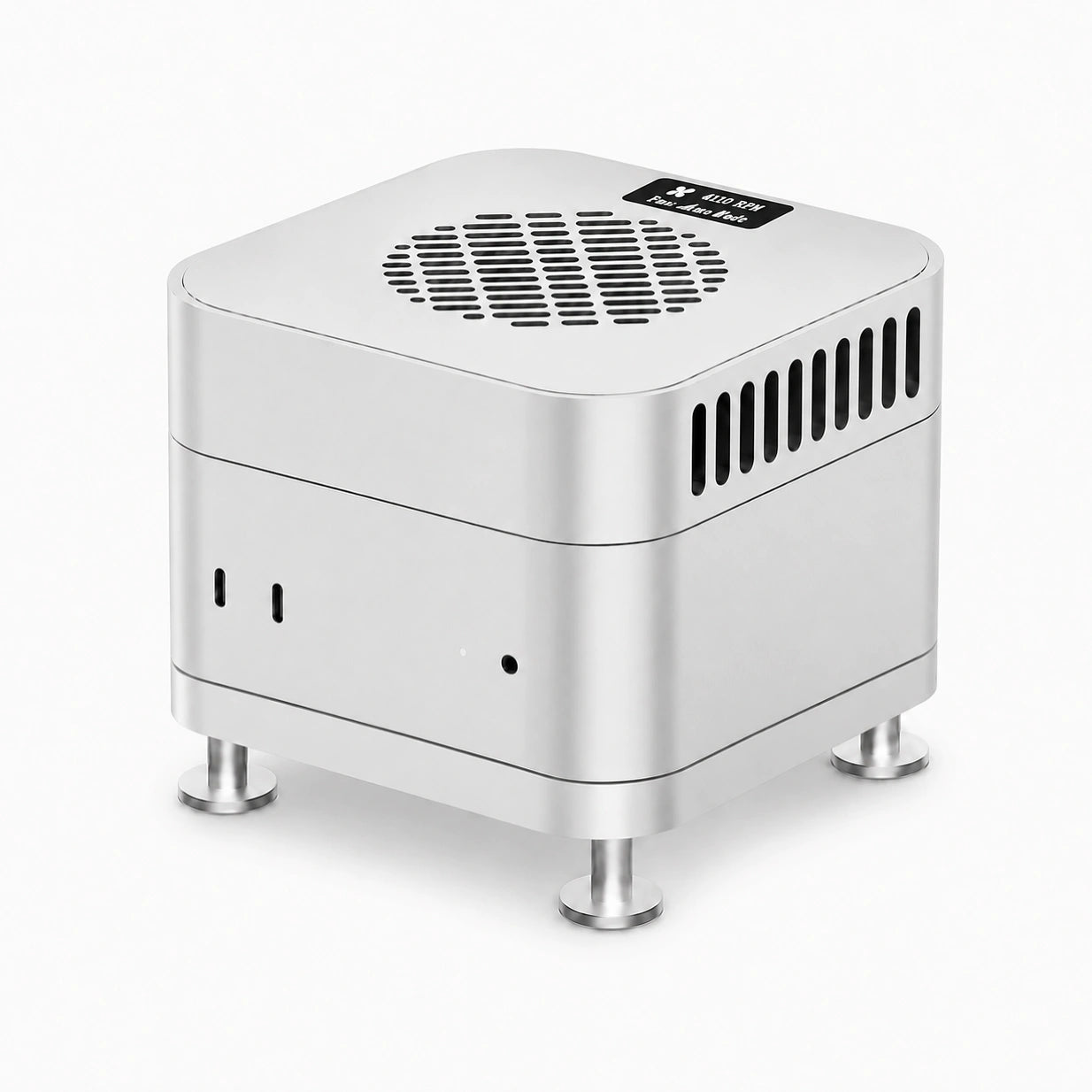
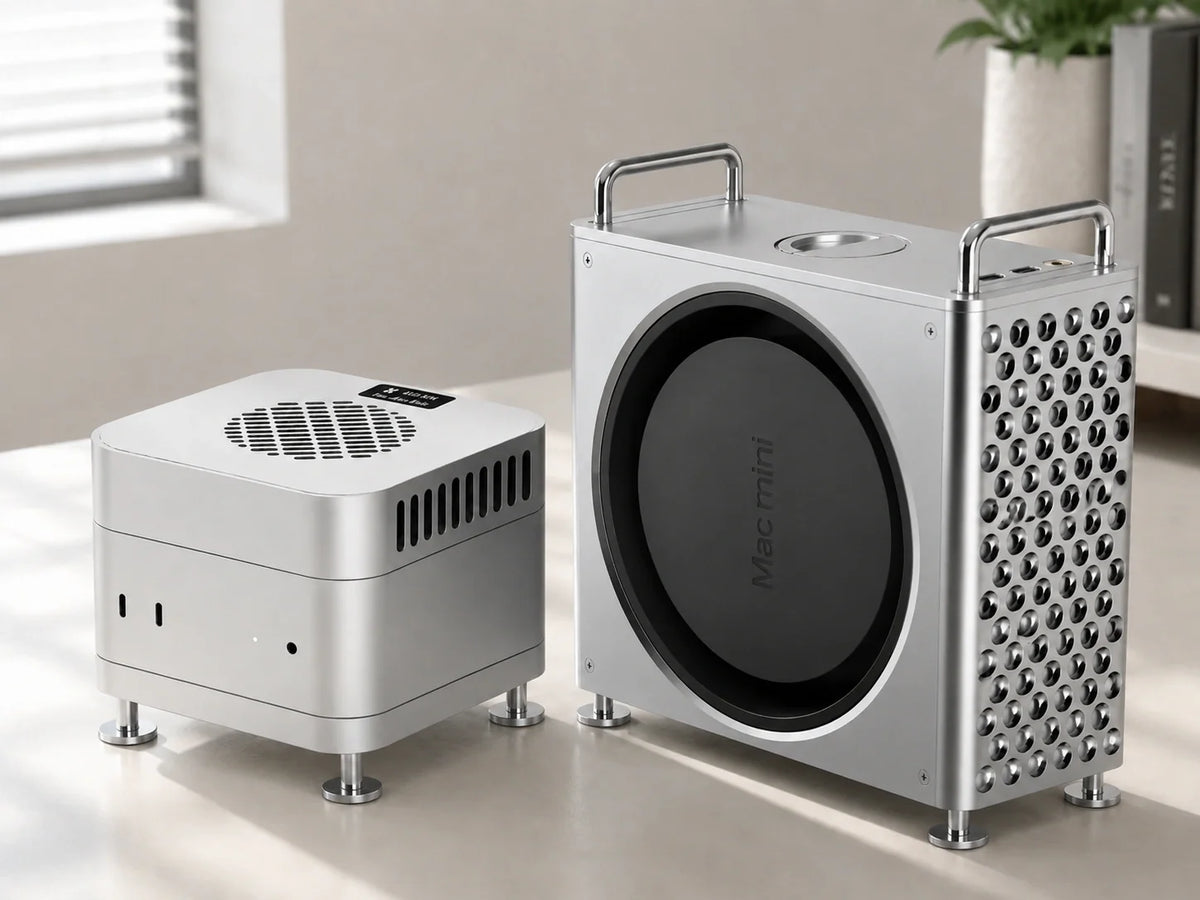
Start worrying when it stays unusually hot at idle, remains loud after the task ends, repeatedly slows down, crashes or shuts down. First check Activity Monitor, clear the bottom vents and move it to a hard, open surface. For repeated long workloads that need more thermal headroom, the ZEERA MacFrost Pro adds direct-contact thermoelectric cooling without blowing air into the Mac mini’s bottom intake.
“Why does my Mac mini get so hot?” sounds like one question, but users are often describing very different situations. One Mac is warm because it is exporting video. Another is hot at idle because Photos is analyzing a library. A third never entered full sleep.
The useful distinction is not simply warm versus hot. It is normal heat under a known workload versus heat accompanied by abnormal behavior.
This guide brings together 17 common Mac mini heat questions and answers them in a practical order. It applies broadly to Apple silicon Mac mini models, while cooling performance will still vary by chip, room temperature, workload and setup.
1. Is It Normal for a Mac mini to Get Hot?
Yes. A Mac mini can feel warm and sometimes hot to the touch without having an overheating fault.
The CPU, GPU, media engines, memory and storage all create heat while working. The compact enclosure has to move that heat away from internal components, and some of it reaches the aluminum exterior.
That is why the top or sides may feel hotter during a long Final Cut Pro export, a graphics-heavy game, a Blender render or local AI generation. Aluminum conducts heat efficiently, so a warm case can be evidence that heat is spreading through the chassis—not proof that the chip is at an unsafe temperature.
| What you notice | What it usually means | What to do |
|---|---|---|
| Warm case during office work | Often normal, especially with several apps, displays or browser tabs active | Keep the vents clear and watch for unusual behavior |
| Hot case and faster fan during a long export or game | Usually the cooling system responding to sustained load | Confirm airflow and check whether performance stays stable |
| Hot at idle with high CPU activity | Likely indexing, synchronization, a background app or a stalled process | Use Activity Monitor to find the workload |
| Persistent heat with crashes, severe slowdown or shutdowns | Possible software, ventilation or hardware problem | Stop the task, restart, update and run diagnostics if it continues |
2. How Hot Is Too Hot for a Mac mini, and When Should You Worry?
There is no single universal surface-temperature or CPU-temperature number that diagnoses every Mac mini. Different utilities may read different sensors, and the internal chip temperature is not the same as the temperature of the case you touch.
Apple lists a Mac mini ambient operating range of 10° to 35°C (50° to 95°F). That figure describes the surrounding room, not the maximum temperature of the CPU, GPU or enclosure.
Behavior is a better warning system than one isolated sensor reading. Investigate if:
- The Mac remains very hot when Activity Monitor shows little work.
- The fan stays unusually loud long after a demanding task ends.
- The same export, render or build repeatedly becomes slower as it continues.
- Apps crash, graphics become unstable or the Mac shuts down unexpectedly.
- The problem continues after a restart in a cool, well-ventilated setup.
A Mac mini is not necessarily defective because its metal case feels hot. Persistent abnormal behavior is what turns surface warmth into a troubleshooting issue.
3. Why Is My Mac mini Suddenly Hot at Idle or During Light Use?
“Idle” only describes what you are doing. macOS may still be working in the background.
Spotlight indexing, iCloud synchronization, Photos analysis, Time Machine, app updates, browser helpers and cloud-storage tools can all create CPU, storage or network activity while the desktop looks quiet.
This is especially common on a new Mac mini or after migration, a major macOS update or a large photo import. Apple specifically identifies Spotlight indexing after data migration as a task that can make the fans run faster.
Check the real workload
- Open Applications > Utilities > Activity Monitor.
- Select the CPU tab.
- Click % CPU to sort from highest to lowest.
- Watch the list for several minutes; ignore one brief spike.
- Check the Energy tab if you want a wider view of app activity over time.
If a known third-party app remains at the top, save your work and quit or update it. Do not force-quit unfamiliar macOS processes merely because their names look strange.
If kernel_task is high, Apple explains that it can be part of temperature management: it makes the CPU less available to processes using it intensely. It responds to thermal conditions; it is not necessarily the original cause.
4. Why Does a Mac mini Get Very Hot While Gaming or During Long Workloads?
Games can load the CPU and GPU at the same time. Higher resolution, frame rate, visual settings and long play sessions increase both power use and heat output.
A hot M-series or Pro-chip Mac mini during gaming is therefore not unusual. Faster fan noise is also expected when the system needs more airflow.
As a quick test, lower the resolution or graphics preset. If case temperature, fan noise and stutter all improve, the workload is the likely cause.
Long video exports, 3D rendering, large code builds and local AI workloads create a similar pattern. A short benchmark may finish before much heat accumulates. A 30- to 60-minute task gives heat time to build through the entire cooling system and enclosure.
This is why sustained performance matters more than a single short benchmark score. Compare the first and final third of the same long task.
5. Does a Mac mini Thermal Throttle, and Is a Faster or Louder Fan Normal?
Mac computers monitor internal temperature and adjust cooling behavior. The fan normally speeds up first to move more air through the system.
Apple says faster fan operation during HD video compression, graphics-heavy gaming or Spotlight indexing is a normal part of cooling. Apple does not publish one universal “normal fan speed” for every Mac mini model and workload.
If more thermal control is needed, macOS can reduce the processing resources available to intensive work. Apple’s explanation of kernel_task shows one way the system helps manage CPU temperature.
In everyday language, this can appear as thermal throttling: a workload that began quickly may slow after the machine has been hot for some time. A brief performance adjustment is protective behavior. Repeated severe slowdown in a properly ventilated setup deserves investigation.
6. Does the Mac mini Have Good Cooling, and How Does It Work?
For its size, the Mac mini has an effective built-in cooling system. It uses temperature sensors, a heatsink or thermal assembly, a blower fan and carefully separated airflow paths.
On the compact M4-style design, the ventilation is concentrated around the lower assembly. Teardown imagery shows separate intake and exhaust areas rather than one interchangeable opening: cooler room air enters below, passes through the internal thermal path and leaves as warmer exhaust.
This design handles normal office, browsing, streaming and creative work without requiring an external cooler. Its limitation is the same one faced by any compact desktop: a small enclosure has less room to absorb and release heat during hours of continuous CPU and GPU load.
7. Can Poor Airflow, Placement or Dust Make a Mac mini Run Hotter?
Yes. Placement can raise temperature even when the software is behaving normally.
Use the Mac mini on a clean, hard and stable surface. Keep paper, fabric, thick cables and solid accessory plates away from the lower ventilation area. Avoid enclosed cabinets where warm exhaust air has nowhere to disperse.
Room temperature matters too. Direct sunlight, another hot computer or a shelf above a radiator reduces the temperature difference available to the cooling system.
Dust can gradually reduce airflow, especially on an older Mac mini or in a room with smoke, cooking particles or an ultrasonic humidifier using unfiltered tap water. Apple specifically warns against operating the Mac mini in environments with significant airborne dust or smoke.
To clean the exterior, shut down the Mac, unplug it and wipe it with a soft lint-free cloth as Apple directs. Do not spray liquid into the vents or push tools deep inside. If internal cleaning is needed, professional service is safer than opening an unfamiliar machine.
8. Why Is My Mac mini Warm or Hot While Sleeping?
A dark display does not always mean the Mac is in full sleep. Background processes, connected storage, network sharing, remote access, backup software or wake settings can keep it active or wake it briefly.
Apple notes that background processes can prevent sleep and recommends checking Activity Monitor for unexpected CPU use. On desktop Macs, settings such as Prevent automatic sleeping when the display is off, Enable Power Nap and Wake for network access can also affect sleep behavior.
Brief warmth is not automatically a problem. Persistent overnight heat should be tested:
- Restart the Mac and test sleep again.
- Disconnect nonessential USB and Thunderbolt devices for one night.
- Review Energy settings and disable unneeded wake options.
- Check backup, sharing and remote-access apps.
- Install current macOS and app updates.
If you need an immediate temporary workaround while investigating, shut down the Mac overnight.
9. How Do I Cool Down a Mac mini?
Use this order. It solves the cause before adding hardware.
- Stop the unnecessary workload. Check Activity Monitor for an app or process using heavy CPU.
- Clear the bottom vents. Remove soft material, papers and poorly fitted accessories from beneath the Mac.
- Move it into open air. Take it out of a cabinet and away from direct sun or another heat source.
- Restart the Mac. Apple recommends restarting an Apple silicon Mac if the fans run fast without heavy use.
- Update macOS and apps. A stalled or incompatible process can create unnecessary load.
- Reduce the workload as a test. Lower game settings, pause extra exports or run one large build at a time.
- Disconnect unusual peripherals. Test without nonessential hubs, drives or displays if heat appears unexpectedly.
- Add external cooling only when justified. Use it for a repeatable long workload after airflow and software have been checked.
Do not put a hot Mac mini in a refrigerator or expose it to an abrupt temperature change. Shut it down and let it cool gradually in a dry, ventilated room.
10. Does a Mac mini Need a Cooling Stand or External Cooler?
Most Mac mini owners do not need one for email, web browsing, documents, streaming or short creative work. The built-in system should be sufficient when the vents are clear and the room is within Apple’s recommended range.
A raised stand can help when a desk accessory restricts space below the computer. It improves clearance but does not actively remove heat.
A bottom fan can move more air, but the result depends on its direction and fit. A broad upward fan may also move more dust toward the chassis or mix recently exhausted warm air back toward the intake.
A top-contact thermoelectric cooler creates a separate heat-transfer path through the aluminum enclosure. That approach is most relevant to long, repeatable workloads—not basic daily use.
| Cooling option | Best for | Main limitation |
|---|---|---|
| Hard, open desk | Every Mac mini | Cannot compensate for a very hot room or extreme sustained load |
| Raised stand | Improving clearance beneath the vents | No active heat removal |
| Bottom fan | Carefully directed airflow in a clean setup | Can add dust or recirculate warm air if poorly aligned |
| Top-contact thermoelectric cooler | Long exports, AI, rendering and compilation | Needs power; stronger modes create more noise |
How to test whether an external cooler helps
- Use the same Mac position and record the room temperature.
- Let the Mac return to a similar idle condition before each run.
- Run the same long export, render, model or build with native cooling.
- Repeat it with the cooler at a chosen mode.
- Compare completion time, final-third performance and total noise.
This A/B test is more useful than asking only whether the case feels colder.
11. Can Long-Term Heat Damage a Mac mini or Shorten Its Lifespan?
A Mac mini is designed to manage heat with sensors, fan control and performance protection. Normal warmth under load is part of that design.
However, repeatedly using any computer in a hot, dusty or poorly ventilated environment is not ideal. Apple warns that operation outside the specified ambient range may affect performance, and blocked airflow forces the cooling system to work harder.
It is not possible to translate one surface temperature into a precise number of months or years of lost lifespan. The practical goal is to remove avoidable heat: keep the room reasonable, maintain clear airflow, stop runaway processes and address persistent crashes or shutdowns.
Run Apple Diagnostics and contact Apple Support if the Mac shuts down unexpectedly, reports a hardware issue, stays abnormally hot at idle or keeps its fan at high speed after a restart in a properly ventilated room. An external cooler may help a legitimate heavy workload, but it should not hide a software or hardware fault.
Frequently Asked Questions
Why is the top of my Mac mini so hot?
The aluminum enclosure spreads internal heat, so the top can feel hot during gaming, rendering, exporting or other intensive work. Check workload, airflow and system behavior before treating surface heat alone as overheating.
Is it normal for a new Mac mini to run hot during setup?
Yes, temporarily. Spotlight indexing, iCloud downloads, Photos analysis, app installation and software updates can create background load. The heat should decrease after setup work finishes.
Can browsers and background apps make a Mac mini hot?
Yes. Busy tabs, extensions, video calls, browser helpers, cloud apps and stalled processes can consume CPU while the Mac appears idle. Sort Activity Monitor by % CPU to find the source.
Should I worry if the Mac mini fan gets loud while gaming?
Usually not. Faster fan noise is a normal cooling response during graphics-heavy work. Investigate if it stays loud long after the game closes or if it is paired with crashes, shutdowns or severe performance loss.
Does lifting a Mac mini help cooling?
It can help when a desk, shelf, hub or accessory restricts the lower ventilation area. If the vents already have clear access to room air, lifting alone may make only a small difference.
Should I clean the Mac mini fan if it starts running hot?
First clean dust around the exterior ventilation area with the Mac shut down and unplugged. Do not spray liquid or push tools into the vents. If an older machine needs internal cleaning, consider professional service.
Should I turn off my Mac mini if it gets hot?
Normal warmth during a known heavy task does not require an immediate shutdown. If the Mac crashes, severely slows down, smells unusual or remains extremely hot at idle, save your work, shut it down and let it cool naturally.
Does every Mac mini need MacFrost Pro or another active cooler?
No. Most users do not need active cooling for normal daily work. MacFrost Pro is intended for users who repeatedly run sustained CPU/GPU workloads and can measure a benefit from additional thermal headroom.
Bottom Line
A hot-to-the-touch Mac mini is not automatically overheating. Ask what it is doing, how long it has been doing it, whether the bottom vents are clear and whether performance remains stable.
For most people, the fix costs nothing: use a hard surface, give the vents space, lower the surrounding temperature and stop unnecessary background work.
For repeated long video exports, local AI, 3D rendering or large code builds, the ZEERA MacFrost Pro adds direct-contact thermoelectric cooling while preserving the Mac mini’s native bottom airflow. Use the lowest effective mode and increase cooling only when the measured performance benefit is worth the additional noise.
Related Mac mini Guides
Explore ZEERA Mac mini and Mac Studio aluminum accessories
Sources
- Apple Support: Important handling information for Mac mini
- Apple Support: About fans and fan noise in your Apple product
- Apple Support: How kernel_task helps manage CPU temperature
- Apple Support: Activity Monitor User Guide
- Apple Support: If your Mac sleeps or wakes unexpectedly
- ChargerLAB: M4 Mac mini teardown and vent layout