Updated: September 6, 2026
Quick Answer
A Mac mini that feels warm—or even hot to the touch during gaming, video exporting, 3D rendering or local AI work—is not automatically overheating. Its compact hardware produces heat, and the aluminum enclosure can conduct some of that heat to the surface.
Worry when the Mac stays unusually hot at idle, its fan runs hard long after the task ends, performance repeatedly drops, apps crash or the computer shuts down. Start by checking Activity Monitor, clearing the bottom vents and moving the Mac to a hard, open surface.
“Why does my Mac mini get so hot?” is a more complicated question than it first appears. One owner may be feeling normal heat after a long Final Cut Pro export. Another may have a background process using the CPU while the Mac appears idle.
The important distinction is not simply warm versus hot. It is normal heat versus heat accompanied by abnormal behavior.
This guide explains what can make a Mac mini hot, what signs suggest a real overheating problem, and how to cool it down safely. The advice applies broadly to Apple silicon models, including Mac mini M1, M2, M4 and the newer M6 and M5 Pro generation.

Is It Normal for a Mac mini to Get Hot?
Yes, a Mac mini can become noticeably warm during demanding work. Compressing video, playing a graphics-heavy game, indexing files, compiling code and running AI models all keep parts of the chip active for extended periods.
Apple explains that fan speed can rise during intensive work and that this rushing-air sound is a normal part of the cooling process. A higher room temperature can also make the fan start sooner and run faster.
The Mac mini’s metal exterior also changes how heat feels. Aluminum conducts heat more readily than plastic, so heat inside the computer can become noticeable at the top or sides. A hot-feeling case alone does not prove that the processor is outside its safe operating limits.
| What you notice | What it usually means | What to do |
|---|---|---|
| Warm case during browsing or office work | Usually normal, especially in a warm room or with several apps open | Keep the vents clear and continue using the Mac |
| Hot case and faster fan during a long export, game or render | Often the cooling system responding to sustained load | Watch for performance loss and confirm that airflow is unobstructed |
| Hot at idle with one process using heavy CPU | Likely software activity, indexing, synchronization or a stalled app | Use Activity Monitor to identify the process |
| Persistent heat with crashes, severe slowdown or shutdowns | Possible thermal, software or hardware problem | Restart, update, run diagnostics and contact Apple if it continues |
Why Is My Mac mini Getting So Hot?
A Mac mini produces heat whenever its CPU, GPU, media engines, Neural Engine, memory or storage are doing work. The following situations are the most common causes.
1. Video editing and long exports
Editing may feel smooth because Apple silicon can play optimized media efficiently. Exporting is different: color grading, effects, codecs and high-resolution footage can hold the chip under load for many minutes.
A 30- or 60-minute export is more likely to reveal sustained heat than a short benchmark run. Repeated 4K or 8K exports can keep the enclosure warm even after the progress bar finishes.
2. Gaming
Games can load the CPU and GPU at the same time. High resolution, high frame rates and demanding graphics settings increase that load, so a Mac mini getting hot while gaming is often expected.
Reduce the resolution or graphics preset as a quick test. If temperatures, fan noise and stutter improve together, the workload—not necessarily a fault—is the likely cause.
3. Local AI and large language models
Local AI generation can use the GPU, Neural Engine and unified memory continuously. Long prompts, larger models, image generation and repeated agent tasks may create much more sustained heat than ordinary web or office use.
This is especially relevant to newer high-performance Mac mini configurations designed for more intensive AI work. However, real-world thermal behavior still depends on the model, workload, room temperature and how long the task runs.
4. 3D rendering and code compilation
Blender rendering, Unreal Engine work, Xcode builds and other parallel tasks can use many processing cores at once. Short builds may finish before heat accumulates. Large projects and repeated builds are more demanding on the cooling system.
5. Spotlight indexing, iCloud and Photos
A new Mac mini can feel hot even when you are not actively using an intensive app. After setup, macOS may index files with Spotlight, download iCloud content, analyze a Photos library or complete system updates.
Apple specifically lists Spotlight indexing after data migration as a task that can make fans run faster. This background activity should normally settle after the initial work is complete.
6. A hot room or enclosed desk
Apple lists a Mac mini operating temperature range of 10° to 35°C (50° to 95°F). This is the surrounding air temperature—not the CPU temperature.
A shelf, cabinet or small desk compartment can trap the warm air leaving the computer. Direct sunlight and other heat-producing devices can make the problem worse.
7. Restricted bottom airflow
The compact Mac mini relies on openings around its lower assembly for airflow. A soft mat, stack of papers, badly fitted hub or accessory plate can reduce the clear space beneath the computer.
Apple recommends keeping vents unobstructed and using a hard, flat surface for optimal temperature control.

8. Dust and aging thermal performance
Older Mac mini models can collect dust around ventilation paths and internal cooling components. Dust may reduce effective airflow and make the fan work harder.
Do not push tools or spray liquid into the vents. Apple also advises against operating a Mac mini in areas with significant airborne dust or smoke. If an older machine needs internal cleaning, professional service is the safer option.
Why Is My Mac mini Hot While Idle?
If your Mac mini is hot when “nothing is open,” check what the system is actually doing before assuming it has a cooling defect.
- Open Applications > Utilities > Activity Monitor.
- Select the CPU tab.
- Click % CPU to sort active processes.
- Watch the list for several minutes instead of judging one brief spike.
- Check whether Photos, Spotlight, a browser helper, cloud storage, backup software or a creative app is working in the background.
A new setup, macOS update or large file transfer can temporarily explain high background activity. If one third-party app remains at the top of the list, save your work and quit or update that app.
Do not force-quit unfamiliar macOS system processes simply because their names look unusual. Restart the Mac first if the cause is unclear.
Why Is My Mac mini Warm During Sleep?
A Mac mini can occasionally perform maintenance, network or synchronization activity while the display is off. Connected storage, network sharing, wake settings or an app can also prevent full sleep.
Brief warmth is not necessarily a problem. Persistent overnight heat deserves a closer look.
- Restart the Mac and test sleep again.
- Disconnect nonessential USB and Thunderbolt accessories for one night.
- Check whether file sharing, backup or remote-access software is active.
- Install current macOS and app updates.
- Shut down the Mac overnight if you need an immediate temporary workaround.
How Hot Is Too Hot for a Mac mini?
There is no single universal surface or CPU temperature that diagnoses every Mac mini. Different apps may read different sensors, and a sensor value inside the chip is not the same as the temperature of the case you touch.
Instead of treating one number as a pass-or-fail threshold, look at the combination of workload, duration and behavior.
More useful warning signs: the same export becomes consistently slower as it continues; the fan stays unusually loud after the workload ends; the Mac remains hot with little CPU activity; apps repeatedly crash; the system reports a hardware problem; or the computer shuts down unexpectedly.
Remember that Apple’s 10° to 35°C figure refers to the room in which the Mac is operating. It is not a maximum internal chip temperature.
How Do I Cool Down My Mac mini?
Work through these fixes in order. Most Mac mini heat problems do not require an accessory.
1. Give the bottom vents clear space
Place the Mac mini on a clean, hard surface. Move fabric, paper and cables away from the lower ventilation area. If a hub or stand sits flush against the base, test the Mac without it.
2. Move it into cooler, open air
Take the Mac out of a cabinet and away from direct sunlight. Leave room around it for warm exhaust air to disperse instead of circulating back toward the intake.
3. Stop the unnecessary workload
Use Activity Monitor to find unexpected CPU activity. Close the app normally, save your work and see whether the Mac cools over the next several minutes.
4. Restart and update
Apple recommends restarting an Apple silicon Mac when its fans run fast without heavy use. Install available macOS and app updates if the problem returns.
5. Reduce sustained load when practical
Lower game settings, render in smaller batches or avoid stacking several demanding jobs at once. This is not always desirable for professional work, but it is a useful diagnostic step.
6. Add external cooling for repeated heavy work
An external cooler makes the most sense when the Mac is correctly ventilated and software is behaving normally, yet long, repeatable workloads still produce unwanted fan noise or performance loss.
Does a Mac mini Need a Cooling Stand?
Not for basic browsing, email, documents, streaming or other light work. The built-in cooling system should handle normal use when the computer has clear airflow and the room is within Apple’s recommended operating range.
A simple raised stand can help when a desk accessory restricts the space beneath the Mac. It improves clearance but does not actively remove heat.
A bottom fan may move more air, but its result depends on direction and fit. A broad fan can also move more dust toward the chassis or mix nearby warm exhaust air with intake air.
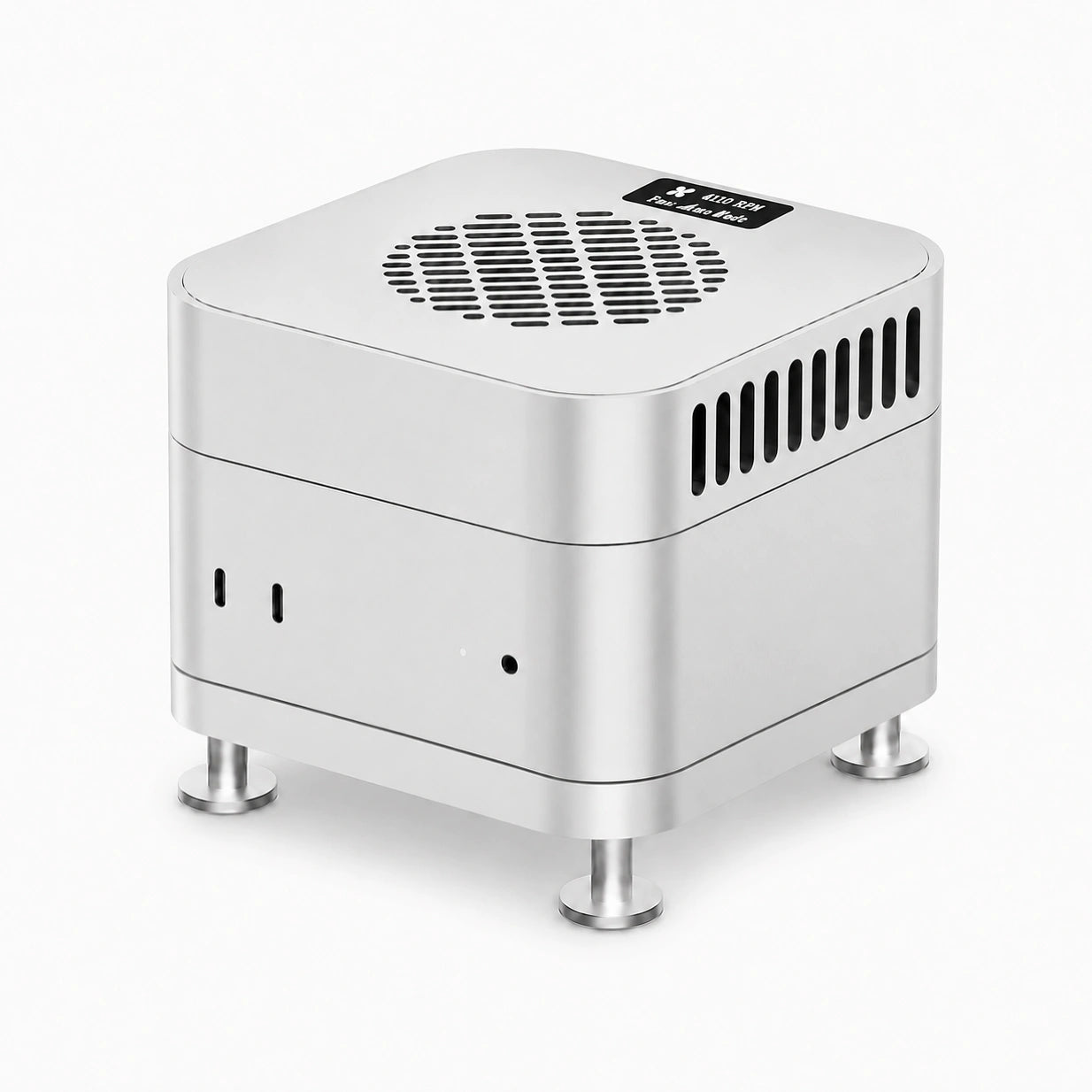
A direct-contact active cooler serves a different purpose: it creates an additional heat-transfer path through the enclosure. That approach is most relevant to repeatable, sustained workloads—not ordinary use.
| Cooling option | Best use | Main limitation |
|---|---|---|
| Hard, open desk | Every Mac mini | Cannot compensate for a very hot room or extreme sustained load |
| Raised stand | Improving clearance beneath the vents | No active heat removal |
| Bottom fan | Carefully directed airflow in a clean setup | Can increase dust movement or recirculate warm air if poorly aligned |
| Top-contact thermoelectric cooler | Long exports, AI, rendering and compilation | Requires power; stronger modes produce more noise |
When Should You Worry About Mac mini Overheating?
Stop the current heavy task and let the Mac return to idle if you notice repeated severe slowdown, graphical problems, crashes or unexpected shutdowns.
Then check the basics:
- Is the Mac in a room above Apple’s recommended operating range?
- Are the bottom vents blocked?
- Is an app or background process continuously using the CPU?
- Does the behavior continue after a restart and software updates?
- Does it happen after all nonessential peripherals are disconnected?
If the Mac shuts down unexpectedly, reports a hardware fault, remains abnormally hot at idle or keeps its fan at high speed in a properly ventilated room after a restart, run Apple Diagnostics and contact Apple Support.
An external cooler may improve thermal headroom during legitimate heavy workloads, but it should not be used to conceal a software or hardware fault.
Mac mini M6 Heat: What Can We Say Before Long-Term Testing?
Apple has announced the Mac mini with M6 and M5 Pro, with availability beginning September 22, 2026. At the time of this update, broad independent long-duration thermal testing is not yet available.
It is reasonable to expect any compact desktop to warm up during sustained AI, graphics and media workloads. It is not yet responsible to claim that the M6 Mac mini has a specific overheating problem or a fixed temperature under load.
Once real units are available, the useful tests will be 30- to 60-minute workloads that track performance over time—not one short benchmark or one surface-temperature reading.
Frequently Asked Questions
Why is the top of my Mac mini hot?
The aluminum case can conduct heat from inside the computer, so the top may feel hot during gaming, rendering, exporting or other intensive work. Check airflow and system behavior before treating surface heat as overheating.
Is it normal for a Mac mini fan to get loud?
Yes, during intensive tasks. Apple says faster fan operation during video compression, graphics-heavy gaming or Spotlight indexing is a normal cooling response. Persistent loud fan noise at idle needs investigation.
Why is my Mac mini hot when nothing is running?
A background process may still be active. Open Activity Monitor and sort the CPU tab by % CPU. Indexing, photo analysis, cloud synchronization, backups and stalled apps are common causes.
Can heat damage a Mac mini?
Macs monitor internal temperatures and adjust cooling behavior. Repeated shutdowns, crashes, severe performance loss or operation outside Apple’s recommended environment should still be addressed instead of ignored.
Should I turn off my Mac mini if it gets hot?
Normal warmth during a heavy task does not require an immediate shutdown. If the Mac behaves abnormally, stop the workload, save your work and shut it down so it can cool safely. Do not place it in a refrigerator or expose it to sudden temperature changes.
Does lifting a Mac mini help cooling?
It can help when the desk, shelf or hub restricts the bottom ventilation area. If the vents already have clear access to cool room air, lifting alone may make only a small difference.
Does every Mac mini need an active cooler?
No. Most owners do not need one for normal daily work. Active cooling is most useful for long, repeated CPU/GPU workloads where additional thermal headroom has a measurable benefit.
What room temperature is safe for a Mac mini?
Apple specifies an operating environment of 10° to 35°C (50° to 95°F) with 5% to 90% noncondensing relative humidity. These figures describe the room, not the Mac’s internal sensors.
Bottom Line
A hot-to-the-touch Mac mini is not automatically overheating. First look for the context: what task is running, how long it has been running, whether the bottom vents are clear and whether performance remains stable.
For most people, the fix is simple: use a hard surface, give the vents room, lower the surrounding temperature and stop unnecessary background work.
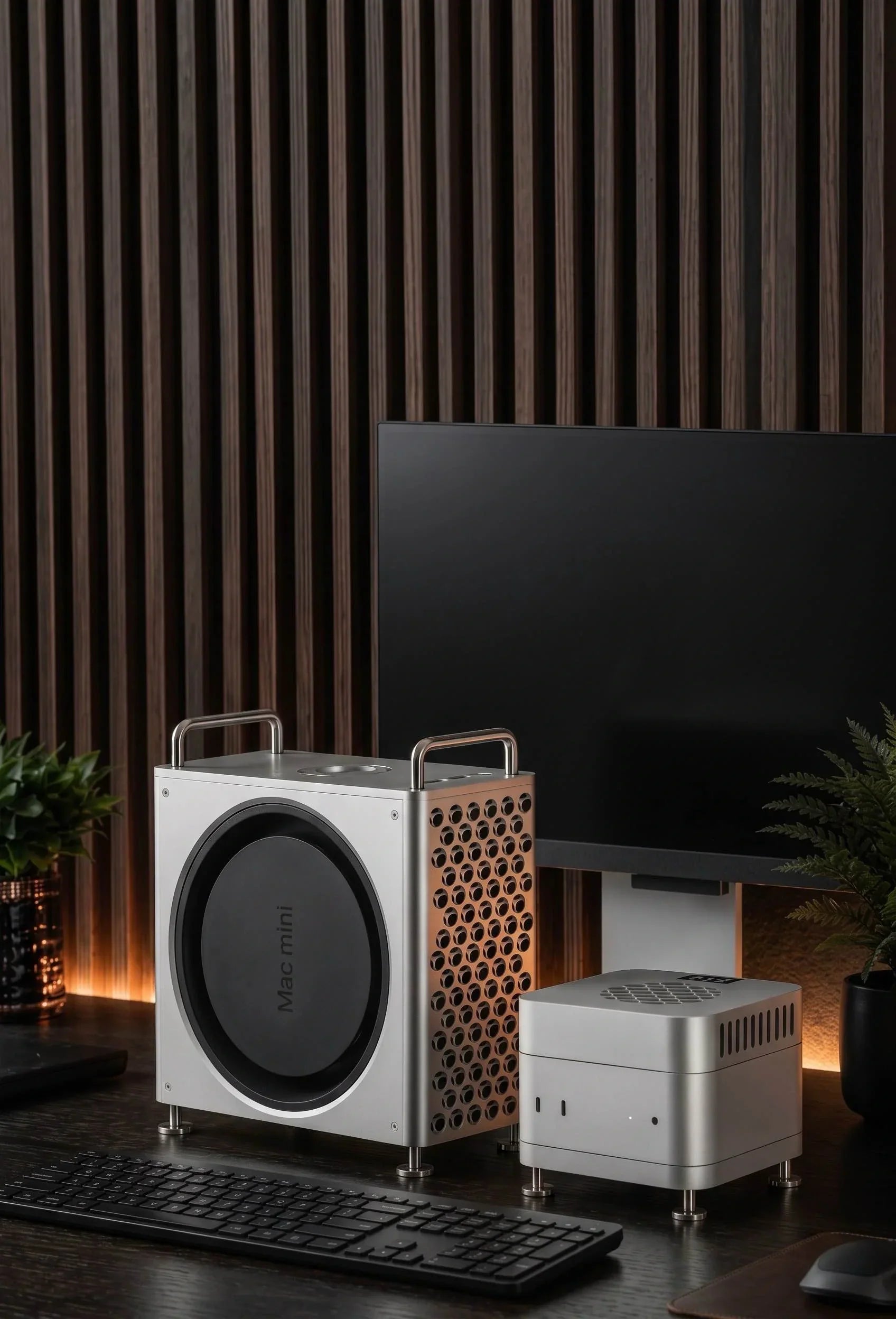
For users who repeatedly run long video exports, local AI, 3D rendering or large builds, the ZEERA MacFrost Pro adds direct-contact thermoelectric cooling while preserving the Mac mini’s original bottom airflow. Start with the lowest effective mode and move higher only when the extra cooling is worth the additional noise.
Sources: Apple Mac mini operating and handling information; Apple guidance on fans, fan noise and ventilation; Apple Activity Monitor CPU guide.