Quick Answer
The iPhone 18 Pro Max lasted longest in Lover of Tech’s cellular-only battery test: 7 hours, 50 minutes, 3 seconds.
Pixel 11 Pro XL finished second at 7:33:10; Galaxy S26 Ultra finished third at 7:13:21.
In the companion wired charging test, iPhone reached 48% after 15 minutes and 100% in 62:37—just 58 seconds behind Pixel.
iPhone had the lowest measured surface temperature at the shared 45-minute charging checkpoint, but the highest reading at its later battery-drain finish.
These are third-party, single-run results. Samsung’s charging was unusually slow, and none of these times is a MagSafe result. Sources and method notes.
Which phone wins battery life and charging overall?
The iPhone 18 Pro Max offers the strongest combination in these two sessions: the longest runtime, the highest battery percentage at 15 minutes of charging, and a full-charge finish less than a minute behind Pixel. Pixel wins the full wired recharge; Samsung finishes third in both sessions, with an important charging caveat.
This is ZEERA’s analysis of Lover of Tech’s testing, based on the supplied transcripts. ZEERA did not conduct this three-phone comparison. The linked original video appears in the source section.
Battery life results: iPhone 18 Pro Max vs Pixel 11 Pro XL vs S26 Ultra
| Phone | Runtime | Finish temperature |
|---|---|---|
| iPhone 18 Pro Max | 7:50:03 | 42.1°C |
| Pixel 11 Pro XL | 7:33:10 | 40.2°C |
| Galaxy S26 Ultra | 7:13:21 | 38.9°C |
Runtime is hours:minutes:seconds. Finish temperatures were recorded at different elapsed times; they are not a synchronized thermal ranking.
iPhone lasted 16 minutes, 53 seconds longer than Pixel and 36 minutes, 42 seconds longer than Galaxy. Calculated from the reported finishing times, that is approximately 3.7% and 8.5% more runtime, respectively.
Those are useful margins for this workload, rather than evidence of hours of extra use for every owner. App choice, cellular reception, display settings and battery condition can change the result.
How the cellular battery test worked
The reviewer describes a continuous recording, with no Wi-Fi use. Each completed stage ran for one hour: rear-camera 4K/60fps recording, X Spaces, TikTok, Instagram Reels, YouTube at 1440p/60fps, YouTube Music, and Subway Surfers. Asphalt Legends followed until the phones ran out.
For Asphalt, all three were set to 60fps; the reviewer notes that Samsung also offers a 120fps option. YouTube Music used maximum speaker volume. The supplied transcript does not fully document brightness calibration, signal strength, battery health, software builds or ambient temperature, so the result cannot isolate modem or chipset efficiency.
Where did the iPhone’s battery advantage appear?
| Elapsed / stage | iPhone | Pixel | Galaxy |
|---|---|---|---|
| 1h / Camera | 82% | 82% | 80% |
| 2h / X Spaces | 76% | 70% | 72% |
| 3h / TikTok | 67% | 57% | 59% |
| 4h / Instagram | 57% | 43% | 46% |
| 5h / YouTube | 46% | 30% | 33% |
| 6h / Music | 33% | 16% | 21% |
| 7h / Subway Surfers | 21% | 9% | 6% |
The clearest lead developed during social apps and video. After five hours, iPhone retained 46%, versus 30% on Pixel and 33% on Galaxy. At seven hours, it still had 21%, leaving a larger reserve for the final game.
Samsung nevertheless used fewer percentage points during the music stage: 33% to 21%, compared with iPhone’s 46% to 33% and Pixel’s 30% to 16%. The overall winner did not win every individual stage.
Reading the numbers: these are remaining-battery checkpoints. Some spoken or auto-captioned per-round losses conflict with them, so those loss figures are not reproduced. Battery percentages also do not measure energy consumption in watt-hours; they cannot establish efficiency independently of battery capacity.
Wired charging speed: 15 minutes, 30 minutes and full charge
All three phones started at 1%. The reviewer used Anker charging equipment rated up to 140W, enabled Pixel’s Extreme Charging, and identified Samsung’s Super Fast Charging 3.0 mode. The adapter rating does not establish each phone’s actual input power or confirm every negotiated charging profile.
| Checkpoint | iPhone | Pixel | Galaxy |
|---|---|---|---|
| 15 min | 48% | 45% | 37% |
| 30 min | 77% | 80% | 54% |
| 45 min | 90% | 94% | 81% |
| 60 min | 98% | 99% | 95% |
| 100% reached | 62:37 | 61:39 | 67:23 |
Completion times are minutes:seconds from a 1% start. They are often searched as “0–100 charging time,” but this was not a true 0% start.
Best for a short top-up: iPhone in this session
At 15 minutes, iPhone displayed 48%—a gain of 47 percentage points from its starting level. The reviewer observed 51% at 17 minutes. That supports a useful near-half-charge top-up, without claiming an exact 50%-in-15-minutes result.
First to 100%: Pixel, by 58 seconds
Pixel moved ahead by 30 minutes and finished first with Extreme Charging enabled. Its 58-second lead over iPhone is small enough that repeated runs would be needed to establish a consistent full-charge advantage.
Why was Galaxy S26 Ultra slower than expected?
The reviewer explicitly says this Samsung run was unusually slow. He recalls earlier full charges around 54–55 minutes, compared with 67:23 here, and does not establish the cause. Treat that earlier time as his reported comparison, rather than a retest performed for this article.
This session establishes the observed ranking. It does not establish Samsung’s best achievable charging time, or prove a charger fault, thermal fault or software problem.
Why does charging slow near 100%?
Apple explains that its lithium-ion charging process slows during the later stage to help battery longevity. That makes a phone’s final few percent disproportionately time-consuming. In this iPhone run, moving from 77% at 30 minutes to full took another 32 minutes, 37 seconds. Apple’s charging explanation.
For adapter selection, see our 140W PD vs 60W-capable AVS charging comparison. That is a separate test; its measured power profiles cannot be assigned to this Anker setup.
Heat test: was iPhone cooler while charging?
| Charging checkpoint | iPhone | Pixel | Galaxy |
|---|---|---|---|
| 45 min | 33.8°C | 34.9°C | 37.4°C |
| 60 min | 31.3°C | 32.7°C | 33.3°C |
| At 100% | 31.0°C | 32.9°C | 34.5°C |
iPhone had the lowest reading at both shared charging checkpoints above. That is useful evidence of cooler measured surfaces during this run. It does not establish the highest temperature reached throughout the entire session, or the temperature inside each battery.
The drain-test finish tells a different story: iPhone ended at 42.1°C after running Asphalt longer than either rival. Because the phones stopped at different times, those end readings do not show which would run coolest after an equal gaming duration.
Apple says wireless charging, intensive games and camera use can make an iPhone warm, and excess internal temperature can slow or pause charging. Surface readings alone do not diagnose overheating. If a warning appears, follow the iPhone 18 Pro Max Charging On Hold guide. Apple temperature guidance.
Do MagSafe chargers and cooling cases change these results?
This comparison tested wired charging. It did not test ZEERA MagTri, SuVolt, an aluminum cooling case, or any other ZEERA accessory. Neither the 48% at 15 minutes nor the 62:37 completion time should be used as a wireless charging promise.
Choose the setup around when you charge
- Before leaving home: a compatible wired charger suits a short, low-battery top-up.
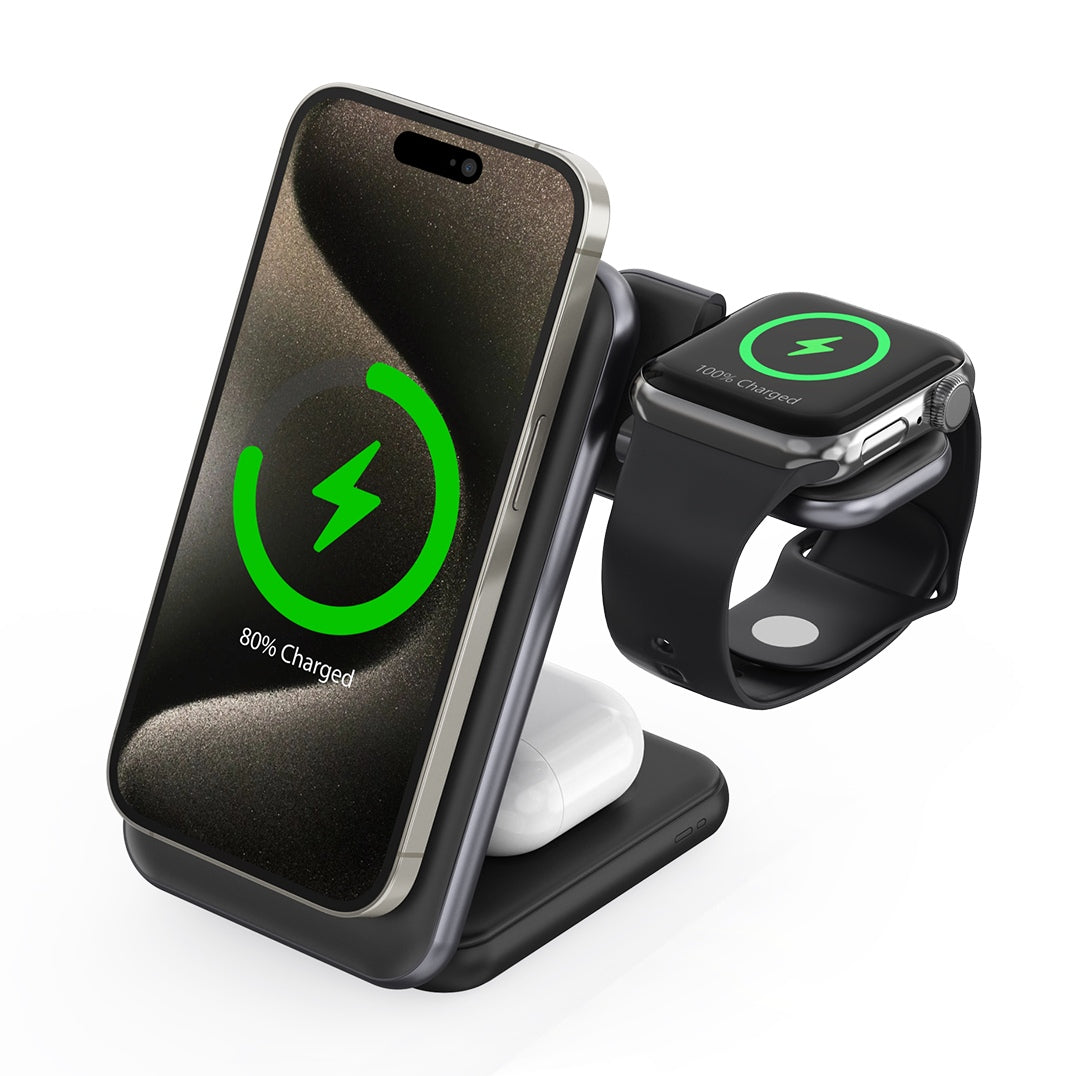
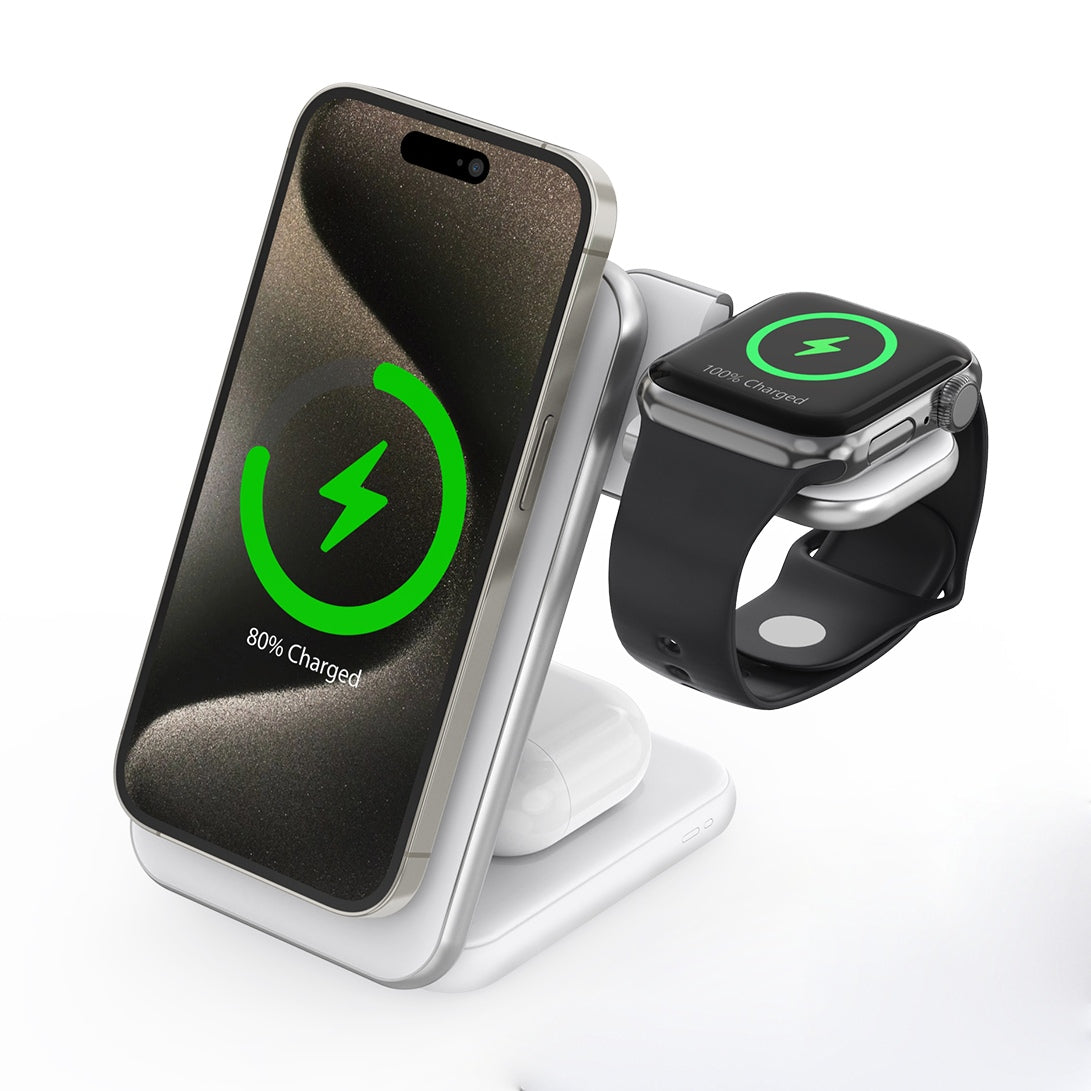
- At a desk or while travelling: MagTri Gen2 offers a folding 3-in-1 setup with up to 25W Qi2.2 charging for compatible iPhones and active cooling.
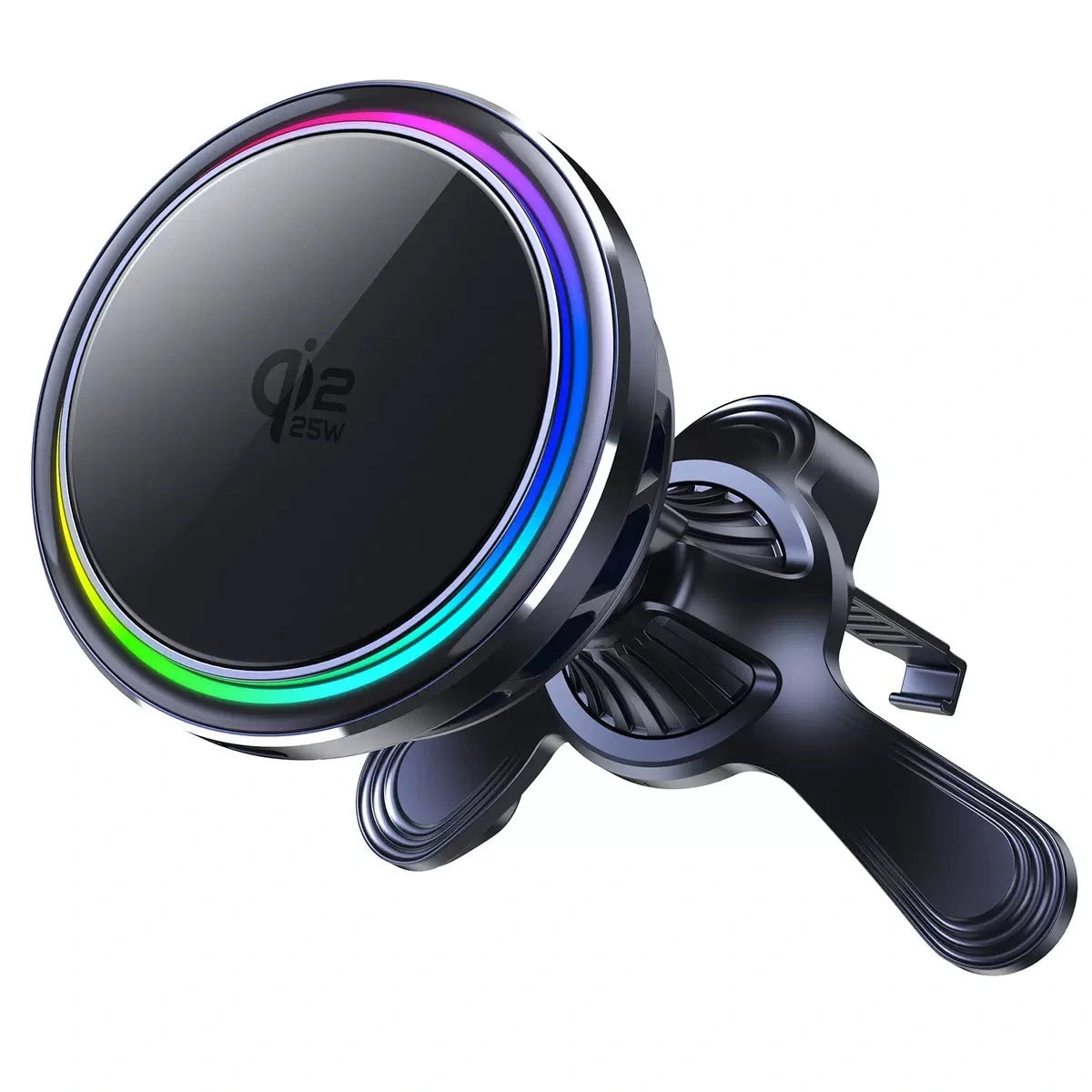
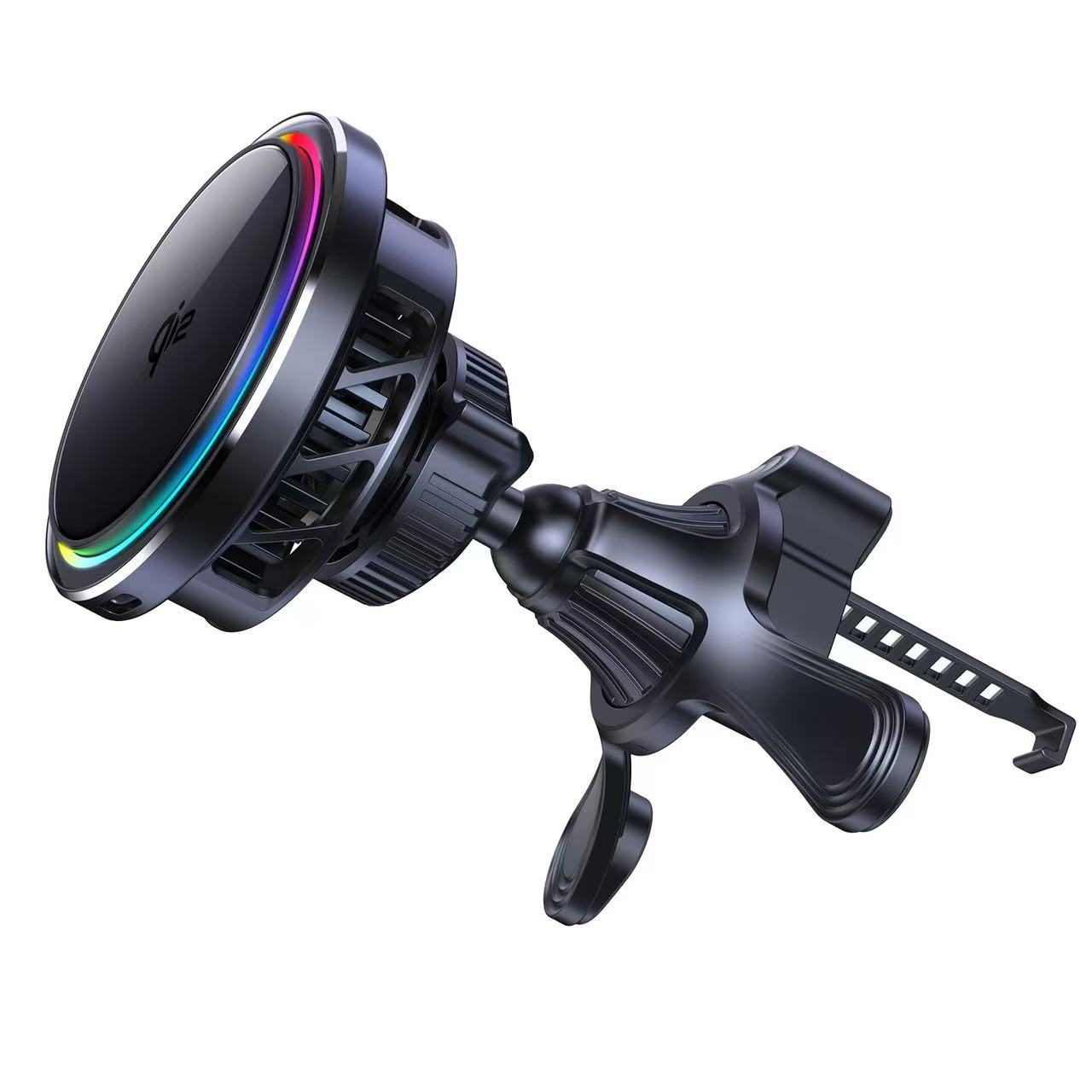
- During navigation: SuVolt Gen5 combines a magnetic car mount with up to 25W Qi2.2 charging and active cooling. Cabin heat and simultaneous phone use still matter.
- When choosing a case: verify the exact iPhone model, magnetic alignment and charging compatibility. An aluminum shell or a “cooling” name alone does not establish lower battery temperature.
ZEERA’s separate 15W vs 25W MagSafe and cooled Qi2.2 test addresses wireless charging. Its conditions and measurements should remain separate from Lover of Tech’s results.
Which phone should you buy for a long day away?
iPhone 18 Pro Max: strongest combined result here
It is the most convincing option from this evidence if cellular video, social apps and a quick wired top-up are your priorities. The runtime lead matters more than its narrow loss in the full-charge race.
Pixel 11 Pro XL: close runtime and the first full recharge
Pixel finished less than 17 minutes behind iPhone on runtime and won the wired recharge with Extreme Charging enabled. That is a competitive result for buyers who prefer Pixel’s wider phone experience.
Galaxy S26 Ultra: seek a charging retest before deciding
Samsung had the shortest runtime in this workload. Its anomalous charging session deserves follow-up, so the 67:23 result should carry less weight as a prediction of normal fast charging.
If you also record long travel clips, assess camera preferences separately from battery life. A filter can change the look of a shot; this test supplies no evidence that a camera accessory extends runtime.
FAQ
Does cellular-only mean this was a controlled 5G battery test?
No. The reviewer confirms mobile data and no Wi-Fi, but the supplied transcript does not establish a fixed 5G mode or matched signal conditions. Describe it as a cellular-only test.
Can I expect seven hours and fifty minutes of screen-on time?
That was the elapsed time for this continuous mixed workload. It is not a guaranteed screen-on-time figure or a prediction of a normal day with standby periods.
Does iPhone’s 42.1°C finish prove it overheats?
No. It is a surface reading at the end of the longest run. The transcript does not establish a temperature-warning event or an equal-duration thermal comparison.
Do these results prove better battery health after a year?
No. Two short tests do not measure long-term capacity retention or charging-cycle aging.
Can I use the same results for iPhone 18 Pro or iPhone Duo?
No. Those models were not tested. Their battery systems, displays and charging behavior need their own measurements.
Sources, original video and methodology notes
Primary test credit: Ben, Lover of Tech. Battery checkpoints, charging percentages, completion times and temperature readings above come from the supplied auto-generated transcripts of iPhone 18 Pro Max vs Pixel 11 Pro XL vs S26 Ultra – Cellular Battery Drain Test and the companion Charging Test. Original measurements belong to the creator; the comparisons and purchasing interpretation are ZEERA’s.
Watch the original Lover of Tech video on YouTube.
The battery-drain and wired-charging sessions are separate tests. Caption inconsistencies in individual stage losses have been excluded. The available material does not establish repeated trials, calibrated thermal measurement positions, or a complete record of device and environmental settings.
- Apple: lithium-ion charging stages — background on charging taper.
- Apple Support: if your iPhone or iPad gets too hot or too cold — temperature management and charging pauses.
Editorial analysis prepared October 16, 2026. Accessory modules describe separate ZEERA products and do not imply that the creator tested, endorsed or used them.
Related articles
- Why a 140W PD charger can lose to a 60W-capable AVS adapter
- iPhone 18 Pro Max MagSafe: 15W vs 25W vs cooled Qi2.2
- iPhone 18 Pro Max Charging On Hold: causes and fixes
- iPhone 18 Pro Max overheating and cooling vs 17 Pro Max
- iPhone 18 Pro Max and iPhone Duo chargers: 40W AVS vs 65W
- iPhone 18 Pro Max vs Galaxy S26 Ultra camera comparison