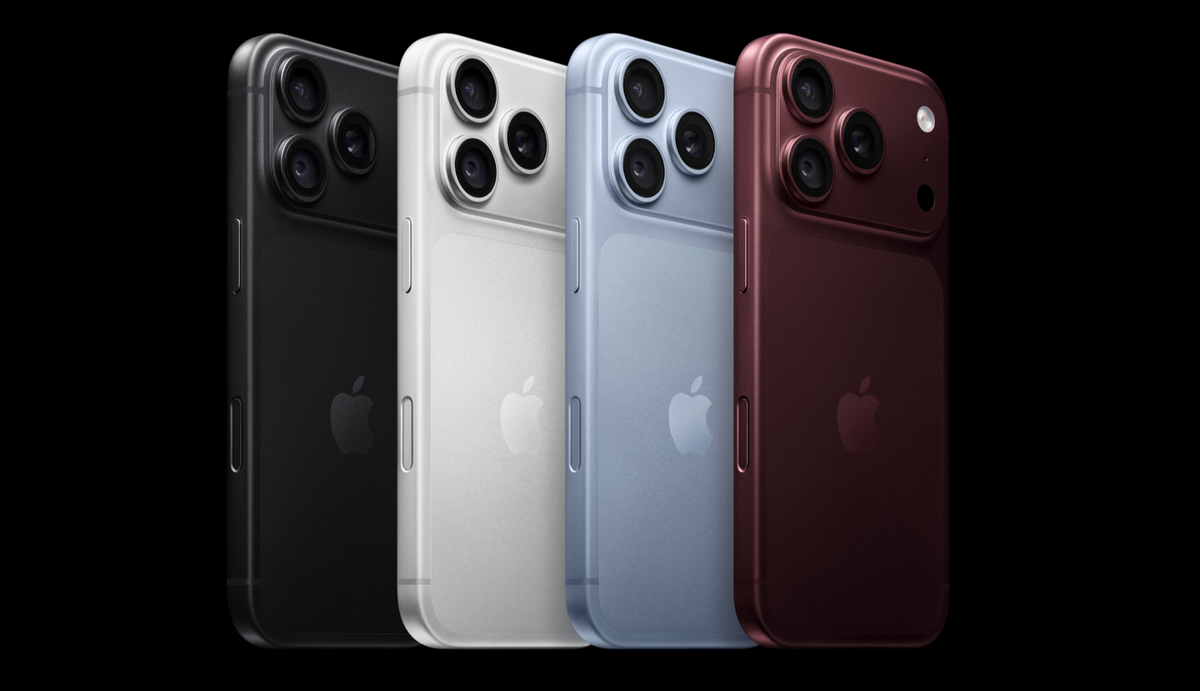
Apple has officially unveiled the iPhone 18 Pro and iPhone 18 Pro Max, and the biggest performance story is the new A20 Pro chip.
Unlike the pre-launch rumors, we now have confirmed information about the A20 Pro. Apple says the chip is built using a 2nm process, features a 6-core CPU and 7-core GPU, delivers up to 20% faster CPU performance and up to 40% faster graphics, and introduces major improvements for on-device AI.
But the A20 Pro story is not just about benchmark numbers. Apple is also pairing the chip with a much larger thermal system, while the iPhone 18 Pro Max offers up to 45 hours of video playback.

The A20 Pro is Apple's new flagship iPhone chip for the iPhone 18 Pro lineup. It uses a 2nm process and includes a 6-core CPU, a 7-core GPU, and a new AI-focused architecture. Apple claims up to 20% faster CPU performance and up to 40% faster graphics compared with the previous generation. The iPhone 18 Pro series also uses a significantly larger vapor chamber designed to improve sustained performance and heat management.
- A20 Pro Official Specifications
- Why the 2nm Process Matters
- A20 Pro CPU: Up to 20% Faster
- A20 Pro GPU: Up to 40% Faster Graphics
- A20 Pro and Apple Intelligence
- What About Memory Bandwidth?
- Does A20 Pro Improve Battery Life?
- A20 Pro and iPhone 18 Pro Max Heat Management
- Why Sustained Performance Matters
- A20 Pro vs. A19 Pro
- What Does A20 Pro Mean for Gaming?
- What Does A20 Pro Mean for Camera and Video?
- Is the A20 Pro a Big Upgrade?
- A20 Pro, Heat and Charging
- A20 Pro FAQ
A20 Pro Official Specifications
Now that Apple has officially introduced the A20 Pro, several important specifications are confirmed rather than rumored.
| Feature | A20 Pro |
|---|---|
| Process | 2nm |
| CPU | 6-core CPU |
| CPU configuration | 2 performance cores + 4 efficiency cores |
| CPU performance | Up to 20% faster than the previous generation |
| GPU | 7-core GPU |
| Graphics performance | Up to 40% faster |
| Neural processing | Two Neural Engines with 32 cores combined |
| AI acceleration | New-generation neural accelerators |
| 8-bit floating-point performance | Up to 2× faster |
| Performance-class positioning | Apple describes the performance cores as desktop-class and the fastest smartphone CPU cores |
Why the 2nm Process Matters
One of the biggest changes with A20 Pro is the move to a 2nm manufacturing process.
A smaller process node allows more transistors and more advanced chip design within a similar physical area. In practical terms, the goal is not simply to make the iPhone 18 Pro faster. It is to improve the balance between performance, power efficiency and sustained workloads.
This distinction is important. A smaller process node does not automatically mean that every application will consume dramatically less power. Real-world battery life depends on the entire device, including the display, modem, battery capacity, software and thermal management.
A20 Pro's 2nm process gives Apple more room to improve performance and efficiency at the same time. The real-world advantage should become most noticeable during demanding workloads such as gaming, video processing and on-device AI.

A20 Pro CPU: Up to 20% Faster
The A20 Pro uses a 6-core CPU consisting of two performance cores and four efficiency cores.
Apple says the new performance cores are desktop-class and represent the fastest smartphone CPU cores. Apple also claims up to 20% faster CPU performance compared with the previous generation.
The phrase up to matters here. It does not mean that every application will run exactly 20% faster. Performance gains vary depending on the workload, software optimization and whether an application is limited by the CPU, GPU, memory or another component.
For everyday users, the biggest benefit may therefore be less about opening an app noticeably faster and more about having additional performance headroom for demanding tasks.
What that means in real use
- Faster CPU-heavy workloads
- More responsive video editing
- Better performance during complex on-device AI tasks
- More headroom for demanding games and professional apps
- Better potential for sustained performance when combined with improved thermal management
A20 Pro GPU: Up to 40% Faster Graphics
The GPU may be the most immediately interesting part of the A20 Pro upgrade.
Apple has moved to a 7-core GPU and says graphics performance can be up to 40% faster than the previous generation.
This does not mean every game will automatically deliver 40% higher frame rates. GPU performance depends on the application, rendering settings, thermal conditions and software optimization.
Instead, the 40% figure should be viewed as additional graphics headroom. Developers can use that headroom for more detailed environments, more demanding visual effects, higher-quality rendering and longer periods of sustained performance.
The A20 Pro is not simply chasing short benchmark bursts. The combination of a faster GPU and a substantially larger thermal system is more important for workloads that keep the processor under load for several minutes or longer.
A20 Pro and Apple Intelligence
Apple is also positioning the A20 Pro as a major step forward for on-device AI.
The chip includes two Neural Engines with 32 cores combined, along with new-generation neural accelerators. Apple says 8-bit floating-point performance can be up to twice as fast.
These improvements are designed to provide more local processing power for Apple Intelligence features without relying entirely on cloud servers.
Apple specifically highlights AI-related experiences such as more expressive voices, improved dictation and visual search.
The important point is that faster AI hardware does not mean every Apple Intelligence feature will be exactly twice as fast. Real-world performance depends on the model being used, the specific task, memory access and Apple's software optimization.
What About Memory Bandwidth?
Before launch, several reports suggested that Apple could significantly increase the A20 Pro's memory bandwidth through a wider memory interface and other architectural changes.
However, those reports should remain separate from the confirmed A20 Pro specifications.
Apple has not publicly established a specific 50% memory-bandwidth increase as part of the official A20 Pro specifications.
For that reason, we are not treating the previously reported 50% figure as an official specification in this article.
iPhone 18 Pro vs iPhone 17 Pro: Does A20 Pro Improve Battery Life?
Battery life is one of the biggest real-world questions surrounding the A20 Pro. Compared with the previous-generation iPhone 17 Pro lineup, Apple has increased the maximum video playback time on both the iPhone 18 Pro and iPhone 18 Pro Max.
| Model | Maximum video playback | Change vs. previous generation |
|---|---|---|
| iPhone 17 Pro | Up to 31 hours | — |
| iPhone 18 Pro | Up to 36 hours | +5 hours |
| iPhone 17 Pro Max | Up to 37 hours | — |
| iPhone 18 Pro Max | Up to 45 hours | +8 hours |
That means the iPhone 18 Pro offers up to 5 additional hours of video playback compared with the iPhone 17 Pro, while the iPhone 18 Pro Max gains up to 8 additional hours compared with the iPhone 17 Pro Max.
This is a substantial improvement, but it would be inaccurate to attribute the entire gain to the A20 Pro alone. Battery life is determined by the complete system, including the processor, battery capacity, display, modem, software and power-management architecture.
The A20 Pro's move to a 2nm process should nevertheless help Apple improve the performance-per-watt balance. Combined with the new chip architecture and improved thermal management, the iPhone 18 Pro lineup is designed to deliver more performance without simply increasing power consumption.
The iPhone 18 Pro Max's maximum video playback increases from 37 hours to 45 hours — an 8-hour improvement over the iPhone 17 Pro Max. The A20 Pro contributes to the efficiency story, but the longer battery life comes from the entire device working together.
A20 Pro and iPhone 18 Pro Max Heat Management
This is where the A20 Pro story becomes particularly interesting.
Apple is not treating performance as a chip-only problem. The iPhone 18 Pro lineup also introduces a significantly larger vapor-chamber cooling system, with a reported surface area around three times that of the iPhone 17 Pro.
That matters because modern smartphone processors can produce substantial heat during sustained workloads. Once temperatures rise, a phone may reduce clock speeds to control heat and power consumption.
A faster chip combined with better thermal management can therefore be more useful than a faster chip by itself.
The goal is not simply higher peak performance. The bigger advantage is the ability to maintain a higher level of performance for longer before thermal limits become the dominant factor.
Why Sustained Performance Matters More Than Peak Performance
Smartphone benchmark charts often focus on short bursts. But many demanding tasks last much longer.
Consider a long gaming session, exporting a large video, recording high-resolution footage, processing photos or running an AI workload locally. These tasks can keep the CPU and GPU under load for minutes at a time.
This is where thermal design becomes critical.
The A20 Pro's performance improvements are therefore best understood together with the iPhone 18 Pro's new cooling architecture. A chip that can reach a high peak score is impressive, but a chip that can maintain high performance without excessive heat is more useful in everyday demanding workloads.
A20 Pro vs. A19 Pro
The easiest way to understand the A20 Pro upgrade is to compare the major confirmed architectural and performance changes with the previous-generation Pro chip.
| Feature | A19 Pro | A20 Pro |
|---|---|---|
| Manufacturing process | 3nm generation | 2nm |
| CPU | 6-core | 6-core |
| CPU architecture | Performance + efficiency cores | 2 performance + 4 efficiency cores |
| CPU performance | Previous generation | Up to 20% faster |
| GPU | 6-core | 7-core |
| Graphics performance | Previous generation | Up to 40% faster |
| AI processing | 16-core Neural Engine | Two Neural Engines, 32 cores combined |
| Thermal design | Apple-designed vapor chamber | Significantly larger vapor-chamber cooling system |
The most important takeaway is that A20 Pro is not simply a clock-speed upgrade. Apple is improving the process technology, CPU performance, GPU capability, AI processing and thermal system together.
What Does A20 Pro Mean for Gaming?
Gaming is one of the areas where the A20 Pro's GPU upgrade should become easier to notice.
A 7-core GPU with up to 40% higher graphics performance gives developers additional room for demanding rendering workloads.
That can help with:
- Higher-quality textures and visual effects
- More complex lighting and shadows
- Hardware-accelerated graphics workloads
- More stable performance during long gaming sessions
- Higher performance headroom for future games
However, the 40% figure should not be interpreted as a universal 40% increase in game frame rates. Actual gaming performance depends heavily on the individual title and its optimization.
What Does A20 Pro Mean for Camera and Video?
The A20 Pro also provides the processing foundation for the iPhone 18 Pro's camera system, but it is important not to attribute every camera improvement directly to the chip.
The iPhone 18 Pro generation introduces new camera hardware and software features, including a 48MP variable-aperture main camera and more advanced manual camera controls.
The A20 Pro contributes the processing power needed for computational photography, image processing and demanding video workflows, while the final camera experience comes from the combination of hardware, ISP processing and software.
For creators, the more interesting advantage may be the combination of faster processing and better thermal management. Long video recording and editing workloads can put sustained pressure on both the CPU and GPU.
Does the A20 Pro Make the iPhone 18 Pro Max Worth Upgrading?
If you are upgrading from an older iPhone, the A20 Pro is only one part of the equation, but it is a major one.
The upgrade is particularly compelling for users who:
- Play demanding games regularly
- Edit photos or videos on the iPhone
- Use Apple Intelligence features heavily
- Record and process high-resolution video
- Want better long-term performance headroom
- Keep their iPhone for several years
For someone already using an iPhone 17 Pro, the decision is more nuanced. The A20 Pro's improvements are substantial on paper, but whether the upgrade feels dramatic will depend on your workload.
The A20 Pro is a meaningful generational upgrade, but its biggest strength is the combination of performance and sustained performance. The 2nm process, faster CPU, 40% graphics improvement, stronger AI processing and significantly improved cooling form a more complete upgrade than any single specification suggests.
A20 Pro, Heat and Charging
There is another part of the A20 Pro story that is easy to overlook: heat management does not stop when you start charging the phone.
Wireless charging already generates additional heat compared with some wired charging scenarios. If the phone is simultaneously running navigation, gaming, video recording or another demanding workload, the thermal load can increase further.
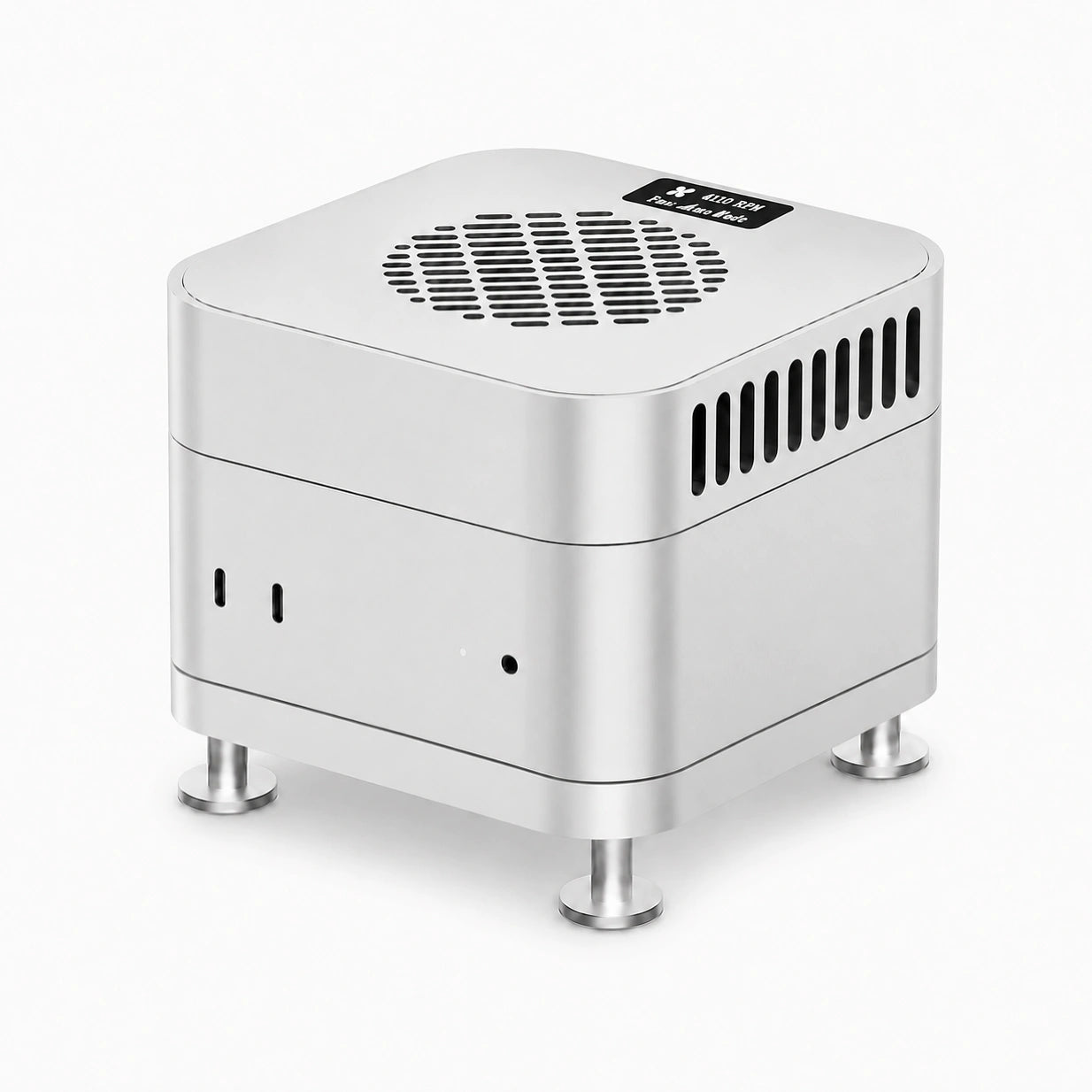
This is one reason active cooling can be useful for users who frequently use their iPhone in demanding environments.
What the A20 Pro Really Changes
Looking at the A20 Pro specification sheet alone, the headline numbers are easy to summarize:
- 2nm process
- 6-core CPU
- Up to 20% faster CPU performance
- 7-core GPU
- Up to 40% faster graphics
- Two Neural Engines with 32 cores combined
- Up to 2× faster 8-bit floating-point AI performance
- Up to 45 hours of video playback on iPhone 18 Pro Max
- A significantly larger vapor-chamber cooling system
But the more important story is how these pieces work together.
Apple is increasing CPU and GPU performance while moving to a smaller process node, expanding AI processing capabilities and improving thermal management. That combination is designed to make the iPhone 18 Pro Max faster not only in short bursts, but also during demanding sustained workloads.
A20 Pro FAQ
Is the A20 Pro made on a 2nm process?
Yes. Apple has officially introduced the A20 Pro as a 2nm-generation chip for the iPhone 18 Pro lineup.
How many CPU cores does the A20 Pro have?
The A20 Pro has a 6-core CPU with two performance cores and four efficiency cores.
How much faster is the A20 Pro?
Apple says the A20 Pro delivers up to 20% faster CPU performance and up to 40% faster graphics performance compared with the previous generation.
Does the A20 Pro have a 7-core GPU?
Yes. The A20 Pro uses a 7-core GPU, and Apple says graphics performance is up to 40% faster.
How many Neural Engine cores does the A20 Pro have?
Apple describes the A20 Pro as having two Neural Engines with 32 cores combined, along with new-generation neural accelerators.
Does the A20 Pro have 50% more memory bandwidth?
A 50% increase was reported before launch, but Apple has not established that figure as an official A20 Pro specification. It should therefore be treated as an earlier report rather than a confirmed specification.
Does Apple confirm WMCM packaging for A20 Pro?
No. WMCM packaging was reported before launch, but Apple has not publicly confirmed the packaging architecture.
How long does the iPhone 18 Pro Max battery last?
Apple says the iPhone 18 Pro Max can provide up to 45 hours of video playback. Actual battery life varies depending on usage, settings and network conditions.
Does A20 Pro make the iPhone 18 Pro Max run cooler?
The chip is designed for improved efficiency, but thermal performance depends on the entire device. Apple has also significantly expanded the vapor-chamber cooling system, which is important for sustained performance.
Final Verdict
The A20 Pro is more than a simple annual processor refresh.
Apple's move to a 2nm process, combined with a faster 6-core CPU, a 7-core GPU with up to 40% higher graphics performance, significantly stronger on-device AI processing and a much larger cooling system, makes the A20 Pro one of the most important upgrades in the iPhone 18 Pro generation.
The most interesting part may ultimately be sustained performance. Instead of focusing only on peak benchmark numbers, Apple is building the iPhone 18 Pro around the idea that high performance should remain available for longer.
For iPhone 18 Pro Max buyers, that means the A20 Pro upgrade is not just about a faster chip. It is about a more capable performance system — from processing and AI to graphics, battery life and thermal management.