Quick Answer
The iPhone Duo’s biggest drawback may be the camera Apple tried to hide.
Its inner under-display FaceTime camera can still be visible to the naked eye, especially on bright backgrounds, and its off-center position near the upper-right area can sit over content in photo grids.
MKBHD’s early test also showed noticeably soft, hazy photo and video quality. Apple limits this inner camera to 1080p, while the outer 12MP Center Stage camera records up to 4K.
The Duo also lacks a dedicated Telephoto camera, does not use a silicon-carbon battery, and offers fast charging rather than the ultra-fast charging available on some rival foldables.

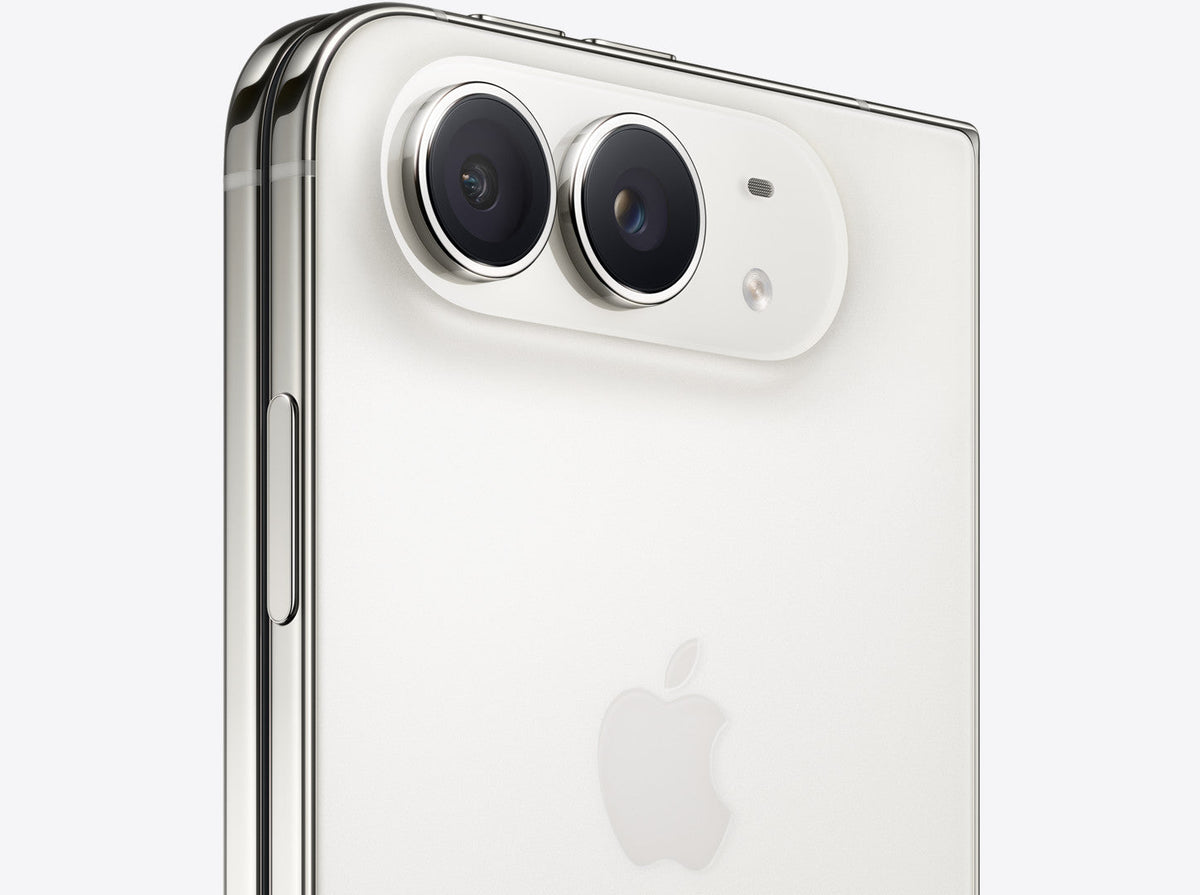
The iPhone Duo is Apple’s most ambitious iPhone design in years. It opens into a 7.6-inch display, runs the A20 Pro chip and starts at $1,999.
Yet the detail that may become hardest to ignore is not the hinge or even the crease. It is the iPhone Duo inner-screen camera.
Apple calls it an under-display FaceTime camera and says it is hidden until needed. In practice, “under-display” does not mean optically invisible. Once you notice the camera area, its position and image quality can make the compromise feel surprisingly obvious.

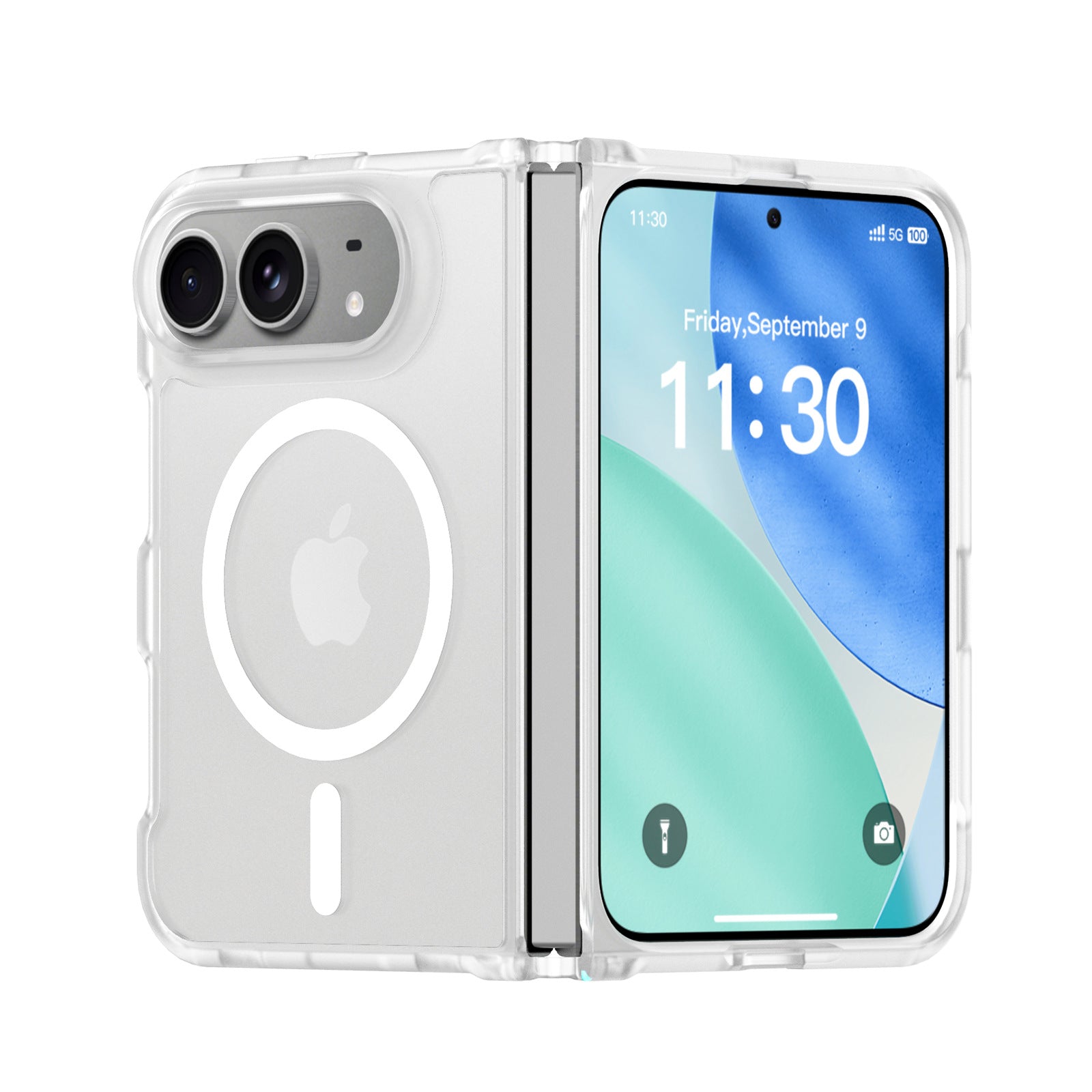

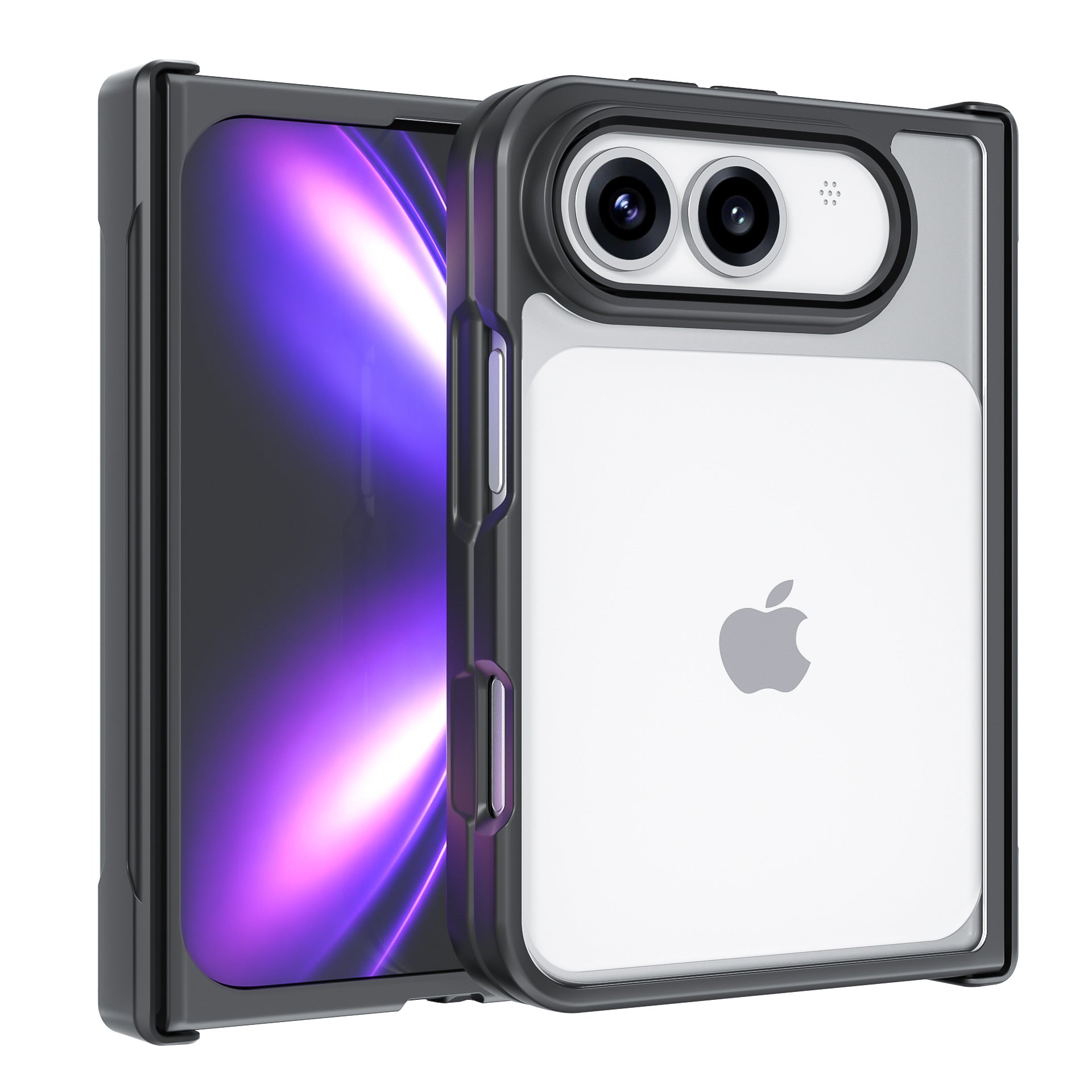
The iPhone Duo’s Hidden Inner Camera Is Still Visible
An under-display camera places the lens behind active screen pixels. Those pixels help the camera disappear when the display shows normal content, but the camera area still needs to let light through.
That creates a trade-off. The pixel structure above the lens can look slightly different from the surrounding OLED panel. On a bright white page, a light sky or another uniform color, the hidden camera area may appear as a faint circle, patch or texture change.
It can be less noticeable during video playback or on a dark wallpaper. It becomes easier to see when light hits the inner display at an angle or when the content around it is flat and bright.
Confirmed by Apple
The outer display uses a 12MP Center Stage camera with up to 4K Dolby Vision video. The inner display uses a separate under-display FaceTime camera limited to 1080p recording at 30 or 60 fps.
The Camera Sits in an Awkward Part of the Inner Display
The problem is not only that the hidden camera can be seen. Its placement can also feel visually awkward.
The camera area sits toward the upper-right side of the unfolded display, but it is not centered and it is not tucked fully into the extreme corner. That leaves it floating inside the usable canvas.
In a photo grid, the first row of images can extend directly into this area. Instead of disappearing into an empty bezel or a corner margin, the camera can overlap the content a user is trying to view.
The exact effect depends on the app and layout. Still, users who are sensitive to symmetry may find the position difficult to unsee. The wider the clean inner screen looks, the more the offset camera area can stand out.

Why Didn’t Apple Put the Camera in the Top-Right Corner?
Apple has not publicly explained the exact engineering reason for this position.
There are plausible constraints. A foldable display needs room around its curved corner, frame, hinge structure, display routing and internal camera module. Moving the lens farther into the corner may reduce usable optical space or place it too close to structural components.
Software may also have influenced the decision. iOS 27 moves important controls toward the right side of the larger display, and the Duo’s interface must work in several orientations.
Those factors may explain the position, but they do not make it visually balanced. From a user’s perspective, a conventional camera opening placed cleanly in the corner could have been easier to understand and less distracting.

Why Not Use the Same Front Camera as the Outer Display?
The outer camera cannot simply serve as the inner selfie camera. When the phone is unfolded and the user looks at the large inner display, the outer camera faces the wrong direction.
Apple therefore needs a second camera on the inner side. The real choice was between a visible cutout with stronger image quality and an under-display camera that protects the all-screen appearance.
A normal 12MP Center Stage module needs a clear optical path. Putting the same system behind active OLED pixels would still force light through the display layer, so the larger specification alone would not eliminate the image-quality loss.
Apple chose the cleaner-looking screen. The cost is that the hidden camera is both less capable and not always fully hidden.
| Front camera | Official capability | Practical result |
|---|---|---|
| Outer display | 12MP Center Stage, up to 4K Dolby Vision at 60 fps | Better choice for selfies, recorded video and low-light use |
| Inner display | Under-display FaceTime camera, 1080p at 30 or 60 fps | Convenient for calls, but lower detail and more processing artifacts |
MKBHD’s Test Shows the Inner Camera Quality Problem
The difference is not limited to a specification sheet. In MKBHD’s early iPhone Duo coverage, the inner-camera sample looks far softer than footage from a normal iPhone front camera.
Fine facial detail is reduced. Contrast looks flatter, bright areas can develop a hazy glow, and the image has the processed look often associated with under-display cameras.
The reason is physical. Before light reaches the lens, it must pass through the OLED pixel layer. Some light is blocked, scattered or diffracted. Computational photography can improve color, exposure and sharpening, but it cannot fully restore detail the sensor never captured.
For a short FaceTime call, the quality may be acceptable. For recording a vlog, taking an important selfie or joining a professional video meeting, the outer 12MP camera—or the rear cameras with Duo Preview—should deliver a better result.
Best way to use the iPhone Duo cameras: use the inner camera for convenient FaceTime calls, the outer Center Stage camera for normal selfies and front-facing video, and the rear 48MP cameras with Duo Preview when image quality matters most.
The iPhone Duo Has No Dedicated Telephoto Camera
The iPhone Duo costs more than the iPhone 18 Pro Max, but it does not carry Apple’s full Pro camera system.
Its rear setup includes a 48MP Fusion Main camera and a 48MP Fusion Ultra Wide camera. The 2x option is an optical-quality crop from the main sensor, not a separate Telephoto lens.
Apple officially lists 0.5x, 1x and 2x options, with digital zoom up to 10x. By comparison, the iPhone 18 Pro line includes a dedicated 48MP Fusion Telephoto camera and up to 8x optical-quality zoom.
The Duo also misses the iPhone 18 Pro’s variable-aperture main camera. Buyers who prioritize concert photos, portraits, wildlife or distant subjects may get more camera value from an iPhone 18 Pro Max.
The Battery Is Dual-Cell, but It Is Not Silicon-Carbon
Apple uses two built-in rechargeable lithium-ion batteries to distribute capacity across the two halves of the phone.
What Apple did not announce is a silicon-carbon battery. That matters because several competing foldables use newer battery chemistry to fit more capacity into very thin bodies.
The Duo’s battery life is not poor on paper. Apple rates it for up to 44 hours of video playback on the outer display and 31 hours on the inner display.
But the absence of silicon-carbon technology makes the battery system feel conservative in a $1,999 first-generation foldable. The 13-hour difference between Apple’s outer- and inner-screen video figures also shows the cost of powering the larger OLED.
Charging Is Fast, but It Is Not Super Charging
Apple says the iPhone Duo can reach 50 percent in around 20 minutes with a 60W-capable adapter or higher. MagSafe and Qi2 wireless charging reach up to 25W and can deliver 50 percent in around 30 minutes with the required charger and adapter.
Those speeds are useful, but they are not class-leading “super charging.” Some buyers moving from an Android foldable may expect far higher wired wattage and a much shorter full-charge time.
Apple’s figure also describes charging to 50 percent, not the time required to reach 100 percent. Like other phones, charging will slow as the battery fills and temperature rises.
The Inner Display Uses More Battery
A 7.6-inch folding OLED is the main reason to buy the iPhone Duo, but it is also the more power-hungry way to use it.
Apple’s own video-playback ratings drop from up to 44 hours on the 5.4-inch outer display to 31 hours on the inner display. Streamed video falls from up to 37 hours outside to 26 hours inside.
Real battery life will depend on brightness, 5G, gaming, multitasking and camera use. The basic pattern is clear: the more often you unfold the Duo, the less useful the headline outer-screen battery figure becomes.
For a deeper comparison, see our iPhone Duo inner-display battery-life guide.
The Folded iPhone Duo Is Thick and Heavy
Open, the iPhone Duo is only 5.2 mm thick. Folded, it measures 11.3 mm before adding a case.
It also weighs 254 grams. That is a substantial device to hold one-handed, carry in a pocket or mount in a car.
A protective case adds more bulk, especially if it covers the hinge and outer-screen edges. Buyers should compare the complete protected setup, not only Apple’s open-device thickness.
There Is No Face ID
The iPhone Duo replaces Face ID with Touch ID in the side button.
Side-button Touch ID is practical because it works whether the phone is open or closed. Still, buyers who are used to unlocking an iPhone, authenticating Apple Pay or filling passwords with a glance may see the change as a downgrade.
The missing Face ID system is also another reminder that the Duo is not simply an iPhone 18 Pro Max with a folding screen. Its internal space required different priorities.
A $1,999 First-Generation Foldable Carries Extra Risk
The iPhone Duo starts at $1,999 for 256GB and reaches $3,199 at 2TB.
Apple lists a titanium frame, IP68 resistance, Ceramic Shield on the outside and a scratch-resistant coating on the inner display. Those are strong specifications.
They cannot answer every long-term question on launch day. Buyers still need independent testing for crease development, hinge wear, inner-screen marking, repair cost and app behavior after months of daily folding.
If the large inner display directly improves your work, reading, gaming or video use, the first-generation premium may make sense. If the folding action is mainly the attraction, waiting for long-term reviews—or a second-generation Duo—remains the safer decision.
Should the Inner Camera Stop You from Buying iPhone Duo?
Not by itself—but it should change how you judge the phone.
If you mainly use the inner camera for occasional FaceTime calls, its 1080p limit may be acceptable. The rear cameras and outer Center Stage camera provide better options when quality matters.
The bigger concern is the combination of compromises. The visible under-display camera, asymmetrical placement, no dedicated Telephoto lens, no silicon-carbon battery, modest charging speed, greater folded thickness and $1,999 price all arrive in the same device.
The iPhone Duo is a display-first iPhone, not Apple’s best camera phone or fastest-charging phone. Buyers who understand that distinction are less likely to be disappointed.
iPhone Duo FAQ
Can you see the iPhone Duo under-display camera?
Yes, it may be visible under certain conditions. Bright, flat backgrounds and angled reflections can reveal a faint circle or texture difference above the inner camera.
Why does the iPhone Duo inner camera look blurry?
Light must pass through the OLED pixels before reaching the camera. That can reduce detail and contrast while creating haze or flare that software cannot fully remove.
What resolution is the iPhone Duo inner camera?
Apple lists the inner under-display FaceTime camera for 1080p recording at 30 or 60 fps. Apple does not publish a megapixel figure for it. The outer camera is a 12MP Center Stage system with up to 4K Dolby Vision video.
Why is the inner camera near the top-right instead of centered?
Apple has not given a public explanation. Display routing, the curved corner, internal structure and foldable interface layouts may have influenced the position, but that is an inference rather than a confirmed Apple statement.
Does iPhone Duo have a Telephoto camera?
No dedicated Telephoto lens is included. The Duo offers 0.5x, 1x and a 2x optical-quality crop from its 48MP Fusion Main camera.
Does iPhone Duo use a silicon-carbon battery?
No silicon-carbon battery was announced. Apple specifies dual built-in rechargeable lithium-ion batteries.
How fast does iPhone Duo charge?
Apple rates wired charging at up to 50 percent in around 20 minutes with a 60W-capable adapter or higher. MagSafe and Qi2 support up to 25W and can reach 50 percent in around 30 minutes with the required hardware.
Is iPhone Duo better than iPhone 18 Pro Max for cameras?
No. The Duo offers a larger folding display, but the iPhone 18 Pro Max has the more complete camera system, including a dedicated Telephoto camera and variable aperture.
Related Guides
Sources: Apple iPhone Duo Technical Specifications, Apple iPhone Duo Overview, and MKBHD’s iPhone Duo first look.
Specifications and U.S. pricing checked September 10, 2026. Independent camera observations may vary with lighting, software version and video-call conditions.