Updated: August 28, 2026
Quick Answer: The Mac mini M6 does not have the same memory bandwidth across all memory configurations.
The 16GB M6 Mac mini is rated at 153GB/s, while the 24GB and 32GB configurations reach 170GB/s.
That makes 24GB the first M6 configuration to provide the higher memory-bandwidth tier. Moving from 24GB to 32GB adds more capacity, but memory bandwidth remains unchanged at 170GB/s.
There is an easy-to-miss difference between the 16GB, 24GB and 32GB versions of the Mac mini M6.
They do not simply differ in how much unified memory you get.
The memory bandwidth changes too.
The base 16GB model is rated at 153GB/s. Upgrade to 24GB or 32GB and that figure rises to 170GB/s.
This means the 16GB-to-24GB upgrade changes both memory capacity and memory bandwidth, while the 24GB-to-32GB upgrade changes capacity only.

Mac mini M6 16GB vs 24GB vs 32GB Memory Bandwidth
Here is the difference at a glance.
| Configuration | Unified Memory | Memory Bandwidth | What Changes |
|---|---|---|---|
| M6 Mac mini | 16GB | 153GB/s | Base configuration |
| M6 Mac mini | 24GB | 170GB/s | More capacity + bandwidth |
| M6 Mac mini | 32GB | 170GB/s | More capacity only |
The important transition happens between 16GB and 24GB.
Memory bandwidth increases from 153GB/s to 170GB/s, a difference of 17GB/s.
That represents roughly an 11.1% increase in theoretical memory bandwidth.
However, that does not mean the 24GB Mac mini will be 11.1% faster in every application.

Why Does the 16GB M6 Have 153GB/s Instead of 170GB/s?
Apple lists different memory-bandwidth figures depending on the amount of unified memory installed.
However, Apple has not provided a detailed public explanation of the underlying memory architecture that causes the 16GB configuration to operate at 153GB/s while 24GB and 32GB configurations reach 170GB/s.
For that reason, it is better not to assume that the difference is caused by a specific memory-chip arrangement, bus configuration or artificial limitation.
16GB is rated at 153GB/s, while both 24GB and 32GB are rated at 170GB/s.
The practical question is therefore not why Apple designed it this way, but how much the extra bandwidth matters in real workloads.
Is 170GB/s Actually Faster Than 153GB/s?
Yes, in terms of theoretical memory bandwidth.
The difference is:
170GB/s − 153GB/s = 17GB/s
That is approximately 11.1% more bandwidth.
But memory bandwidth is only one part of overall Mac performance.
Real-world performance can also depend on:
- CPU utilization
- GPU utilization
- Unified-memory capacity
- Memory pressure
- SSD swap
- Media engines
- Application optimization
- The specific type of workload
For ordinary web browsing, office applications and lightweight tasks, you may see little practical difference from the additional bandwidth.
Memory-intensive GPU, AI and professional workloads have more potential to benefit.
Mac Mini M4 & Mac Studio Aluminum Cases
ZEERA MacForge CNC Mac Studio Aluminum Case
- CNC aluminum
- Mac Pro style
- Cooling grille
- Tool-free fit
- Studio guard

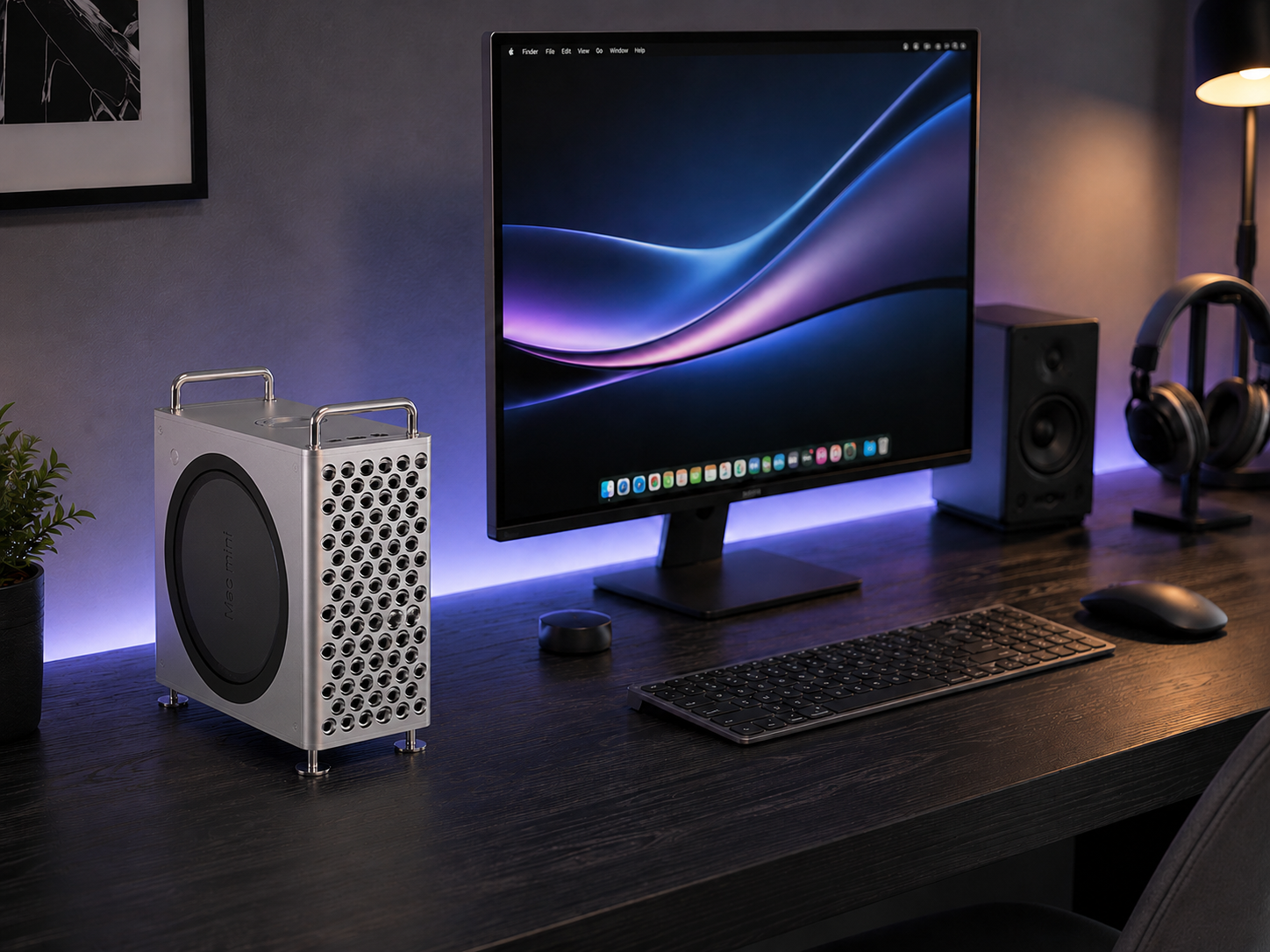
ZEERA MacForge Gen3 CNC Aluminum Mac Mini Case
- Mac Pro grille
- CNC chassis
- Better airflow
- SSD expansion
- Front ports

16GB to 24GB Changes More Than Memory Capacity
This is the most interesting part of the M6 memory lineup.
Moving from 16GB to 24GB increases unified memory capacity by 50%.
At the same time, memory bandwidth increases from:
153GB/s → 170GB/s
So the 24GB upgrade changes two parts of the memory subsystem at once.
16GB → 24GB
+8GB unified memory
+17GB/s memory bandwidth
This is different from simply adding more RAM while keeping every other memory specification unchanged.
24GB vs 32GB: Why the Bandwidth Is the Same
Both higher-memory M6 configurations are rated at 170GB/s.
That means upgrading from 24GB to 32GB does not unlock another memory-bandwidth tier.
24GB → 32GB
+8GB unified memory
No additional memory bandwidth
The reason to choose 32GB is therefore capacity.
If an application already fits comfortably inside 24GB, adding another 8GB should not automatically make it faster.
But if your workload regularly approaches or exceeds the available memory, 32GB can reduce memory pressure and reliance on SSD swap.
Memory Capacity vs Memory Bandwidth
These two specifications are often confused.
Memory capacity describes how much data can be stored in unified memory at one time.
Memory bandwidth describes how quickly data can move through the memory subsystem.
A larger number is not automatically better if the workload does not need it.
For example, an application that uses only 10GB of memory does not suddenly become much faster because the Mac has 32GB instead of 24GB.
On the other hand, a workload that needs 28GB may perform considerably better on a 32GB machine because it can avoid heavier swap usage.
The same idea applies to bandwidth.
Software that moves large amounts of data between unified memory and the GPU can potentially benefit more from additional bandwidth than a lightweight office application.
Does M6 Memory Bandwidth Matter for Local AI?
Local AI is one of the workloads where memory specifications matter more.
Apple silicon uses unified memory, allowing the CPU and GPU to access the same memory pool.
This makes capacity particularly important because local AI models must fit into the memory available to the system.
The jump from 16GB to 24GB therefore provides two benefits:
- More room for AI models and context
- Higher 170GB/s memory bandwidth
Moving from 24GB to 32GB gives larger models additional room, but bandwidth remains at 170GB/s.
For bandwidth-sensitive AI workloads, there is another Mac mini configuration worth understanding: M5 Pro.


M6 24GB vs M5 Pro 24GB Memory Bandwidth
Comparing the M6 and M5 Pro shows why unified-memory capacity alone does not tell you how fast a Mac's memory subsystem is.
Both machines can have 24GB of unified memory.
But their memory bandwidth is dramatically different.
| Specification | M6 24GB | M5 Pro 24GB |
|---|---|---|
| Unified Memory | 24GB | 24GB |
| Memory Bandwidth | 170GB/s | 307GB/s |
| Maximum Memory | 32GB | 64GB |
| Rear Thunderbolt | Thunderbolt 4 | Thunderbolt 5 |
The M5 Pro provides 137GB/s more memory bandwidth than the higher-memory M6 configuration.
That is roughly 81% more theoretical bandwidth.
This does not mean the M5 Pro will be 81% faster in every workload.
It does mean that users running bandwidth-heavy GPU, AI, 3D or professional workflows should not compare the two machines using unified-memory capacity alone.

Does Memory Bandwidth Matter for Video Editing?
It can, but it should not be treated as the only performance metric.
Video editing can involve large frames, GPU effects, multiple video streams, color grading and large amounts of data moving through memory.
Apple silicon also uses dedicated media engines for supported video formats, so some video workloads rely less heavily on raw memory bandwidth.
For lighter Final Cut Pro or social-media projects, the difference between 153GB/s and 170GB/s is unlikely to be the deciding factor.
For larger professional projects, memory capacity, GPU performance and sustained workload performance become increasingly important.
Does Memory Bandwidth Matter for Developers?
For ordinary web development and general coding, memory bandwidth is rarely the main limitation.
Developers are more likely to notice memory capacity when simultaneously running:
- Xcode
- Docker
- Databases
- Browsers
- Emulators
- Virtual machines
- Local AI tools
In this situation, moving from 16GB to 24GB provides significantly more memory headroom while also moving from 153GB/s to 170GB/s.
For large compilation workloads and more demanding development environments, M5 Pro may still offer a more meaningful performance upgrade than simply moving from 24GB to 32GB on the standard M6.
ZEERA Mac mini Setup
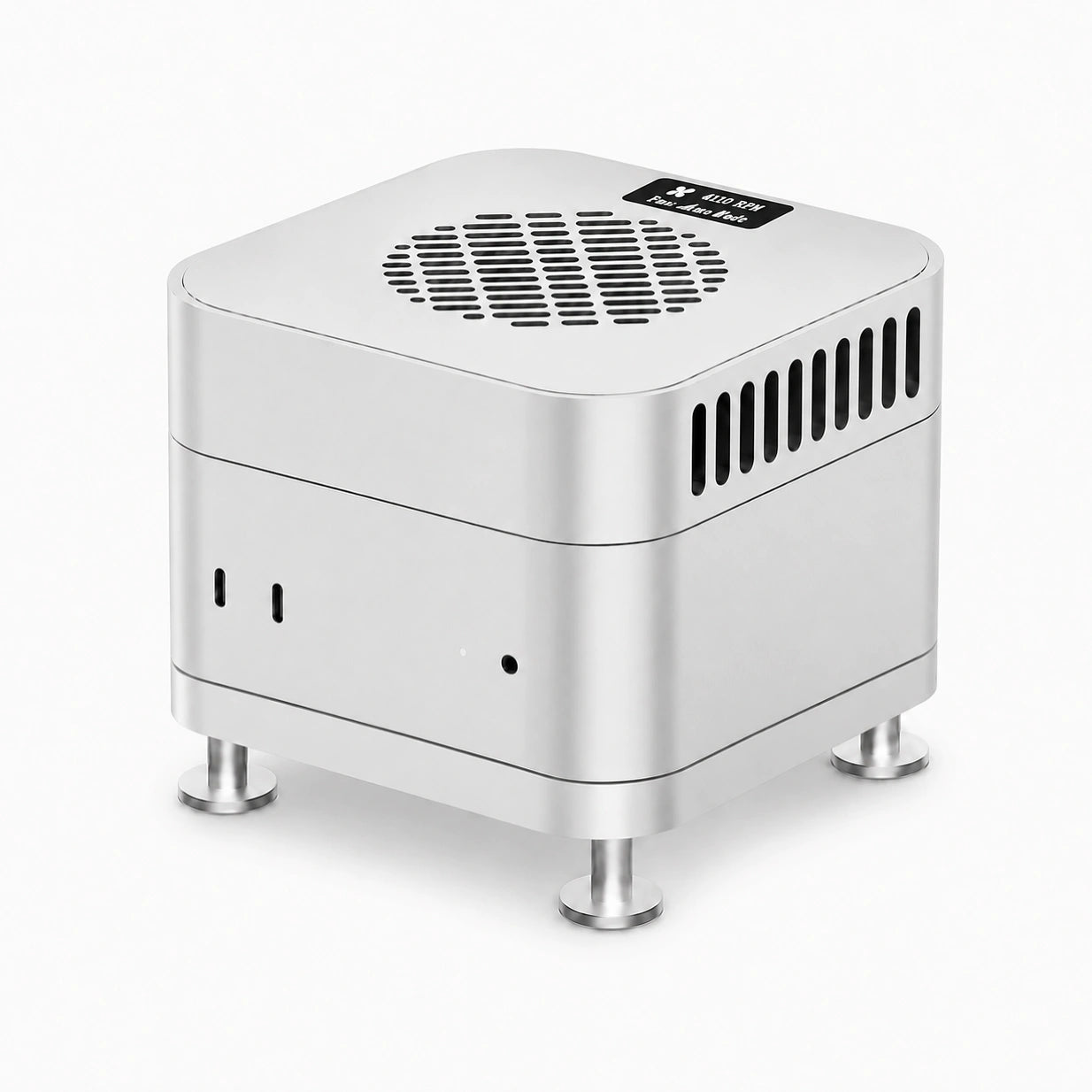
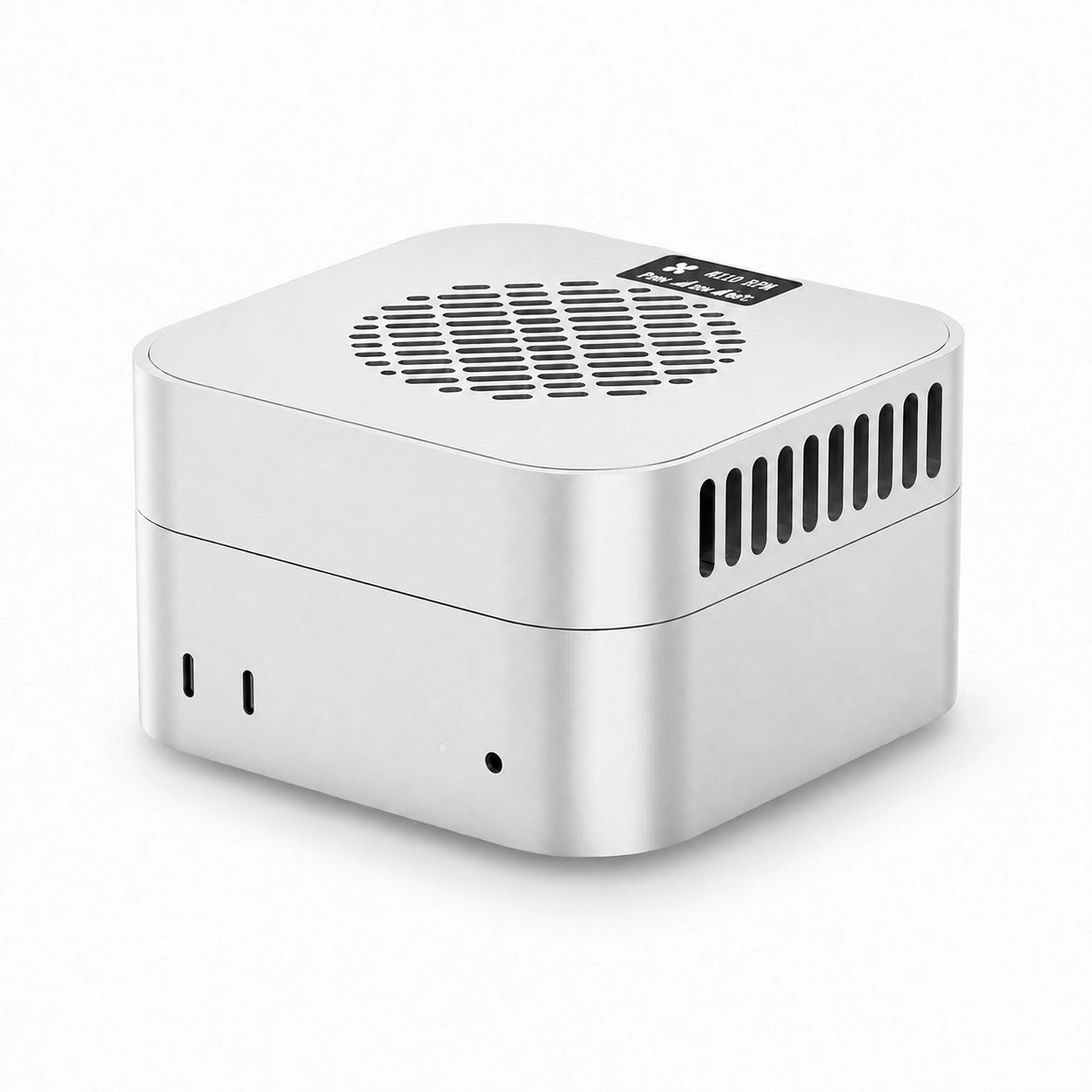
ZEERA MacForge Gen3 CNC Aluminum Mac mini Case
Build a cleaner Mac mini setup with a CNC aluminum enclosure, Mac Pro-inspired design, improved airflow architecture and dedicated space for a compatible external SSD enclosure.
Shop Now
Which M6 Memory Tier Has the Best Bandwidth?
If we look only at memory bandwidth, the answer is simple:
16GB: 153GB/s
24GB: 170GB/s
32GB: 170GB/s
The 24GB configuration is therefore the first M6 memory tier to reach the maximum 170GB/s bandwidth offered by the standard M6 Mac mini.
Upgrading to 32GB does not make the memory subsystem faster. It simply gives applications more unified memory to work with.
That distinction is the most important thing to understand when comparing the three configurations.
FAQ
What is the memory bandwidth of the 16GB M6 Mac mini?
The 16GB M6 Mac mini is rated at 153GB/s of memory bandwidth.
What is the memory bandwidth of the 24GB M6 Mac mini?
The 24GB configuration is rated at 170GB/s.
What is the memory bandwidth of the 32GB M6 Mac mini?
The 32GB M6 Mac mini is also rated at 170GB/s.
Is 24GB faster than 16GB on the M6 Mac mini?
The 24GB configuration has higher theoretical memory bandwidth: 170GB/s compared with 153GB/s on the 16GB model. That does not mean every application will run proportionally faster.
Does 32GB have higher bandwidth than 24GB?
No. Both 24GB and 32GB configurations are rated at 170GB/s. The 32GB upgrade primarily provides additional memory capacity.
How much faster is 170GB/s than 153GB/s?
170GB/s provides approximately 11.1% more theoretical memory bandwidth than 153GB/s.
How much memory bandwidth does the M5 Pro Mac mini have?
The M5 Pro Mac mini is rated at 307GB/s, substantially higher than the 170GB/s maximum of the standard M6 Mac mini.
Does memory bandwidth matter for local AI?
Yes, particularly for workloads that repeatedly move large model data through unified memory and the GPU. However, memory capacity is also critical because the model must fit within the available unified memory.
Related Reading
Mac mini M6 Price, Specs & Buying Guide
Best Accessories for Mac mini M6 & M5 Pro