Quick Answer
If Microsoft 365 email is not syncing on your Mac, first send and receive a test message in Outlook on the web.
If webmail works, check the Mac app’s connection, sign-in, updates and account settings.
For Apple Mail problems starting in October 2026, ask IT to check Exchange Online EWS access before deleting the account.
For Outlook, use the current Mac client and consider Reset Account only after preserving unsynced data.
Use webmail to keep working while you identify whether the problem is local or organization-wide.
Why is Microsoft 365 email not syncing on my Mac?
An inbox that stops updating can have several causes: a disconnected session, an offline app, a network restriction, stale local data, or a change to your organization’s Exchange access. The same symptom does not always need the same fix.
ZEERA reviewed Microsoft and Apple’s official guidance and built this troubleshooting order around one useful distinction: does the mailbox work in a browser, and which Mac app is failing? This is a documentation-based guide, not a claim that ZEERA reproduced every issue.
The steps below cover Microsoft 365 work or school email hosted in Exchange Online. If Outlook is managing a Gmail or other provider’s address, use that provider’s account settings; having a Microsoft 365 subscription does not make every connected mailbox an Exchange account.
Choose your starting point
- Webmail also fails: check account access, service health and mailbox limits.
- Apple Mail fails, but current Outlook works: investigate Apple Mail sign-in and Exchange protocol access.
- Only Outlook fails: check its version, connection and local cache.
- Several colleagues are affected: involve IT before rebuilding individual accounts.
Checked October 3, 2026. Menu names can vary with macOS and Outlook versions.
1. Test Microsoft 365 email in Outlook on the web
Open Outlook on the web and sign in to the affected work or school mailbox. Send a message to another address you can access, then reply to it.
Compare the browser inbox with the Mac app. Check the same folder and the exact subject, rather than relying on unread counts.
If both messages appear in webmail but not on the Mac, the next investigation should focus on the app or its access path. If the browser cannot send or receive either, start with service health, account access and quota. A working browser is useful evidence, but it does not prove that the desktop app has the correct permissions.
Apple recommends testing webmail when diagnosing Mac email problems: Apple’s send and receive troubleshooting guide.
2. Check Microsoft 365 service health and October 2026 Exchange changes
For a business account, ask an administrator to check Microsoft 365 admin center → Health → Service health, including Exchange Online advisories. Also check Message center for planned changes affecting the organization.
Several accounts failing at the same time is a reason to investigate a shared service or policy change. Reinstalling Mail on each Mac will not resolve a server-side access restriction.
Apple Mail stopped receiving Exchange email after October 1?
Microsoft’s Exchange Team says updated EWS access behavior begins rolling out on October 1, 2026. EWS stands for Exchange Web Services, a connection method used by Mac Exchange clients. The rollout is staged, so the date alone does not prove why your mailbox stopped syncing.
Ask IT to review the tenant’s EWSEnabled setting and EWSAllowedAppIDs list for the affected application. Microsoft’s September guidance explains that allow lists may be populated from recent usage when an administrator has not created one. Administrators should review their actual configuration rather than assume every app remains allowed.
Apple says it is working with Microsoft to move Mail and related apps to Microsoft Graph in a future update to macOS 27. That announcement does not confirm the change is already present in your installed build.
Practical next step: use webmail or a current Outlook client approved by your organization while IT checks access. Re-entering a password cannot override an EWS block. Microsoft’s published final Exchange Online EWS shutdown date is April 1, 2027.
Sources: Microsoft 365 service health; Microsoft’s September EWS rollout update; Apple’s Exchange integration guidance; Microsoft’s EWS retirement timeline.
3. Check offline mode and hidden inbox messages
Before changing account settings, confirm that the messages are actually missing. Select the affected account’s Inbox and clear any search or unread-only filter. In Outlook, also check Other if Focused Inbox is enabled, plus Junk, Archive and any folders used by rules.
In Outlook: if your version shows Outlook → Work Offline, make sure it is not selected. Open Tools → Accounts and look for connection errors. Use the app’s Sync command if available, then compare with your test message in webmail.
In Apple Mail: click a warning symbol beside the account to read the actual error. Check that the account is enabled in Mail → Settings → Accounts. Quit the app normally and reopen it to test again.
If a message appears after clearing a filter, treat the problem as an inbox-view issue. If new messages appear only after every manual refresh, continue with updates and the app-specific steps below.
Sources: Microsoft’s Outlook connection checks; Apple Mail status messages.
4. Reconnect the account after a password or MFA change
If syncing stopped after a password change or a new sign-in requirement, complete the account’s sign-in prompt in the affected app. Use your full work or school address and finish the Microsoft authentication process, including any required MFA approval.
For Apple Mail, open System Settings → Internet Accounts, select the Exchange account, and address any sign-in warning. For Outlook, inspect the affected account under Tools → Accounts and follow its reconnect prompt.
If you see “administrator approval required,” an access-policy error, or a device-compliance requirement, send the exact message to IT. Repeatedly entering the same password is unlikely to resolve an authorization decision.
Microsoft has documented Microsoft 365 accounts disconnecting from Apple Mail and recommends refreshing credentials before removing and adding the account again. Its support page includes mobile Settings paths; the Mac uses Internet Accounts and Mail settings instead.
Source: Microsoft’s Apple Mail reconnection guidance.
5. Update macOS and use the current Outlook for Mac
Install available supported updates before troubleshooting a persistent sync failure. On a managed work Mac, follow your organization’s approved update process.
- Outlook installed from Microsoft: open an Office app and choose Help → Check for Updates to use Microsoft AutoUpdate.
- Outlook installed from the Mac App Store: open the App Store and check Updates.
- Apple Mail: check System Settings → General → Software Update; Mail updates are delivered with macOS.
Legacy Outlook deserves special attention in October 2026. Microsoft says the legacy Mac client will stop working with Exchange Online mailboxes starting this month and recommends moving to the current Outlook experience. Do not use switching back to Legacy Outlook as a durable fix for Microsoft 365 email.
After updating, reopen the app and repeat the same send-and-receive test. A successful update is not proof that tenant access settings are correct.
Sources: Microsoft’s Mac update instructions; Legacy Outlook for Mac support changes.
6. Test another network if email stalls after sleep or on Wi-Fi
If syncing fails only on one network, compare it with another permitted connection, such as a personal hotspot. A Mac mini can also be tested over Ethernet when available. Restart the Mac if its network connection has not recovered after sleep.
Check whether a VPN, proxy or network-filtering app is involved. Ask IT to approve any test that changes a required company connection; some accounts depend on that connection for access.
Interpret the result: if the same app and account work immediately on another network, investigate the original network path. If only one mail app fails on both connections, return to its account and compatibility checks.
A display that remains black after sleep is a separate symptom. If that also affects your desktop, see our Mac mini monitor wake troubleshooting guide.
7. Check Apple Mail’s Exchange account setup and mailbox storage
In System Settings → Internet Accounts, confirm that Mail is enabled for the affected account. In Mail → Settings → Accounts, verify the address and account status.
For a Microsoft 365 business mailbox, use the Microsoft Exchange account setup flow approved by IT. An account configured as a generic mail account may have different capabilities or restrictions. Avoid replacing it with guessed IMAP settings as a quick fix.
Also check the mailbox’s server storage quota in webmail or ask your administrator. A full mailbox can affect sending and receiving. Preserve required messages before deleting or archiving anything, and follow your company’s retention policy.
Local Mac disk space and Exchange mailbox quota are different limits. If macOS reports that its startup disk is full, address that separately. Our Mac mini storage upgrade guide explains the difference between internal storage and external capacity.
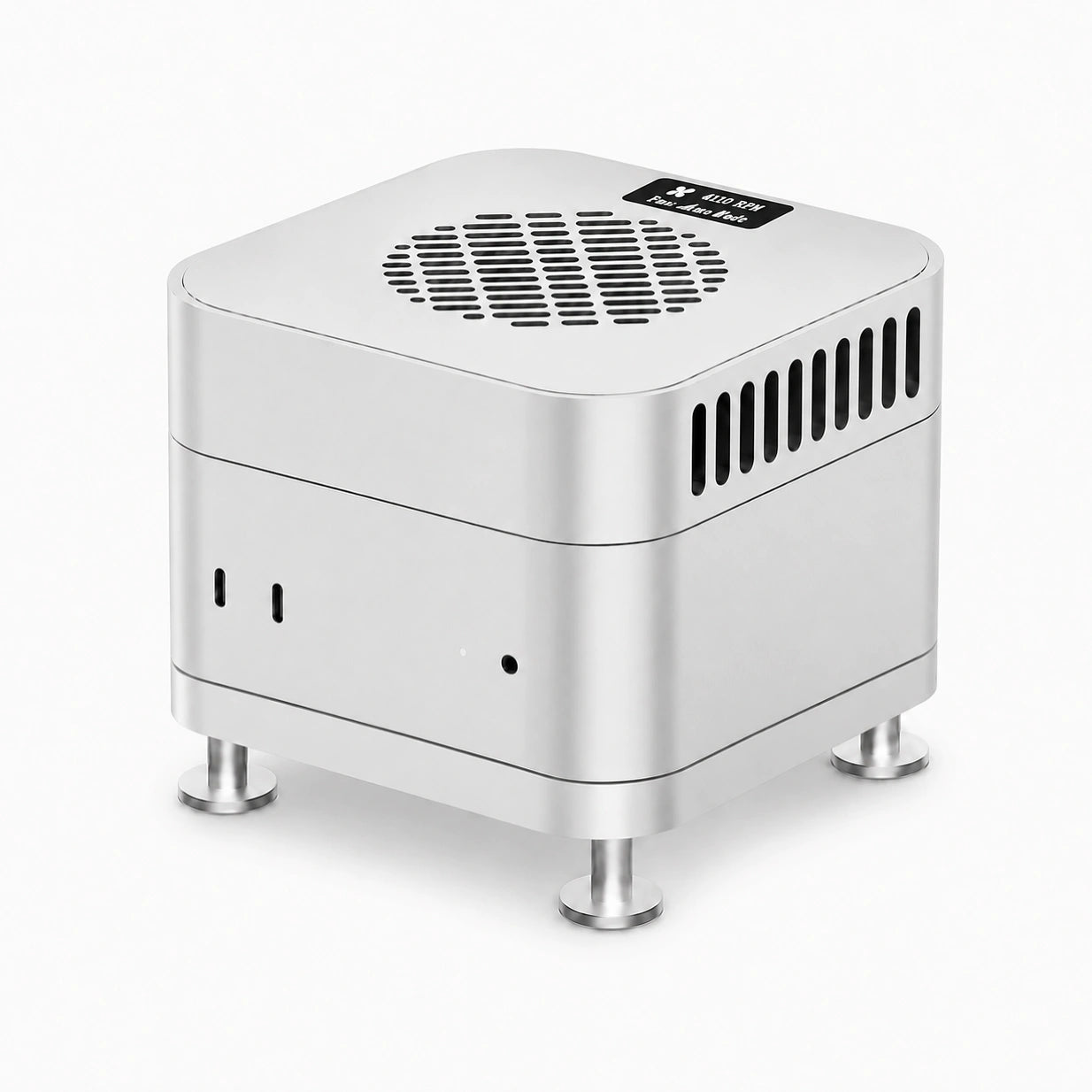
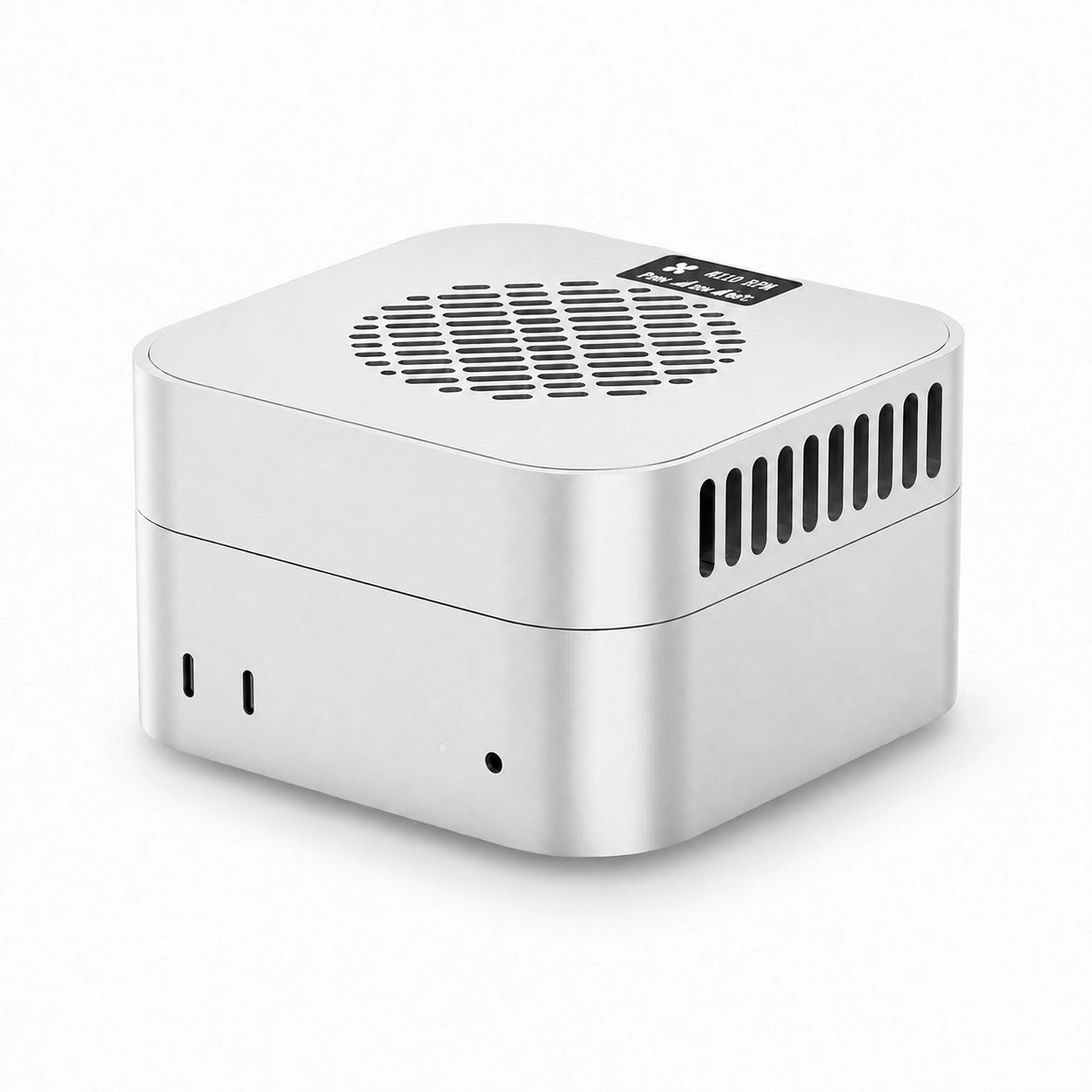
If the Mac mini is also unusually hot or slow outside Mail, investigate that symptom separately with our Mac mini heat troubleshooting guide. The cooling accessory below is intended for sustained workloads; it does not restore Exchange account access.
Sources: Apple’s account management guide; Apple’s mailbox quota guidance.
8. Reset Outlook’s account cache after protecting unsynced data
If webmail contains your messages and the current Outlook client still displays stale or incomplete data, Microsoft documents an account reset that rebuilds the local cache.
Before Reset Account
Microsoft warns that resetting removes information that has not synchronized with the server. Preserve unsent Outbox messages, local drafts and other local-only items first. Check webmail to confirm that important server-backed items are present.
- Connect the Mac to the internet and confirm that the affected mailbox is accessible.
- In Outlook, open Tools → Accounts.
- Select the affected Microsoft 365 account.
- Open the Manage menu and choose Reset Account, if available in your version.
- Allow the mailbox to download again, then repeat the test with a new message.
Older Outlook interfaces may offer a folder-level Properties → Empty Cache action instead. That operation also removes unsynced data from the affected folder. Use only the procedure documented for the interface you actually have.
A cache reset cannot fix an account blocked by server policy. If the inbox freezes again soon afterward, stop repeating resets and collect the details for support.
Sources: Microsoft’s Reset Account procedure; Microsoft’s folder-cache procedure.
9. Remove and add the email account again as a last local step
Consider reconnecting from scratch only after confirming webmail access, checking organization policies and saving data that exists only on the Mac. An account managed by a configuration profile should be handled with IT.
Apple Mail: go to Mail → Settings → Accounts, select the account and use the remove button. If macOS directs you to Internet Accounts because other apps use it, follow that prompt and consider the effect on Calendar and Contacts too.
Then choose Mail → Add Account and follow the Exchange setup flow. Depending on your macOS version, enter the address first or select Microsoft Exchange from the provider list. Complete Microsoft sign-in and enable Mail.
Outlook: remove the affected account through its Accounts settings, then add it again with the normal Microsoft sign-in flow. Preserve local-only content before proceeding.
Removing the Mac connection does not normally delete copies stored on the mail server, but those copies must actually exist there. If you cannot confirm where important messages are stored, get help before removing the account.
Source: Apple’s account removal and setup instructions.
When should you contact IT or Microsoft support?
Escalate when several users are affected, sign-in is blocked by policy, Apple Mail fails after the October changes, a shared mailbox alone will not update, or resetting the local account provides only temporary relief.
Provide a short report with:
- Your macOS version, mail app name and Outlook version if relevant.
- Whether webmail can both send and receive a new test message.
- Whether Apple Mail, current Outlook, your iPhone or colleagues show the same problem.
- The exact error text and approximate time it began, including the time zone.
- Any recent password, MFA, network, app or account-policy changes.
- Whether the affected folder belongs to your own mailbox or a shared mailbox.
Work or school users should start with their organization’s help desk. In eligible Outlook installations, Help → Contact Support provides another route; availability depends on licensing and organizational settings.
Source: Contact support within Outlook for Mac.
FAQ: Microsoft 365 email sync on Mac
Why does my Microsoft 365 email work on iPhone but not on Mac?
The two devices can use different Exchange connection methods. Apple documents Exchange ActiveSync for iPhone and EWS for Mac integration while its Graph transition is being developed. A working iPhone therefore does not prove that the Mac app’s access is allowed. Compare webmail and current Outlook, then ask IT to inspect the failing client.
Can I send email from Apple Mail but still have a sync problem?
Yes. A successful send does not prove that incoming messages, folder changes or calendar updates are arriving. Test both directions and compare a specific message with webmail.
Does Microsoft 365 email not syncing mean I need a new Mac?
No. This symptom alone does not establish a hardware fault. Check account access, service changes, the network and the app before considering hardware repair or replacement.
Will reinstalling Outlook fix a company access restriction?
No. Reinstalling the app does not change the organization’s authorization settings. IT must resolve the relevant access or compliance requirement.
How long should Outlook take to sync after Reset Account?
There is no universal completion time. Mailbox size, attachments and network conditions affect the download. Look for progress, compare a new test message and avoid repeated resets that restart the process.
Can I keep using email while Apple Mail is disconnected?
Use Outlook on the web or another working client your organization permits. Before switching, preserve any unsent message that exists only in the disconnected app.
Related Mac guides
- Mac mini M6 Monitor Not Waking After Sleep? 9 Fixes to Try
- Why Does My Mac mini Get So Hot? Causes and Fixes
- Mac mini M6 Desk Setup: Build a Mini Mac Pro
- Best Mac mini M6 and M5 Pro Accessories
- Mac mini M6 256GB SSD Is Slower: Should You Buy 512GB Instead?
- Mac mini M6 and M5 Pro SSD Upgrade: Why You Can’t Swap Internal Storage
Written by Guichang Chen · ZEERA WIRELESS. Guidance checked against Microsoft and Apple documentation on October 3, 2026.