Quick Answer
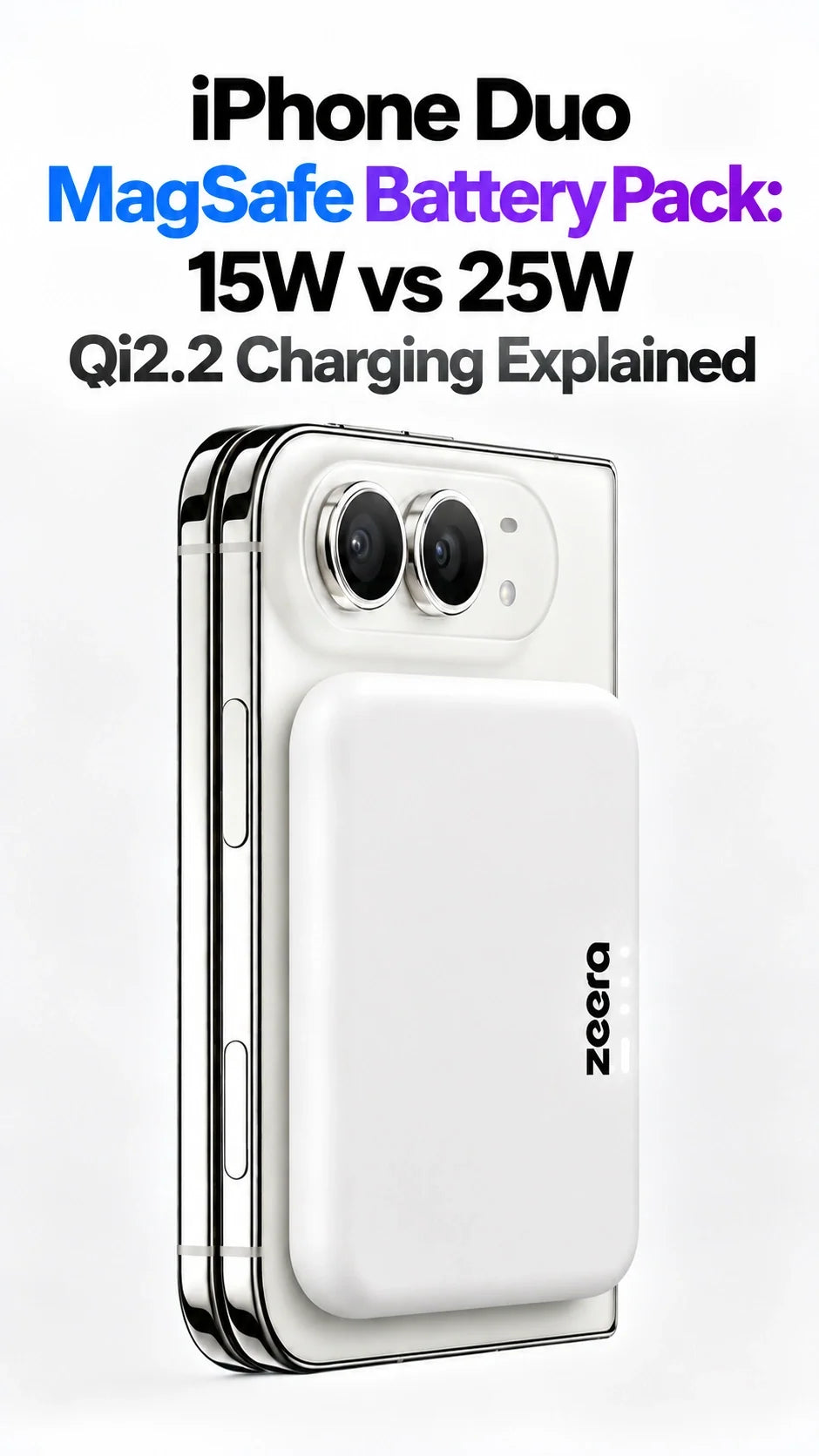
iPhone Duo supports up to 25W MagSafe and Qi2 wireless charging in Apple’s US specifications. Apple’s mainland China specifications list a 15W maximum, so check your model’s regional rating.
Original Qi2 supports up to 15W; the newer Qi2 25W tier is commonly called Qi2.2. Both the phone and battery pack must support the faster mode.
A power bank’s USB-C output, wireless output and recharge input are separate ratings. A “25W” headline alone does not identify which one you get.
25W is a peak capability. Temperature, battery level and phone activity affect sustained charging and the time saved over 15W.
ZEERA specifies up to 25W wireless output for the upcoming MagVolt Gen5. Completed Qi2 25W certification has not been verified for this article; a confirmed WPC ID and finished-product speed tests are not available here.
Can iPhone Duo actually use a 25W MagSafe battery pack?
Yes, if your Duo model supports 25W and the battery pack supports the compatible 25W wireless charging mode. Apple’s US technical specifications list up to 25W for both MagSafe and Qi2. Apple’s mainland China specifications list up to 15W for both.
Check the phone’s regional specification before shopping. A 25W accessory cannot raise a 15W phone’s receiving limit, and a 25W-capable Duo cannot turn a 15W wireless power bank into a 25W one. This guide explains the charging modes behind those numbers.
Reviewed October 21, 2026. Apple and WPC sources establish the phone specifications and charging standards. MagVolt Gen5 details are ZEERA’s announced specifications, rather than independent performance results.
Qi2 15W vs Qi2 25W: what changes?
The Wireless Power Consortium’s launch announcement identifies Qi v2.2.1 as the standard branded Qi2 25W. You will also see the shorthand “Qi2.2” or “Qi 2.2” in product listings. The WPC’s consumer explanation clarifies these names.
Original Qi2: up to 15W
A magnetic wireless charging tier that remains useful for routine top-ups. It does not become 25W because the phone supports a newer standard.
Choose it when: your current pack meets your needs, your phone is limited to 15W, or the price difference matters more than faster short charging sessions.
Qi2 25W: the higher-power tier
The maximum increases from 15W to 25W: 10W more, or approximately 67% more rated power. Magnetic alignment remains part of the charging system.
Choose it when: you have a compatible 25W phone and want more charging headroom during a brief break. Confirm the exact battery model’s wireless rating and certification.
MagSafe-compatible: attachment is only one part
“MagSafe-compatible” can describe how an accessory attaches. It does not, by itself, establish Qi2 certification, Apple certification or a 25W wireless charging mode.
A battery can attach magnetically while charging at a lower supported rate. Look for a separate, explicit wireless-output specification.
Wireless output, USB-C output and input: read three separate ratings
When comparing an iPhone Duo Qi2.2 power bank, read the specification for each charging direction. These numbers describe different circuits and cannot be substituted for one another.
Wireless output: battery pack → iPhone
This is the relevant rating when the pack is attached to the back of the Duo without a charging cable. Look for an explicit up to 25W wireless output statement and the supported charging mode.
USB-C output: battery pack → iPhone through a cable
This is wired charging. Check the pack’s USB-C Power Delivery profiles and the phone’s supported input. A 30W USB-C output does not prove that the same pack offers 25W wirelessly.
Illustrative example: a pack marked “30W USB-C output / 15W wireless output” remains a maximum-15W wireless charger.
Input: a charger → battery pack
Input tells you how the pack recharges itself. USB-C input and wireless input may have different limits. Neither one tells you how quickly it can charge your phone.
Illustrative example: “25W input” describes pack recharging, unless a separate wireless-output rating says otherwise. These examples are not MagVolt Gen5 specifications.
Also check whether a pack’s advertised total output is shared across ports or charging surfaces. A combined total is not necessarily available to the phone alone. Pass-through charging—recharging the pack while it charges another device—requires explicit support and may use different power limits.
Is 25W really faster than 15W in everyday use?
It can be, but a 67% increase in peak rated power does not mean a 67% reduction in charging time. The useful comparison is energy delivered during the time you actually have, under matching conditions.
Peak power and average power answer different questions
A pack may reach its fastest mode briefly and then reduce output as the phone warms or fills. Two products with the same peak rating can therefore produce different results over a 20-minute session.
Arithmetic only: holding 25W continuously for 20 minutes represents 8.3Wh at that measurement point; holding 15W represents 5Wh. These are idealized energy figures before downstream losses, not measured Duo charging results or battery-percentage predictions.
Short breaks favor higher sustained power
A compatible 25W setup has more potential during a quick top-up from a lower charge level. During a long charging window, a dependable 15W pack may already provide enough power for your routine.
Near full charge, the phone reduces charging power. Buying a higher peak rating does not remove that taper.
Apple’s published wired and MagSafe fast-charge examples use specified wall-powered setups. They are not a speed guarantee for every portable battery. We do not have a finished-product 15W-versus-25W charging curve for MagVolt Gen5, so no minutes-saved or 0–50% claim is made for it here.
Why does a 25W battery pack slow down or get warm?
Wireless charging involves power conversion and heat. Apple explains that an iPhone can warm during wireless charging and that charging can slow or stop when the device gets too hot. A higher advertised ceiling does not override thermal management.
Heat and phone activity
Direct sunlight, a warm room, navigation, gaming, video recording or a bright display can reduce charging headroom. The phone also consumes energy while charging, so the battery percentage may rise slowly even while power is being delivered.
Battery level and power sharing
The phone’s charge level, the pack’s remaining energy and other active outputs can affect power. Check the manufacturer’s instructions for any low-battery limits, simultaneous-output restrictions and temperature behavior.
Case alignment and wired accessories
Rear stands, wallets, metal plates or a case that prevents proper seating can disrupt the charging setup. A magnetic ring does not raise the phone’s electrical power limit.
Apple’s charging-speed guidance also says connected USB-C or Lightning accessories can limit wireless charging. Disconnect unnecessary wired accessories when checking wireless performance.
For a useful check, start with a cool phone and pack, remove detachable rear accessories, use a compatible case and leave the screen off. If charging pauses because of temperature, let the devices cool in a shaded, ventilated place. Compare another session under the same conditions before judging the pack by one slow result.
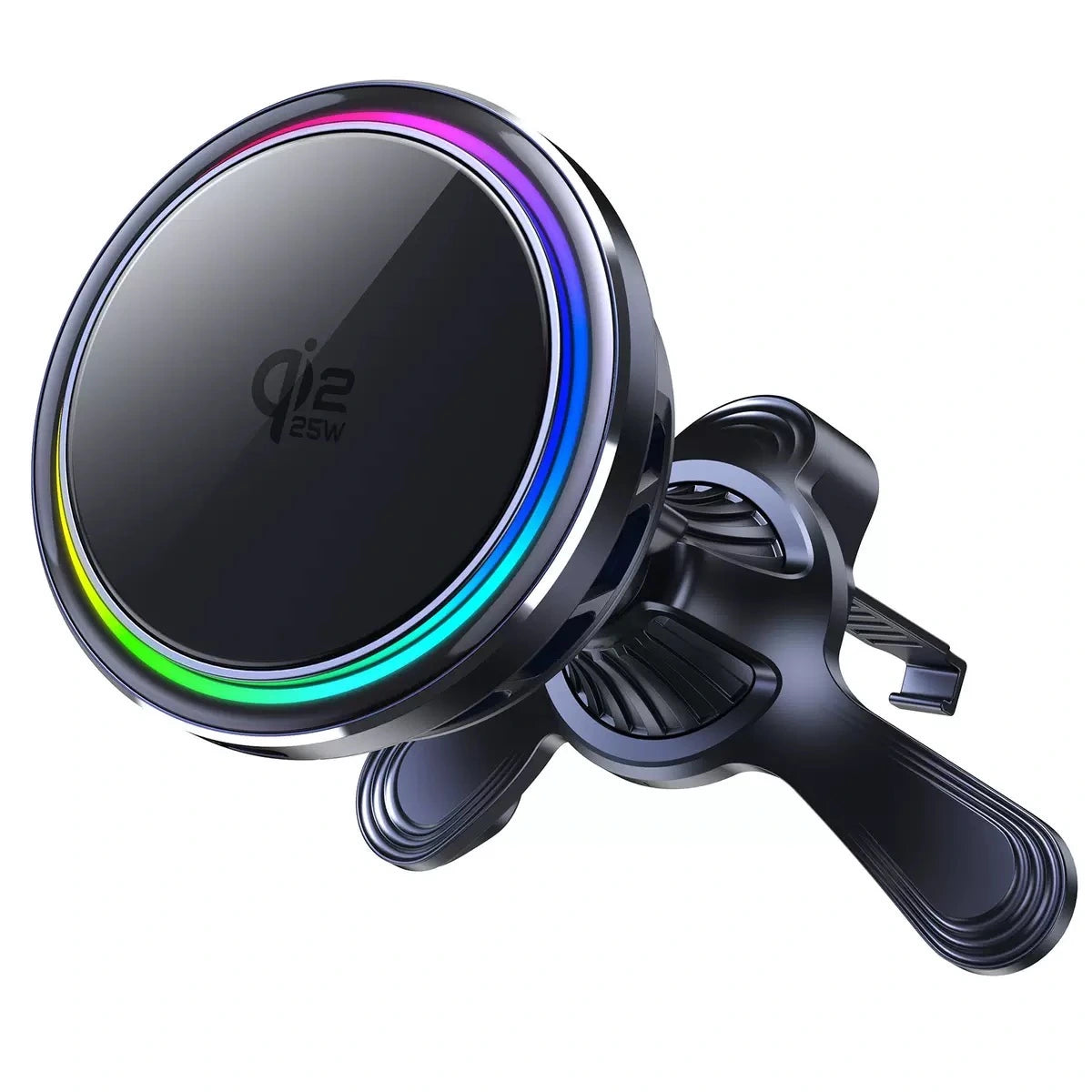
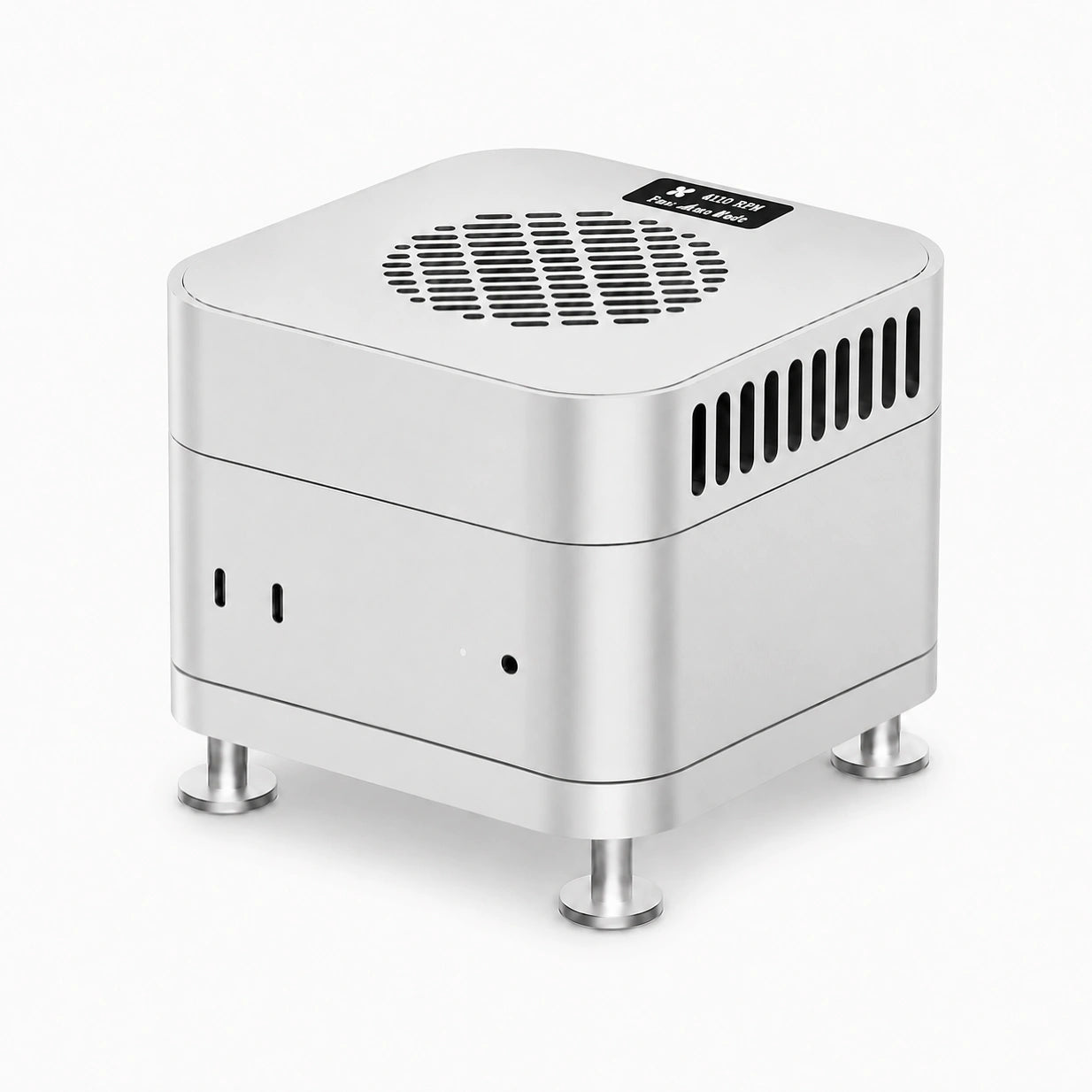
For navigation, our iPhone Duo magnetic car-mount guide covers mounting support separately from charging power. An actively cooled car or desk charger is a different product category from a battery pack; do not assume a portable pack includes active cooling.
Where ZEERA MagVolt Gen5 fits into the 25W choice
MagVolt Gen5 is ZEERA’s upcoming portable option for buyers who want up to 25W wireless output for a compatible iPhone Duo. The MagVolt Gen5 product preview gives the broader announced feature set. Here, the important distinction is what its charging claims establish.
Up to 25W wireless output — ZEERA-stated
ZEERA describes a Qi2.2 / Qi2 25W wireless-output design. This is a stated maximum capability for a compatible phone, not a promise that the phone continuously receives 25W or stores energy at that rate.
Certification — not verified for this article
No confirmed MagVolt Gen5 WPC certification ID or matching Qi2 25W database record is provided in the sources used here. Completed certification has not been verified. The 25W design specification must not be presented as proof of certification.
“Certification pending” would also require confirmation that the product is undergoing that process. This article does not establish that status.
6,000mAh custom battery
ZEERA specifies a high-energy-density lithium-polymer cell. Capacity describes stored charge at the cell’s rated voltage; it does not specify wireless speed or guarantee a full Duo recharge. Delivered energy depends on conversion losses and actual use.
MagSafe self-recharging is wireless input
ZEERA says the pack can recharge from a compatible MagSafe charger. That is charger-to-pack power flow. Its wireless-input wattage has not been detailed here, and the 25W output claim must not be copied into the input specification.
AirPods and Apple Watch support
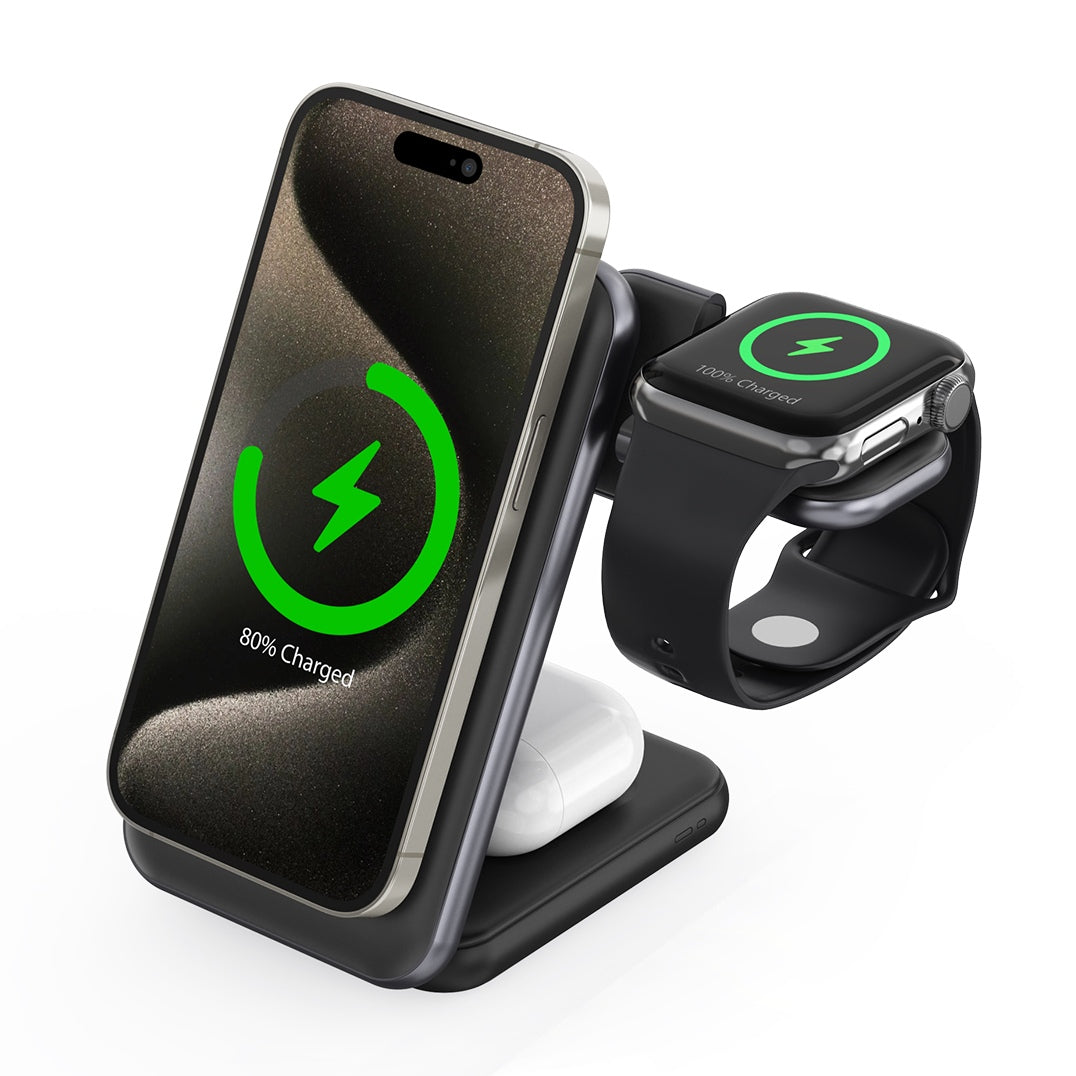
ZEERA has announced support for compatible AirPods charging cases and Apple Watch. Phone-output wattage does not establish the charging rate for those accessories. Exact model support, simultaneous charging and power-sharing details remain to be specified.
MagVolt Gen5’s USB-C input/output ratings, measured sustained charging performance, price and launch date are not established in the announcement used for this guide. Check the final specifications before ordering. For release updates, use the newsletter signup on ZEERA’s website.
How to check a Qi2 25W power bank before buying
The WPC recommends checking its Certified Product Database. A listing for a different model, an internal component or another product from the same brand does not verify the pack you are buying.
A practical five-point check
- Match the exact model: use the product name, model number and WPC certification ID.
- Confirm the charging tier: a Qi2 15W certification is not proof of the newer Qi2 25W capability.
- Read wireless output explicitly: ignore USB-C or combined-output numbers when assessing magnetic charging.
- Check the phone: confirm its regional maximum and required software.
- Look for useful test conditions: starting percentage, room temperature, case, phone activity and battery-only operation.
The WPC’s certification guidance distinguishes certification from compatibility claims. Certification verifies conformity through its program; a real-world charging test answers the separate question of speed in a particular setup.
Should you choose a 15W or 25W battery for iPhone Duo?
Keep 15W if it already solves your problem
A reliable 15W pack can remain useful for commuting, desk top-ups or a phone with a 15W receiving limit. Upgrade when your actual charging window or supported phone makes the additional capability worthwhile.
Choose 25W for a compatible phone and shorter top-ups
Prioritize a clearly specified wireless mode, verified certification and sustained performance under realistic conditions. A higher number on the USB-C port is not a substitute for those checks.
Choose USB-C when wired charging suits the task
A suitable USB-C PD pack and cable avoid the wireless transfer stage and are worth considering when you want a direct charging connection. Compare actual compatible output profiles rather than assuming that any wired setup is faster.
Your case should allow the charger to seat as intended. The iPhone Duo case resource hub explains the different designs; MagSafe support varies by model and variant. The collection below includes multiple case types, so check the selected product’s charging compatibility.
FAQ: iPhone Duo 15W vs 25W MagSafe batteries
Does a MagSafe charging animation prove I am getting 25W?
No. A charging indicator confirms a charging state, not a measured power level. Check the supported charging mode and use an appropriate test to establish actual performance.
Will a 25W Qi2 pack work with a phone limited to 15W?
A compatible certified setup can use a mutually supported lower-power mode. It cannot increase the phone’s receiving limit to 25W. Confirm the exact phone and pack compatibility.
Can I measure wireless charging with a USB-C power meter?
A meter on a wall charger measures input to the charging setup, including its losses and other consumption. It does not directly measure power stored in the phone’s battery. A self-powered pack has no wall-input reading during ordinary battery-only use.
Does a Slow Charger message mean the battery pack is faulty?
Not necessarily. Apple says this message can indicate that a more powerful charger could improve speed. Check the phone’s specifications, connected accessories, temperature and charging setup before treating it as a hardware fault.
Will a larger mAh rating make wireless charging faster?
No. Capacity and output power are different specifications. Compare rated energy and delivered recharge results for endurance, and the supported wireless mode for charging speed.
Can MagVolt Gen5 provide 25W while it is recharging itself?
Pass-through support and power limits have not been established in the announcement used here. Do not assume that wireless self-recharging and maximum phone output can operate together.
Is ZEERA MagVolt Gen5 already Qi2 25W certified?
Completed Qi2 25W certification has not been verified for this article, and a confirmed WPC ID is not supplied in its sources. ZEERA’s stated up-to-25W wireless design is separate from certification and measured performance.
Related Articles
Sources and disclosure: Technical references are linked beside the relevant explanations. ZEERA develops and sells accessories. MagVolt Gen5 information is based on ZEERA’s product announcement; no independent charging benchmark, battery-percentage gain or completed certification is claimed. The charging calculations are illustrative. Regional phone specifications and final accessory documentation take precedence for your setup.