Quick Answer
At $899 in the US, the M6 Mac mini packs remarkable CPU, graphics and media performance into a tiny desktop.
In Max Tech's M6 Mac mini testing, it excelled at Blender, Logic Pro and Final Cut Pro, but a large Lightroom export barely improved over the M4.
The biggest buying compromises are the $300 higher entry price, soldered internal storage, a 256GB base SSD and only 16GB memory in the entry configuration.
For a main creative desktop, 24GB memory and at least 512GB storage are worth considering; light users can keep the base model if they plan for external storage.
Is the M6 Mac mini really the best-value powerful PC?
It is a compelling answer for people whose apps run well on macOS, especially if they already own a monitor and peripherals. Apple lists the entry M6 with a 12-core CPU, 12-core GPU, 16GB unified memory and 256GB SSD for $899 in the US. The computer alone is not a complete desk setup, and “most powerful PC for the money” is a judgment about specific work, not a universal benchmark title.
M6 Mac mini at a glance · US base model
$899 before display and accessories
M6 · 12-core CPU · 12-core GPU
16GB unified / 256GB SSD; 24GB, 32GB and larger SSD options
3 × Thunderbolt 4, HDMI, 2.5Gb Ethernet, Wi-Fi 7 and Bluetooth 6
Where does the M6 Mac mini feel genuinely fast?
Everyday response and creative work: Max Tech reports a Geekbench 6 single-core score of 4,676 and a Speedometer 3.1 result above 77 in its test setup. Those are useful signs of fast interaction, although a benchmark does not mean an M4 owner will notice a dramatic difference while writing email.
Graphics and rendering: The video records more than 52 fps in 3DMark Steel Nomad Light, roughly 75% above the prior base M4 result in that comparison. Its Blender Party Tug render finished in under 40 seconds, about 2.5 times as fast as the tested base M4. These are test-specific gains, not a promise that every game or renderer scales the same way.
Music and video: Its Logic Pro benchmark ran 210 tracks without CPU overload, reported as 62% more than the M4 in the same test. A five-minute 4K HEVC Final Cut Pro export took 1 minute 27 seconds. This combination makes the small desktop especially appealing to creators moving up from an M1 or M2. For separate owner feedback, read our M6 music production and coding guide.
Apple also claims up to 2× faster graphics and up to 4× faster AI performance versus its M4 Mac mini in selected tests. Those are Apple's controlled comparisons; Max Tech's workload numbers above are independent third-party measurements.
What are the four biggest M6 Mac mini drawbacks?
The $899 base price is $300 above the comparable 16GB/256GB M4 launch model discussed in the video. The performance gain is real, but the value case is less simple for light use.
Third-party teardown evidence shows the M6 NAND soldered to the board. The M4 generation's removable replacement module is no longer a practical upgrade route.
Max Tech observes a single NAND package in its 256GB unit and about 3,200 MB/s storage performance. This measured base configuration should not be generalized to every capacity.
16GB can be enough for light tasks, but large photo batches, many apps or local AI models may run into swapping and a 32GB M6 maximum.
The storage distinction matters: an external Thunderbolt SSD can hold projects and libraries, but it cannot convert the built-in 256GB drive to 512GB or restore an internal upgrade path. See our M6 and M5 Pro SSD upgrade guide before ordering.
One more workflow limit: the M6 has Thunderbolt 4 on its rear ports. The M5 Pro model offers Thunderbolt 5, more memory capacity and higher memory bandwidth, which can matter for fast external arrays and heavier production setups.
Why did Lightroom improve so little in the video?
This is the clearest counterexample to the “fastest at everything” headline. Max Tech's 50-photo, 42MP Lightroom export took 41 seconds on M6 versus 52 seconds on M4. At 500 photos, the M6 took 6 minutes 51 seconds, only slightly faster than the M4 in that test and well behind the tested M4 Pro.
The reviewer observed roughly 2GB of swap use and full memory pressure on the 16GB machine. Limited RAM and the base SSD layout are plausible contributors, but the video does not isolate their individual effect or prove a Lightroom optimization fault. CPU and GPU temperatures were reportedly fine in that run. If Lightroom Classic is your primary paid workflow, judge the M6 by your own catalog, previews and export settings before assuming the Blender gains transfer to it.
The video also could not complete its Xcode benchmark under macOS 27. That is a test failure, not evidence that the M6 is slow at compiling. We therefore do not assign it an Xcode benchmark score.
Which M6 Mac mini configuration should you buy?
Best when you already own a display, mainly browse or work in office apps, and consciously keep larger files on an external drive.
Our balanced pick for a primary Mac with active photo, music, design or development projects. More headroom helps when several demanding apps stay open.
Consider for larger multitasking and local AI tasks if the rest of the M6's I/O and memory limits still fit your workflow.
Compare its $1,699 US starting price if you need more than 32GB memory, Thunderbolt 5, larger local models or sustained professional workloads.
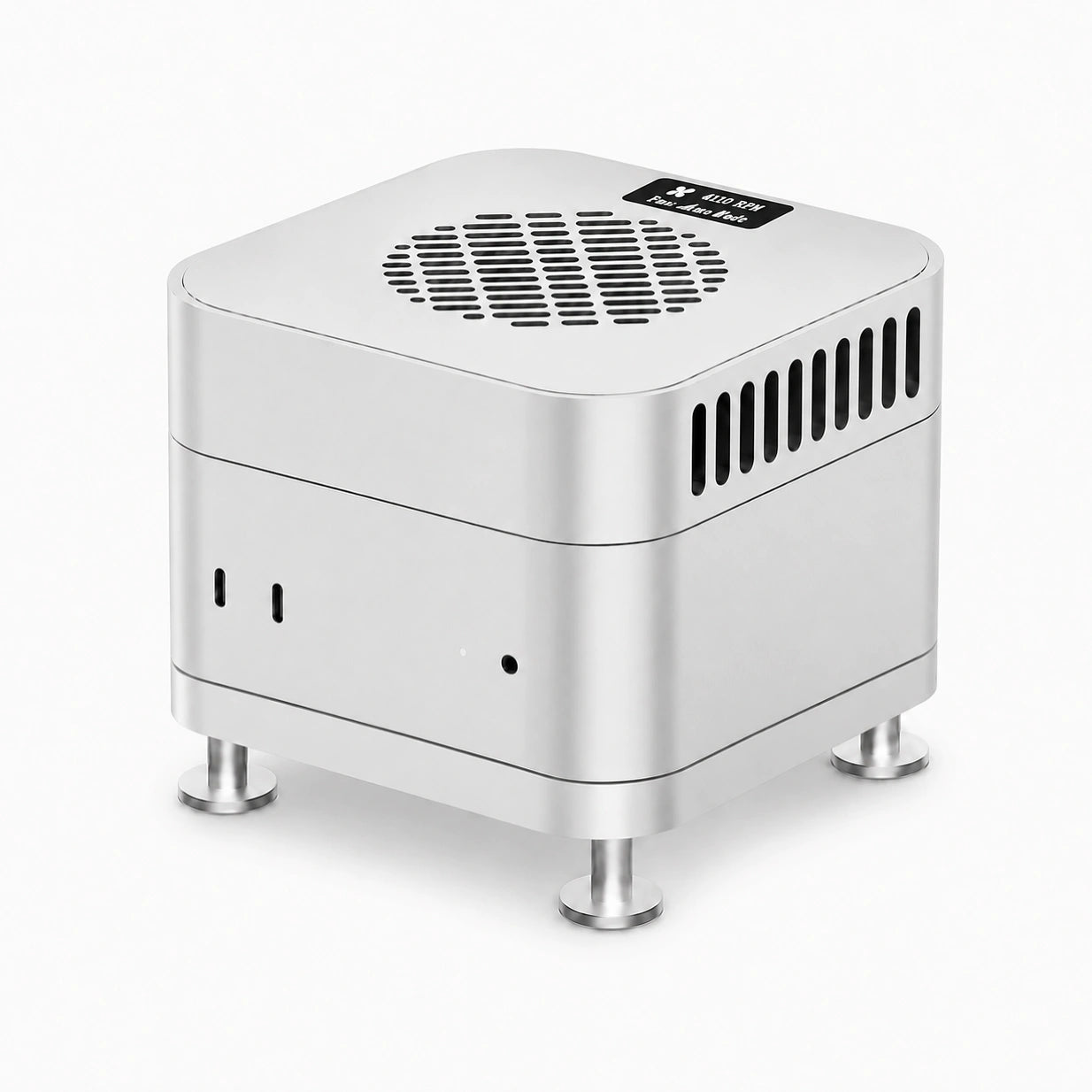
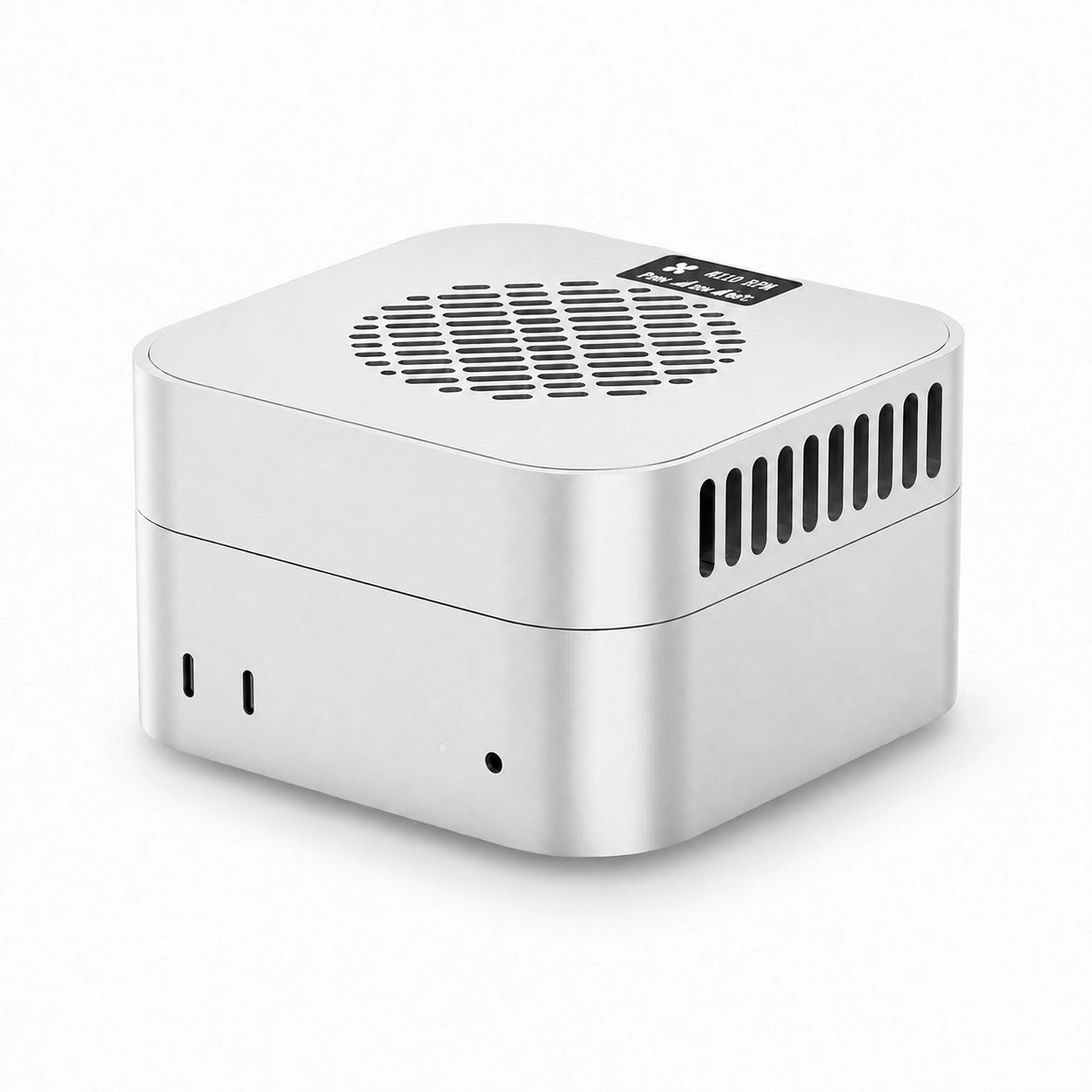
Do not buy active cooling to compensate for too little RAM or a slow export caused by swapping. The reviewer did not find a thermal limit in its Lightroom test. For normal use, the built-in cooling should be the starting point; our M6 cooling stand guide explains when sustained loads make an extra cooler useful.
Should M4, M1 or Windows users switch?
Already on M4: Keep it if your actual projects finish comfortably. The M6's rendering and GPU improvements are substantial in the cited tests, but general office work rarely uses all that headroom. Compare our M6 versus M4 buying guide if you have a specific bottleneck.
On M1, M2 or an aging Intel desktop: The M6 is a much easier upgrade to justify, especially for Logic Pro, media exports, web design and 3D work. Price the RAM and SSD you will actually need; the $899 headline applies only to the entry unit.
On Windows: Check your required games, plug-ins, peripherals and Windows-only software first. Max Tech calls the M6 the best-value PC in its review; that is the reviewer's overall verdict, not proof that it wins every Windows workload. The right machine is the one that runs your daily tools.
Video source: Max Tech, “M6 Mac mini just ENDED Windows PCs..”. All Max Tech benchmark values, SSD observations and review opinions above are attributed to this video. ZEERA's buying recommendations are editorial analysis of those results and Apple's specifications.
Verdict: huge performance per dollar, with a configuration catch
The M6 Mac mini can be an unusually capable $899 desktop if its base memory and storage fit your work. Max Tech's tests make a strong case for rendering, music and video exports. The same review exposes a weaker Lightroom result, and the soldered drive makes the initial SSD choice more important than it was for some M4 buyers.
Our practical choice is 24GB/512GB for a primary creative Mac, subject to the actual upgrade price. If that build approaches the M5 Pro tier, compare the two complete configurations instead of treating $899 as the final bill.
FAQ
Is 16GB RAM enough for the M6 Mac mini?
Yes for typical browsing, office work and lighter creative projects. For large Lightroom batches, several demanding apps or local AI models, 24GB or 32GB may reduce memory pressure.
Can you upgrade the M6 Mac mini SSD later?
There is no practical removable internal SSD module like the prior M4 generation. An external drive adds working capacity but does not replace the soldered internal NAND.
Does the M6 Mac mini need a cooler?
Usually no. Keep its vents clear. Consider extra cooling only if a sustained real workload shows a measurable thermal limit; the Lightroom slowdown in the cited video was not shown to be thermal.
Is the M6 better than the M5 Pro Mac mini?
It can beat older Pro chips in selected tests, but that does not make it universally better than the current M5 Pro. The M5 Pro supports more memory and Thunderbolt 5, with greater headroom for heavier work.
Related ZEERA guides
- M6 vs M4 Mac mini: benchmarks and upgrade guide
- M6 vs M5 vs M4: real performance tests
- Why the M6 and M5 Pro internal SSDs cannot be swapped
- M6 Mac mini for Logic Pro and coding
- Does the M6 Mac mini need a cooling stand?
- Mac mini desk setup: case, stand and cooler
- Best accessories for M6 and M5 Pro Mac mini
Updated September 29, 2026. US prices are Apple launch prices and may change.