Updated September 17, 2026
Quick Answer
Does the iPhone 18 Pro have a camera flare problem? In a newly released hands-on review, leading Chinese video production company Mediastorm (影视飓风) showed severe flare from the iPhone 18 Pro’s main camera when its variable aperture was fully open. Large patches appeared when light entered from the side; stopping down made the image noticeably cleaner. The test shows a meaningful limitation for some night and backlit shots. It does not yet prove that every unit behaves identically or identify the exact optical component responsible.
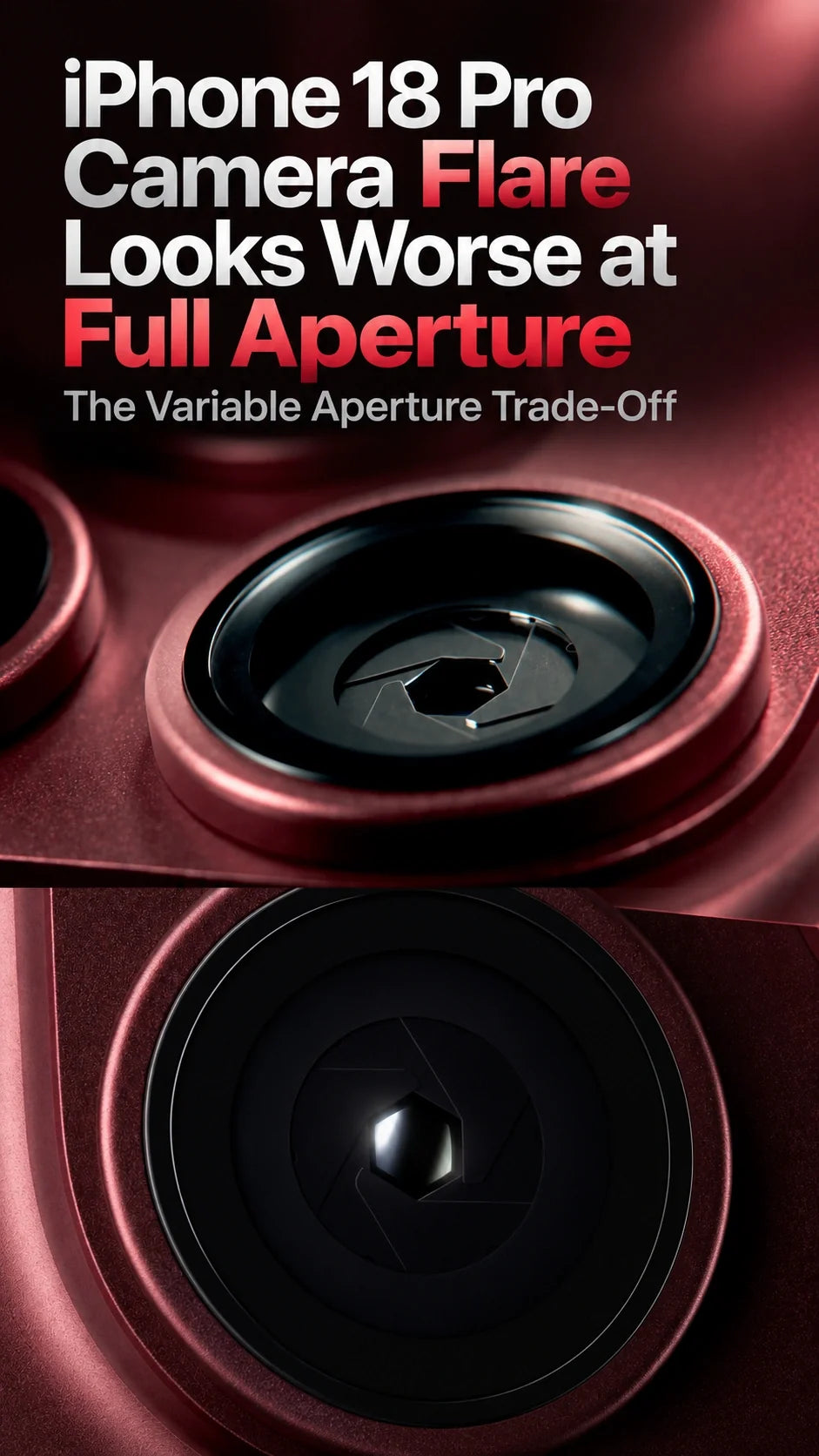
The iPhone 18 Pro’s variable aperture is one of its most interesting camera upgrades. Apple says its six-blade main camera can open for low-light photography and close for greater depth of field. But the first major reviews show that more control also brings a difficult choice: what if the aperture you want for a dark scene produces distracting flare?
Who found the iPhone 18 Pro flare problem?
Mediastorm (影视飓风) documented the problem in its iPhone 18 Pro review. Mediastorm is one of China’s leading video production teams, known for detailed camera testing and professional filmmaking. Its work also extends beyond online reviews to commercial video production for major brands, including brands belonging to large global companies.
That background matters here. Flare can be difficult to judge from a single attractive sample photo. Mediastorm demonstrated the issue on video, compared aperture positions, and explained how the result would affect an actual shoot.
At approximately 18:55, the team turns from the benefits of the variable aperture to what it calls an obvious drawback found during testing. With the aperture stopped down, the flare remains manageable in its example. At the widest opening, large areas of unwanted light become visible across the frame.
On the tested iPhone 18 Pro, opening the main camera to its widest aperture made flare much more intrusive when light entered from the side. Stopping down reduced it. That is a direct observation from its footage; the precise internal optical cause remains unconfirmed.
Why is the iPhone 18 Pro variable aperture a double-edged sword?
According to Apple’s announcement, the 48MP main camera uses six moving blades and offers four aperture settings. At f/1.48, it opens wider to admit more light. At f/4, it lets in less light while keeping more of the scene in focus.
Those options are useful. A wider opening can help with dim scenes. Stopping down can make a group photo or a close shot of text more consistently sharp. Mediastorm shows both advantages in its review.
The problem is that low-light scenes often contain the very light sources that reveal flare: streetlights, headlights, signs, stage lights, or a bright window just outside the frame. In Mediastorm’s example, the widest setting gathers more light but also produces large, distracting flare. Closing the aperture cleans up the shot at the cost of admitting less light.
That is the double-edged sword: the variable aperture gives you a way to reduce the problem, but doing so can take away the wide-open setting you wanted for the scene.
Does the variable aperture mechanism itself cause the flare?
That has not been established. Flare can arise when strong light reflects or scatters among optical surfaces. The lens design, coatings, protective glass, light angle, and accessories can all affect what appears in the final image.
Mediastorm’s footage establishes a narrower and more useful finding: on its test device, flare becomes substantially more visible when the main camera is opened fully under the demonstrated lighting. More controlled tests would be needed to isolate the exact optical cause.
Starbursts around point lights can be an intentional look when an aperture is stopped down. The large patches of light in Mediastorm’s wide-open sample are unwanted flare. They should not be confused with the creative starburst effect the same aperture system can produce.
Is iPhone 18 Pro flare worse than on the iPhone 17 Pro?
The iPhone 18 Pro example looks severe, particularly at its widest setting. However, Mediastorm’s flare segment alone does not give us a controlled iPhone 18 Pro versus iPhone 17 Pro measurement under identical lighting, framing, exposure, and lens conditions.
For now, the supported conclusion is that the iPhone 18 Pro’s new wide-open shooting option has a serious flare trade-off in the scene shown. A precise claim about how much worse it is than the iPhone 17 Pro needs matched side-by-side tests.
If your main reason for upgrading is night photography or video, this is a more important question than the aperture specification alone. Our variable aperture real-world guide explains how aperture, shutter speed, and exposure choices affect the final image.
How can you reduce iPhone 18 Pro camera flare?
1. Stop down and compare the preview
If a bright light produces a large patch of flare, try a narrower aperture and inspect the result before shooting. This is the remedy Mediastorm demonstrated. In a dark scene, check whether the cleaner frame is worth the reduced light intake.
2. Change your position slightly
Move a step to the side or adjust the camera angle so the bright source hits the lens differently. You may be able to keep the subject and reduce the flare without changing the aperture.
3. Clean the camera glass
Fingerprints can create their own haze and streaking. Wipe the lens with a suitable microfiber cloth before deciding that every bright patch comes from the camera’s internal optics.
4. Test without a removable lens protector
An additional glass surface can add reflections. If you use a removable camera protector, compare the same shot with and without it. This helps identify accessory glare; it does not mean a protector caused the flare in Mediastorm’s test.
Take one frame wide open, one stopped down, and one from a slightly different angle. Compare the flare, exposure, and subject detail before choosing the version you keep.
Should this affect your decision to buy the iPhone 18 Pro?
If you mostly photograph people and everyday scenes in even light, Mediastorm’s worst-case example may not reflect most of your photos. The variable aperture still offers genuine control over light and depth of field.
If you frequently film concerts, city streets at night, cars under strong lighting, or backlit subjects, the test deserves close attention. Those are situations where stopping down may solve the flare while making the exposure harder to manage.
ZEERA’s view: Mediastorm’s test is especially valuable because it shows both sides of the upgrade. The iPhone 18 Pro can produce strong results when the aperture works in your favor, but its widest setting should be judged in difficult real-world light, not by its f-number alone.
FAQ: iPhone 18 Pro camera flare
Does the iPhone 18 Pro main camera have severe lens flare?
It does in the wide-open, side-lit conditions shown by Mediastorm. The review does not establish how often the same severity occurs across all scenes and devices.
Does f/1.48 make iPhone 18 Pro flare worse?
In Mediastorm’s test, flare was far more intrusive with the main camera opened fully than when the aperture was stopped down. The test does not isolate which individual optical component causes it.
Can you fix iPhone 18 Pro lens flare by changing the aperture?
Stopping down reduced it in the review’s example. Reframing, cleaning the lens, and checking removable accessories can also help diagnose a particular shot.
Does the iPhone 18 Pro Max have the same issue?
Apple equips both Pro models with a variable-aperture main camera, and Mediastorm refers to the Pro series in its discussion. Matched tests of retail Pro and Pro Max units would clarify whether their flare behavior is identical.
Is the iPhone 18 Pro camera defective?
The review demonstrates a meaningful limitation in certain lighting. It does not establish that the tested phone was defective or that every iPhone 18 Pro has a manufacturing fault.
Related ZEERA Articles