Quick Answer
USB-C is the faster choice for iPhone Duo: Mediastorm measured a 36–37W wired peak and an 88-minute charge from 0% to 100%.
For wireless charging, distinguish China-market MagSafe at 15W from compatible Hong Kong/U.S. 25W MagSafe setups.
The review's wireless screenshot shows roughly 33W at the charger's USB-C input, not 33W reaching the battery.
Apple's U.S./Hong Kong fast-charge figures are around 20 minutes to 50% wired versus 30 minutes with MagSafe.
Use a cable for a short, urgent top-up; choose 25W magnetic charging for convenient charging at a desk or bedside.
Is iPhone Duo Faster to Charge by Cable or MagSafe?
Wired charging wins when time matters. In Mediastorm's iPhone Duo review, USB-C charging reached about 36–37W and filled the battery in 88 minutes. That makes a cable the straightforward option before leaving home or between meetings.
MagSafe is the more convenient everyday option, but the charger version matters. A 15W China-market charger and a compatible 25W Hong Kong/U.S. charger are not equivalent purchases, even though both attach magnetically.
iPhone Duo Charging Speed at a Glance
| Setup | Power | Time or practical role |
|---|---|---|
| Wired USB-C | 36–37W peak in Mediastorm's test | 88 minutes, 0–100% |
| China-market MagSafe | 15W class; review reported a 15W maximum | Convenient routine charging |
| Compatible Hong Kong/U.S. MagSafe | Up to 25W wireless output | Faster magnetic top-ups |
| Review's higher-power wireless setup | About 33W USB-C input shown | Input reading, not battery power |
For a half-charge benchmark, Apple's U.S. specifications list around 20 minutes to 50% with a 60W-capable or higher USB-C adapter, or around 30 minutes with a MagSafe Charger and a 35W or higher adapter. Those half-charge figures answer a different question from the review's 88-minute full charge.
China MagSafe 15W vs Hong Kong and U.S. 25W
Mediastorm reported a maximum of 15W with a China-market MagSafe charger. Switching to a Hong Kong-market MagSafe charger or certain third-party magnetic chargers produced the higher wireless input reading shown below.
Check both the charger version and the phone's regional specification
In the video, “China” and “Hong Kong” refer to the MagSafe charger being used. Separately, Apple's mainland China iPhone Duo specifications list MagSafe and Qi2 at up to 15W, while the Hong Kong specifications and U.S. page list up to 25W. Check the exact phone-and-charger combination rather than assuming an imported puck changes every regional limit.
For a Hong Kong or U.S. setup, look for the current 25W-capable charger generation. An older 15W puck bought in either market is still a 15W charger. Likewise, magnetic attachment alone does not identify a third-party charger's supported power level.
Already own a working 15W charger? It can still make sense for overnight charging. A 25W upgrade is more useful when you regularly want a meaningful top-up during a shorter break.
Why Does a 25W Wireless Setup Show About 33W?

The meter is measuring power before the wireless transfer. The adapter supplies the charger, the charger transmits energy across the coils, and the phone manages the power it receives. Conversion losses and the charger's own operation mean the input figure can be higher than the rated wireless output.
That is why a roughly 33W input reading can appear in a 25W-class wireless setup. It does not turn the Duo into a “33W MagSafe” phone, and it should not be compared directly with a wired input reading as if both numbers represent energy stored in the battery.
The useful comparison is battery gained over time
A peak wattage tells you what happened at one moment. For a quick top-up, compare how much battery is added in 15 or 30 minutes. For a full charge, compare elapsed time to 100%—not just the highest number on the meter.
Wired Charging: 36–37W Peak and 88 Minutes to Full

The wired result is the clearest full-charge measurement in the review: 88 minutes from empty to full. In the same review, iPhone 18 Pro Max took 70 minutes, putting Duo 18 minutes behind.
The 36–37W peak does not continue for the entire 88 minutes. Charging power changes as the battery fills, with the final portion taking longer per percentage point. That is also why a fast first 50% does not mean the next 50% takes the same time.
For the fastest wired setup, use a suitable USB-C PD adapter and a USB-C charging cable rated for the job. Apple's 60W-capable adapter recommendation describes the power source to use; it does not mean Duo continuously draws 60W.
What Makes iPhone Duo Wireless Charging Slow Down?
Heat and background use
A warm phone may reduce charging power. Navigation, video calls and a bright inner screen also consume energy while charging, leaving less to increase the battery percentage. At a desk, give the charger airflow; in a car, avoid direct sun and heat-soaked mounting positions.
The adapter and charging surface
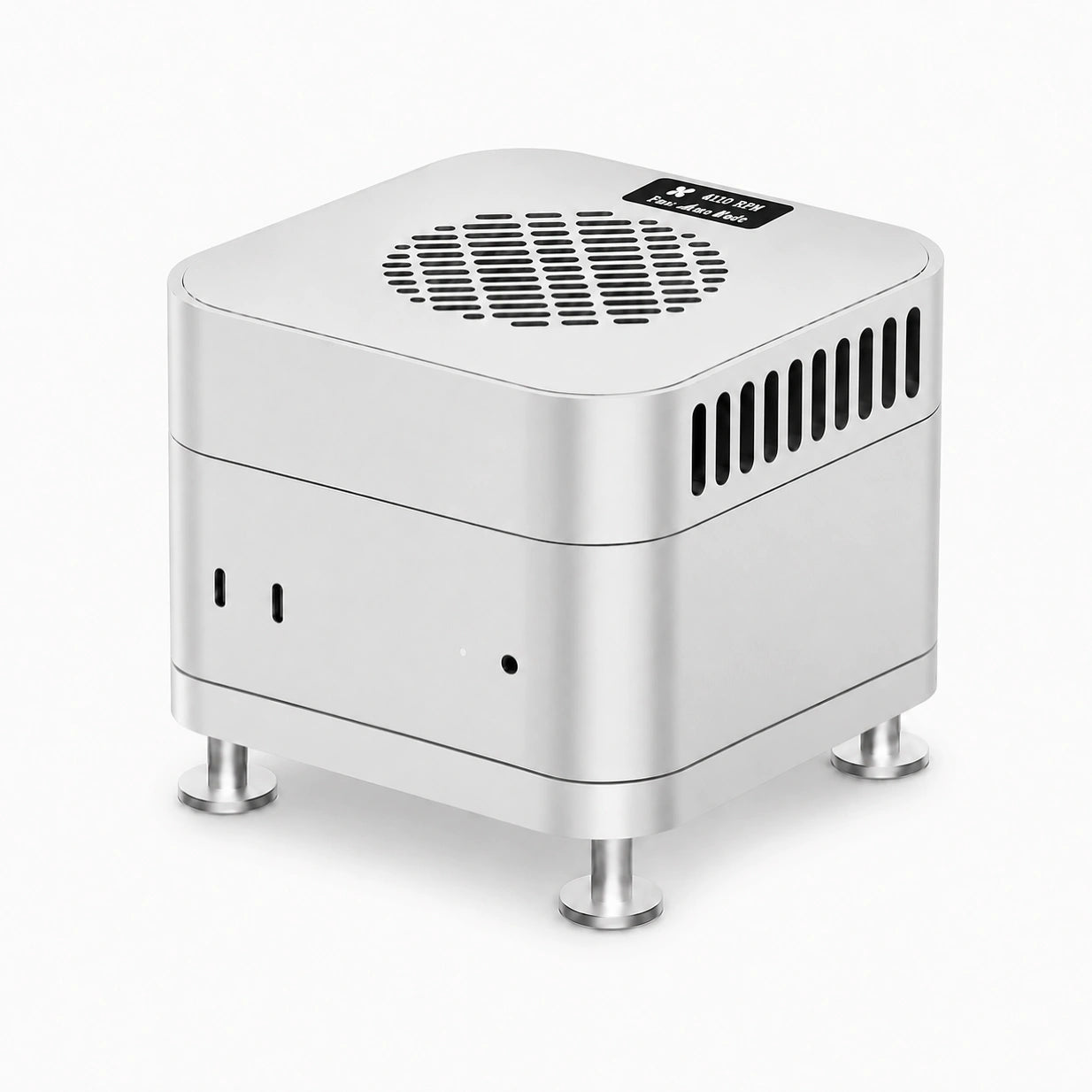
Use the adapter specified for the charger, especially when it also powers active cooling or multiple devices. Make sure the charging face sits flat against the correct area, with no wallet, loose metal ring or raised grip between the surfaces.
For integrated stands, our iPhone Duo ring-stand charging guide explains what to fold flat and which optional rings to remove. If the problem appears mainly during navigation, see why wireless charging slows down in the car.
Which Charging Setup Makes the Most Sense?
Keep USB-C for the moments you are in a hurry
For an urgent low-battery rescue, plug in. It is the faster route and avoids the extra wireless conversion stage. Keep a suitable cable and adapter in your travel bag even if you normally charge magnetically.
Use 25W magnetic charging for everyday convenience
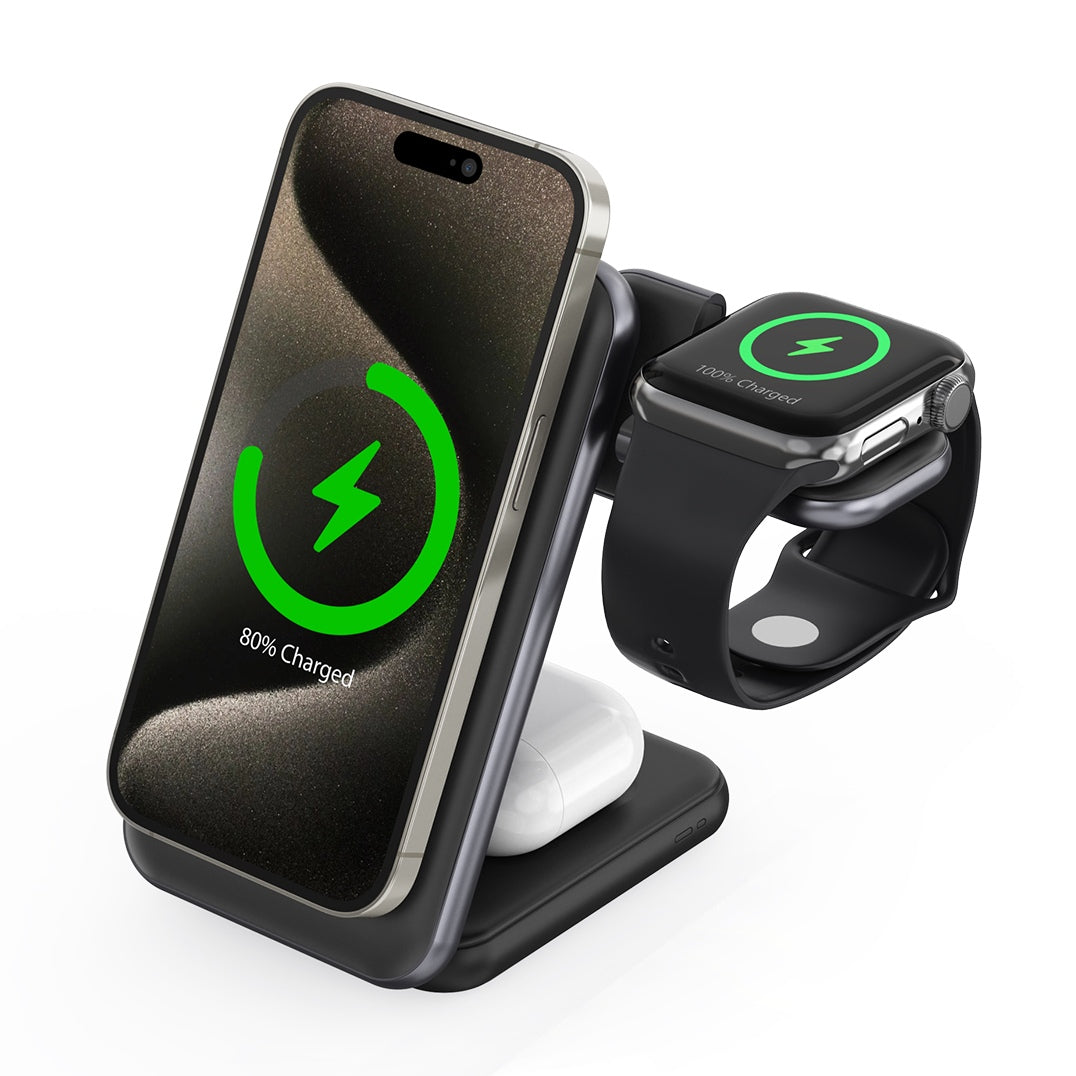
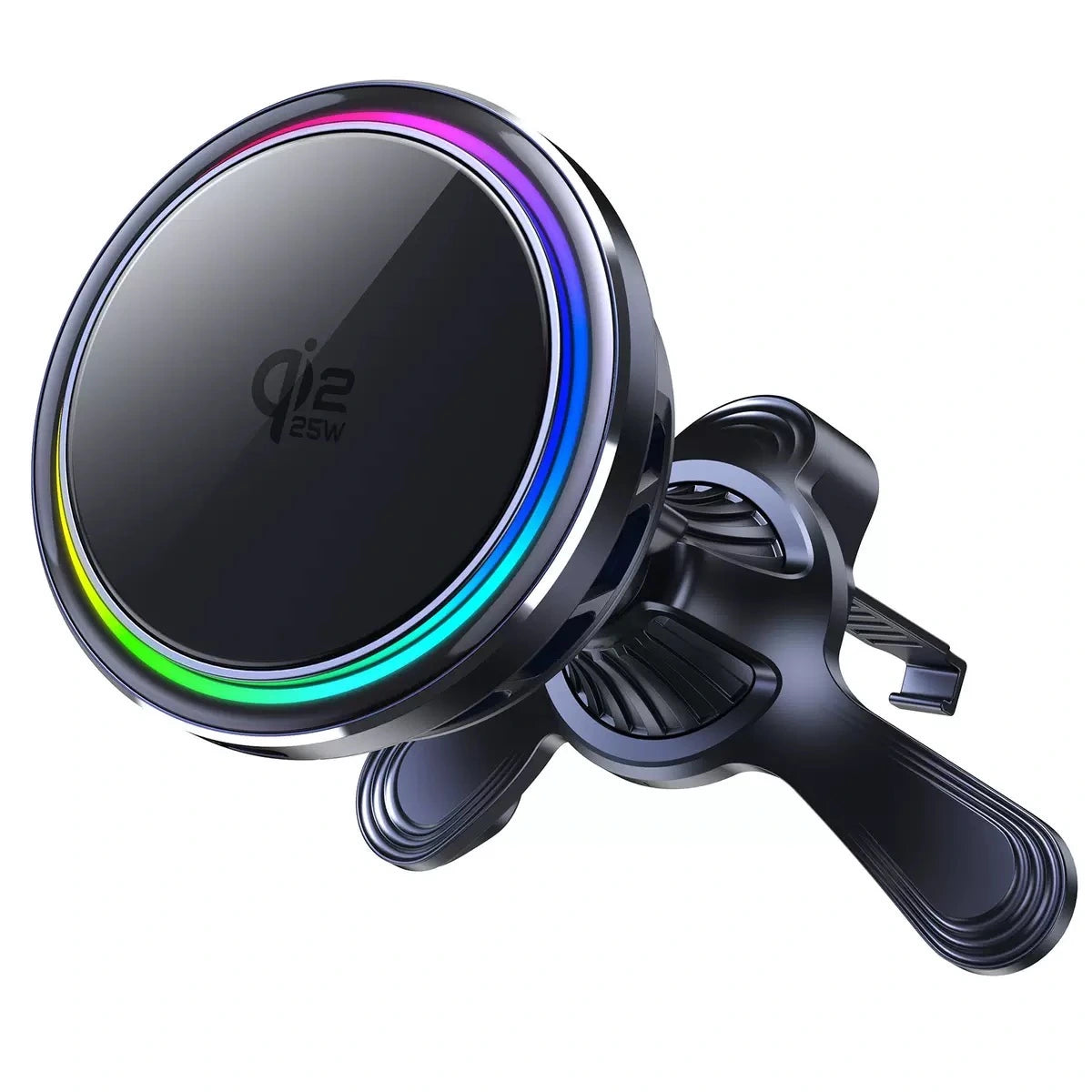
For a compatible 25W setup, a stand lets you dock the phone between tasks without repeatedly connecting a cable. ZEERA MagTri Gen2 combines up to 25W Qi2.2 charging with active cooling and a foldable three-device design; SuVolt Gen5 brings the same power class to an in-car mounting setup.
The choice comes down to where you charge most often. Our MagSafe charger and stand comparison separates desk, travel and car use. For many Duo owners, the best arrangement is simple: USB-C for speed, magnetic charging for the rest of the day.
Watch the Original Mediastorm Review
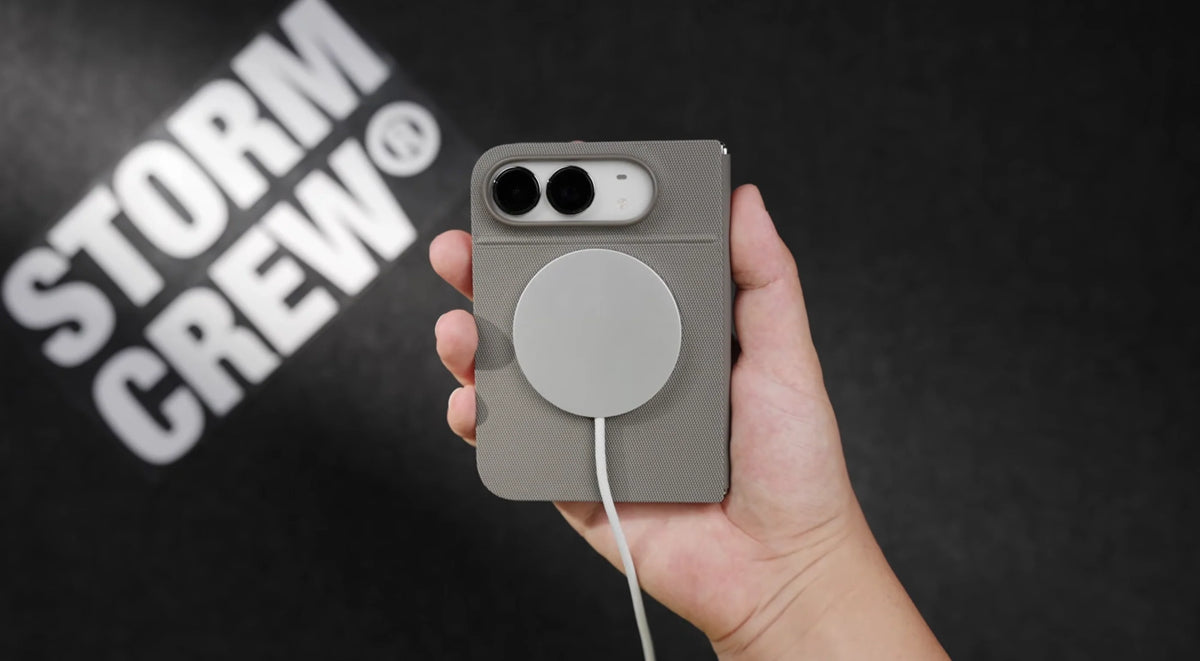
Video source: Mediastorm / 影视飓风. The charging measurements and the two review frames above come from its iPhone Duo in-depth review.
Frequently Asked Questions
Will a 100W USB-C adapter charge Duo faster than a suitable 60W adapter?
A higher label alone does not make the phone draw more power. What matters is the adapter's USB-C PD support, available output on the port and the power the phone requests.
Is a MagSafe-compatible charger automatically a 25W charger?
No. Check its rated wireless output, supported phone models and adapter requirement. Magnetic attachment, 15W charging and 25W charging are different features.
Can I calculate the wireless full-charge time from the 33W reading?
No. That is an input-power snapshot, and power changes during charging. The review gives an 88-minute wired full charge, not a matching timed wireless 0–100% result.
Should I replace my 15W charger immediately?
Keep it if it reliably covers overnight charging. Upgrade to a compatible 25W setup when quicker daytime top-ups matter, and keep USB-C available for your shortest charging windows.
Related Articles
- MagSafe Charger Stands for iPhone 18 Pro Max and iPhone Duo
- Does MagSafe Charging Work with an iPhone Duo Ring Stand Case?
- Why Wireless Charging Slows Down in the Car
- Can a MagSafe Car Mount Hold iPhone Duo Unfolded?
- 12 iPhone Duo Cases Compared: Materials, Stands and Protection
- iPhone Duo Case Resource Hub: Fit and Accessory Guides