Early owners say the M6 Mac mini is a compelling upgrade for music production and coding, especially from an M1 or older Intel Mac.
A 24GB/512GB M6 owner reports smooth plugin-heavy sessions after CPU overloads on an M1. A Logic Pro user praises demanding serial plugin chains at low buffer sizes.
A widely shared compile chart puts the base M6 near an M1 Ultra in one test; it does not predict every Xcode build.
For most serious Logic Pro or development setups, start with 24GB of memory and 512GB of storage. Choose M5 Pro when your projects need more memory, more parallel CPU capacity or Thunderbolt 5.
What are M6 Mac mini owners actually reporting?
On September 26, an M1-to-M6 owner in r/macmini described a 24GB/512GB machine used for music production. Large sessions had caused beachballs and CPU overloads on the M1; the owner said the new mini handled many plugins well. Another owner of the same configuration also expressed satisfaction in the discussion.
That is useful firsthand experience, but the posts do not specify track counts, plugin versions, audio interface or buffer settings. They establish an encouraging upgrade pattern, not a guaranteed session capacity for every producer.
Our earlier M6 vs M1 upgrade guide covers the broader hardware changes. This article focuses on the two day-to-day workflows behind the new owner reports.
Is the Mac mini M6 good for Logic Pro and music production?
Early signs are positive for sessions with demanding plugin chains. In a September 24 Logic Pro community post, an owner who had considered the M5 Pro said the base M6 comfortably handled CPU-heavy effects placed in series on one channel, including work at low buffer sizes. The owner still expected the M5 Pro to lead under much heavier multicore load.
That distinction matters. One busy channel strip cannot always be spread evenly across many CPU cores. Fast individual cores can therefore make tracking and monitoring feel better, while a huge session with many independent tracks or sample instruments can benefit from more total cores and memory. Your DAW, plugins and project routing determine which limit appears first.
Which configuration makes sense for Logic Pro?
16GB/256GB: workable for lighter projects if you manage free space and external libraries deliberately. 24GB/512GB: the most sensible starting point for many plugin-heavy M1 upgraders, matching the positive report above. 32GB/512GB or larger: consider this for larger sample libraries or several demanding apps at once. If your existing projects regularly exceed 32GB, compare the M5 Pro instead.
Check that your audio interface drivers and essential plugins support your macOS and Apple silicon setup before switching a working studio. Keep a copy of a representative session for an apples-to-apples trial at the same sample rate and buffer size.
Is the M6 Mac mini good for Xcode and coding?
The M6 has a 12-core CPU with two super cores, and early developer conversation suggests strong responsiveness for code builds. A widely discussed chart shows a base M6 approaching an older M1 Ultra in a particular compile comparison. The post's popularity is evidence of interest, not a measure of the result's reliability.
One 24GB/512GB owner also reported a single-core make job taking about 13.9 seconds on M6 and 25.0 seconds on an M1 Ultra in that person's environment. The same owner initially said the M6 did not feel dramatically faster across all work. A single C/Fortran build, a parallel Swift build, simulator startup and a full Xcode clean build stress different resources.
Practical takeaway: the M6 is a strong option for Xcode, Swift, web development and moderate container work, particularly when coming from M1 or Intel. If you run multiple simulators, Docker services, local AI tools and a large IDE together, memory and storage may matter more than the headline compile chart. For heavy parallel builds or a need for more than 32GB of memory, consider M5 Pro.
ZEERA has not run the cited build tests. Compare your own project using the same Xcode version, build configuration and cache state before treating any chart as a purchasing benchmark. For generation-wide results, see our M6 vs M5 vs M4 performance guide.
What should producers and developers buy?
Apple lists the M6 with 16GB standard memory and 24GB/32GB options; the M5 Pro supports higher capacities and has Thunderbolt 5, while the M6 has Thunderbolt 4. Internal storage choices deserve care: ZEERA's SSD upgrade guide explains why an external drive adds space but does not replace the built-in drive.
External SSDs are useful for Logic libraries, recorded media and project archives. For Xcode, leave comfortable space on the internal drive for the app, SDKs, simulators and build caches. The 256GB vs 512GB SSD test also shows a significant sequential speed gap in third-party measurements. These are storage decisions, not proof that every project needs a faster processor.
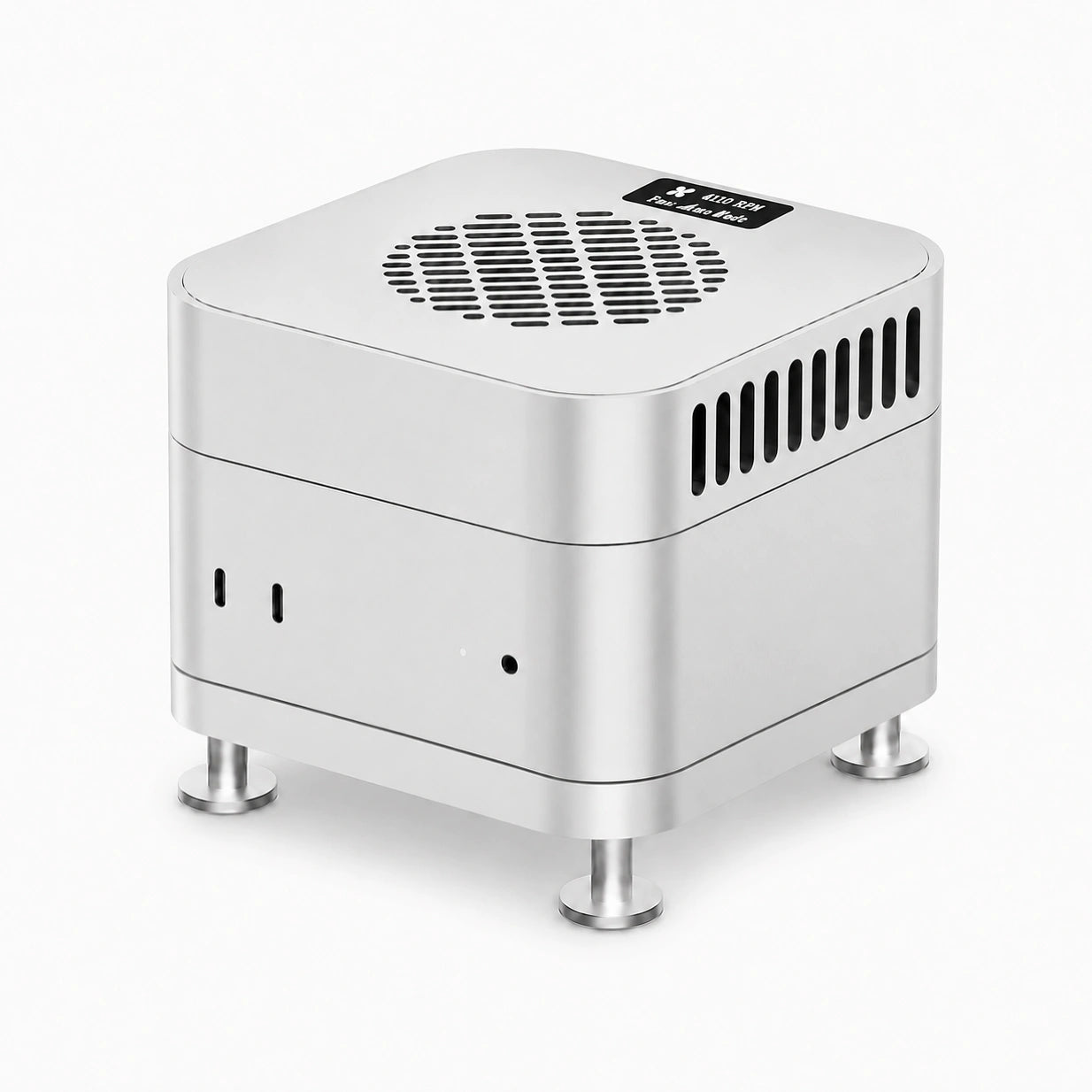
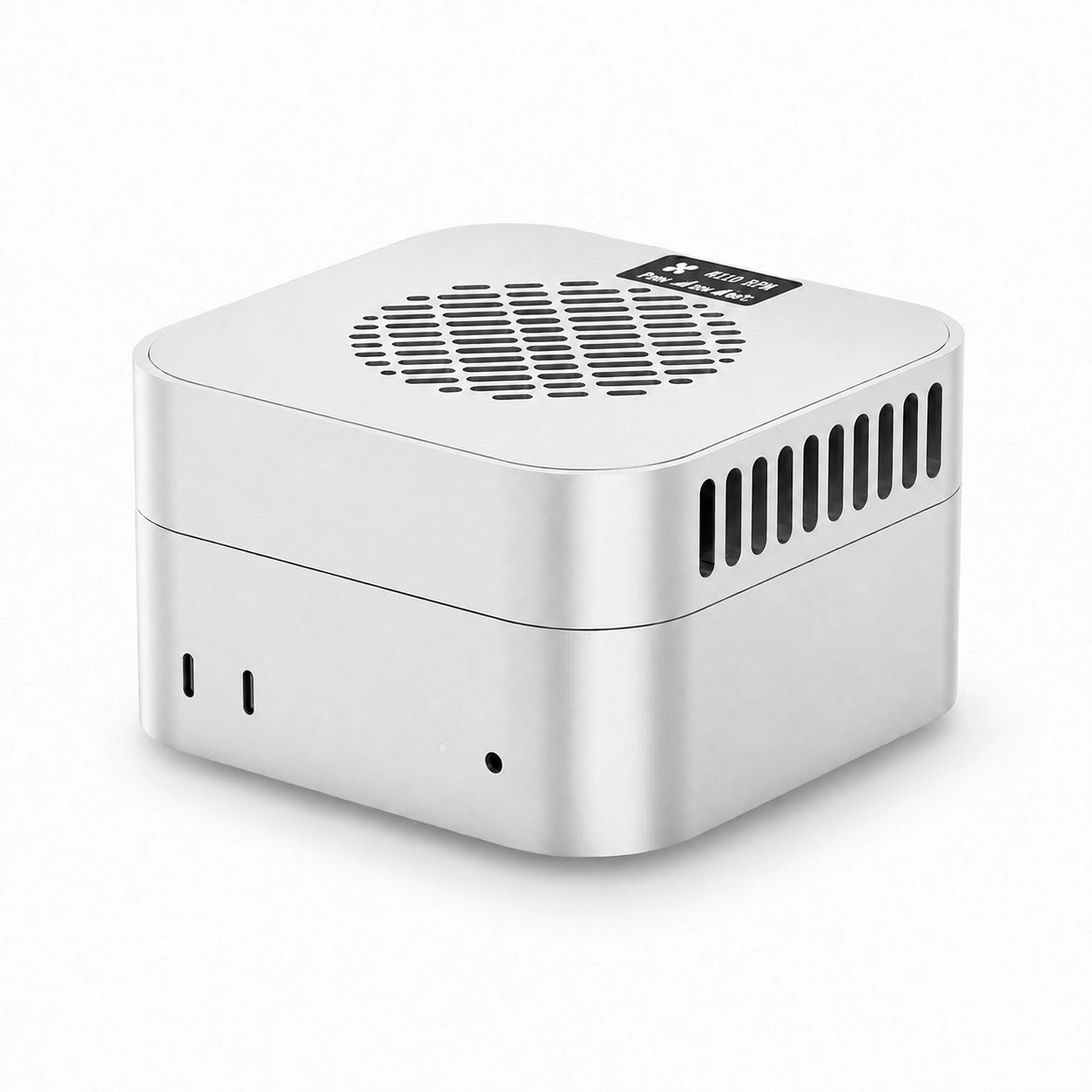
Neither music production nor coding automatically requires active cooling. Consider it for repeated long workloads only after measuring a genuine thermal slowdown; it is not a fix for plugin compatibility, insufficient memory or a full SSD.
Verdict: M1 and Intel owners have the clearest reason to upgrade
If your old Mac regularly stops a Logic session or makes builds interrupt your work, the first M6 owner reports are encouraging. The 24GB/512GB configuration is a practical middle ground. The case is less urgent for a smoothly running M4, and M5 Pro remains the safer choice for substantially larger parallel or memory-heavy projects.
These conclusions combine Apple specifications with a handful of early owner accounts. They are buying guidance, not a controlled ZEERA performance test.
Frequently asked questions
Can a Mac mini M6 run Logic Pro with third-party plugins?
Yes, owners report good results with plugin-heavy projects, but confirm compatibility for every essential plugin and interface driver. Actual limits depend on the session and buffer setting.
Is 24GB of RAM enough for Xcode on the M6 Mac mini?
For many Xcode projects, yes. Choose 32GB if you routinely keep several simulators, containers and other memory-hungry tools running together; check your present memory pressure first.
Does the M6 compile every project as fast as an M1 Ultra?
No. The shared comparison describes one compile workload. Build times change with language, project structure, parallelism, memory, storage and cache state.
Should I replace a working M4 Mac mini for Logic Pro?
Usually only if you can point to a real CPU, memory or storage bottleneck in your current sessions. A smooth M4 workflow is not made obsolete by an M6 result.
Sources and related reading
Firsthand reports: M1-to-M6 music producer; Logic Pro M6 owner; developer build timings. Additional context: compile comparison discussion and Apple's Mac mini specifications.
- M6 Mac mini vs M1: Is It Worth Upgrading?
- M6 vs M5 vs M4: Real Performance Tests
- Mac mini M6 vs M5 Pro Buying Guide
- M6 256GB SSD Is Slower: Buy 512GB?
- M6 and M5 Pro Internal SSD Upgrade Limits
- M6 256GB vs 512GB Storage Guide
- M6 Memory: 16GB vs 24GB vs 32GB
Optional gear for the rest of your Apple setup.