Quick Answer
If your Mac mini M6 external SSD keeps disconnecting, first connect it directly to the Mac with a known-good data cable.
Disconnect other USB accessories and check whether the problem happens during transfers or only after sleep.
For sleep-related ejections, temporarily prevent automatic system sleep and check the SSD or enclosure maker’s firmware guidance.
Back up important files before running Disk Utility First Aid or changing the drive’s format.
“Disk Not Ejected Properly” is a symptom, not a diagnosis. Reformatting should not be your first fix.
Why does an external SSD keep ejecting from a Mac mini M6?
The warning means macOS detected that a mounted disk disappeared without being safely ejected. The cable may still be plugged in: a brief loss of power, a connection reset or a problem waking the storage device can interrupt the connection.
Western Digital’s troubleshooting guidance lists loose or faulty cables, sleep or standby behavior, file-system problems and drive-security behavior among possible causes. Those are useful starting points, but the notification alone does not establish which component failed. Read WD’s troubleshooting guidance.
After reviewing Apple and drive-maker guidance, ZEERA recommends isolating the connection before replacing hardware. Start with one SSD, one cable and a direct Mac port. The steps below are a troubleshooting framework, not a claim that ZEERA has reproduced an M6-specific SSD defect.
Match the symptom to the first test
- Disconnects after sleep: test while the Mac stays awake, then compare a direct connection with the dock.
- Disconnects while copying files: check the cable, power supply and enclosure before investigating software.
- Disconnects only through a hub or monitor: bypass that device and repeat the same task.
- Missing from Finder but visible in Disk Utility: check mounting, encryption and Finder visibility.
Before troubleshooting, protect the files on your SSD
Pause exports, downloads, Time Machine backups and other jobs writing to the affected disk. When the drive stays connected long enough, copy irreplaceable files to a different, reliable storage device and verify that the copies open.
Use copied or disposable files for troubleshooting transfers. If the SSD is repeatedly disappearing, reports read errors or contains the only copy of important work, prioritize recovery over benchmarks, repairs and firmware updates.
Record the SSD model, enclosure model if separate, macOS version and connection route. Note whether the failure occurs immediately, after inactivity or after several minutes of copying.
9 fixes for an external SSD that keeps disconnecting
1. Connect the SSD directly to the Mac mini
Remove the USB-C hub, Thunderbolt dock, monitor USB hub, extension cable and adapter from the test connection. Plug the SSD directly into the Mac and repeat the task that previously failed.
Apple recommends a direct connection when a USB or Thunderbolt hub is involved in a device-power problem. If the SSD becomes stable, add the removed devices back one at a time. This narrows the problem to the connection route rather than proving the SSD is faulty. Apple’s USB power troubleshooting.
If your enclosure has port extensions or built-in connectivity, bypass those during diagnosis too. An organized Mac mini case can improve daily access, but the test should use the Mac’s own port.
2. Replace the cable and try another compatible port
Use the SSD’s supplied cable or a known-good replacement rated for its protocol. USB-C describes the connector; it does not guarantee USB4, Thunderbolt or the required data-transfer capability.
Check that both plugs seat fully and that the cable is not pulled tight behind the monitor. Swap the cable first, then change the port, so you can see which change helps.
Mac mini M6 port reminder: Apple lists two front USB-C ports with USB 3 support up to 10Gb/s and three rear Thunderbolt 4 ports supporting Thunderbolt 4 and USB4 up to 40Gb/s. A Thunderbolt-only SSD needs a Thunderbolt-capable connection; a USB SSD can be tested on a compatible front or rear port. Check Apple’s M6 Mac mini specifications.
A lower negotiated speed is not, by itself, an explanation for random ejections. The purpose of changing ports is to isolate the connection, not assume that a faster port cures instability.
3. Check the hub’s power supply and reduce connected devices
If you see “USB Devices Disabled” or a message saying a device needs more power, treat power delivery as a priority. Apple advises connecting a self-powered USB or Thunderbolt hub to its AC adapter.
For testing, remove extra drives, capture devices and phone-charging cables. Use the dock manufacturer’s specified power supply and connect only the SSD. For a separately powered drive, check its own power adapter too.
A powered hub can address some power-related problems, but it does not automatically fix a faulty cable or incompatible controller. Confirm direct-port stability before purchasing replacement equipment.
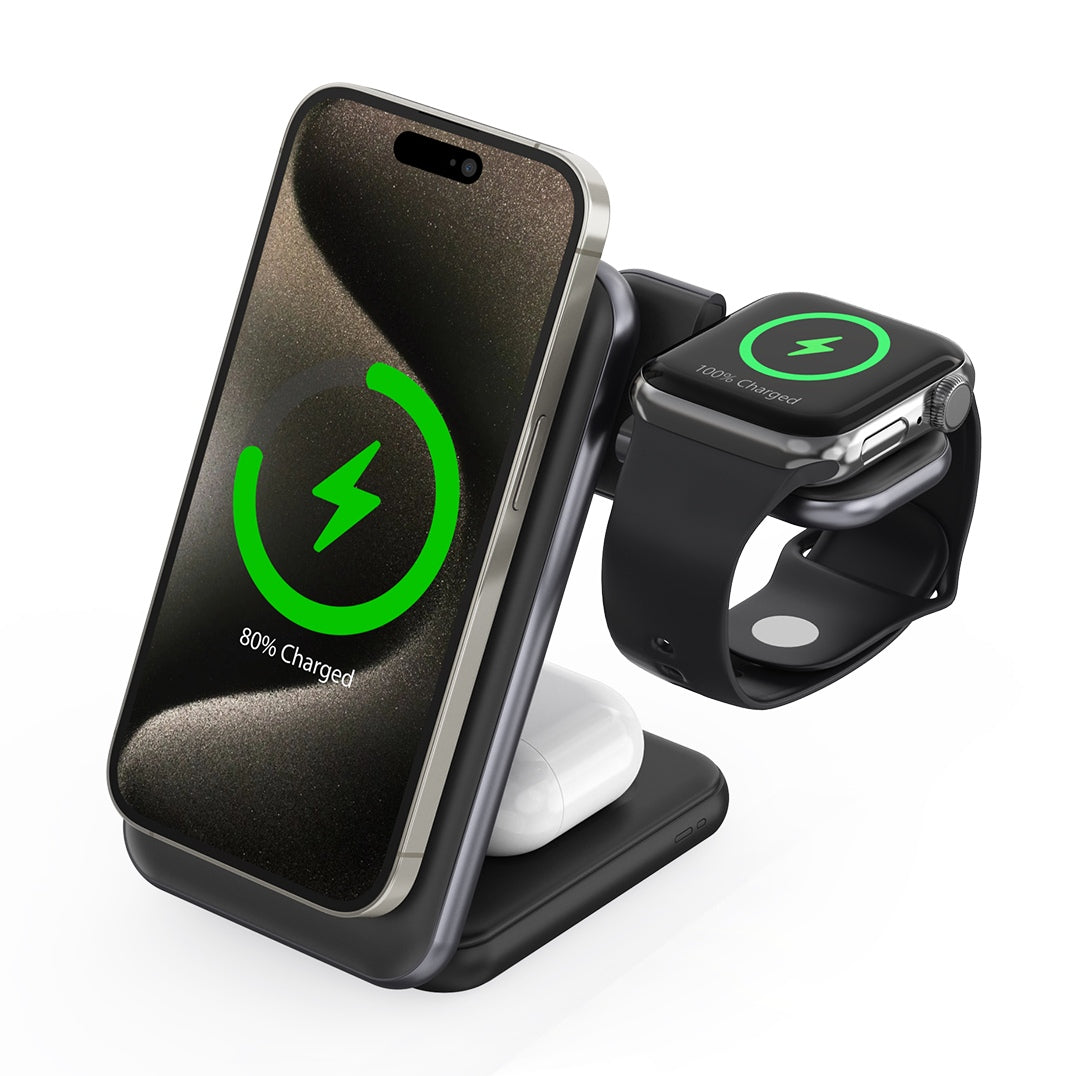
For everyday desk charging: a separate wall-powered iPhone charging station can keep phone charging separate from your storage hub. The MagTri below is an Apple-device charging accessory, not an SSD power supply.
4. Test whether automatic sleep triggers the ejection
If the drive disconnects overnight or after the screen turns off, open Apple menu > System Settings > Energy. Temporarily enable “Prevent automatic sleeping when the display is off.” Apple notes that available options depend on the Mac. See Apple’s Energy settings guide.
Let the display turn off while the Mac remains awake, then check the SSD after the usual failure interval. Compare this with a separate sleep-and-wake test after saving your work and stopping disk activity.
If your macOS version shows “Put hard disks to sleep when possible,” you can test with it disabled. Its presence and effect vary; it is not a universal switch for an external SSD enclosure’s own standby behavior.
Stability while awake suggests a sleep-transition issue. Check the enclosure or SSD maker’s sleep compatibility and firmware guidance. Preventing automatic sleep is a temporary diagnostic workaround, and it does not prevent manual sleep or guarantee that the enclosure will stay awake.
If the monitor also fails to return after sleep, follow our separate Mac mini M6 monitor wake troubleshooting guide to isolate the display connection.
5. Update macOS and check model-specific firmware
After protecting your files, check System Settings > General > Software Update for a stable macOS update. Check the SSD, enclosure and dock manufacturers’ official support pages for updates that apply to your exact hardware.
For a DIY NVMe setup, the SSD firmware and the enclosure’s USB or Thunderbolt bridge firmware are separate. An update for one does not necessarily update the other.
Some portable drives offer vendor utilities: Samsung’s T7 documentation, for example, describes software and firmware updates. Follow the instructions for your model and supported operating system. Never install firmware for a similar-looking enclosure or interrupt an update. Samsung T7 manual.
If the connection is too unstable to complete an update safely, contact the manufacturer first. Do not assume that installing a macOS beta is a storage-reliability fix.
6. Check enclosure airflow during sustained transfers
If the SSD works briefly and fails during a long copy or video export, move the enclosure to an open surface. Keep it away from the Mac’s exhaust, stacked electronics and soft material that covers vents.
Warmth alone does not prove overheating. Samsung explains that the T7 can slow down under thermal protection during prolonged transfers; a speed reduction and a drive disappearing are different symptoms. Samsung’s T7 thermal guidance.
For a user-installed NVMe SSD, consult the enclosure maker’s thermal-pad and compatibility instructions. Shut down or safely disconnect it before opening the enclosure, and avoid opening a sealed portable SSD.
Once the files are backed up, compare the same ordinary transfer with improved airflow. A different result is a clue for further investigation, not proof that heat was the only cause.
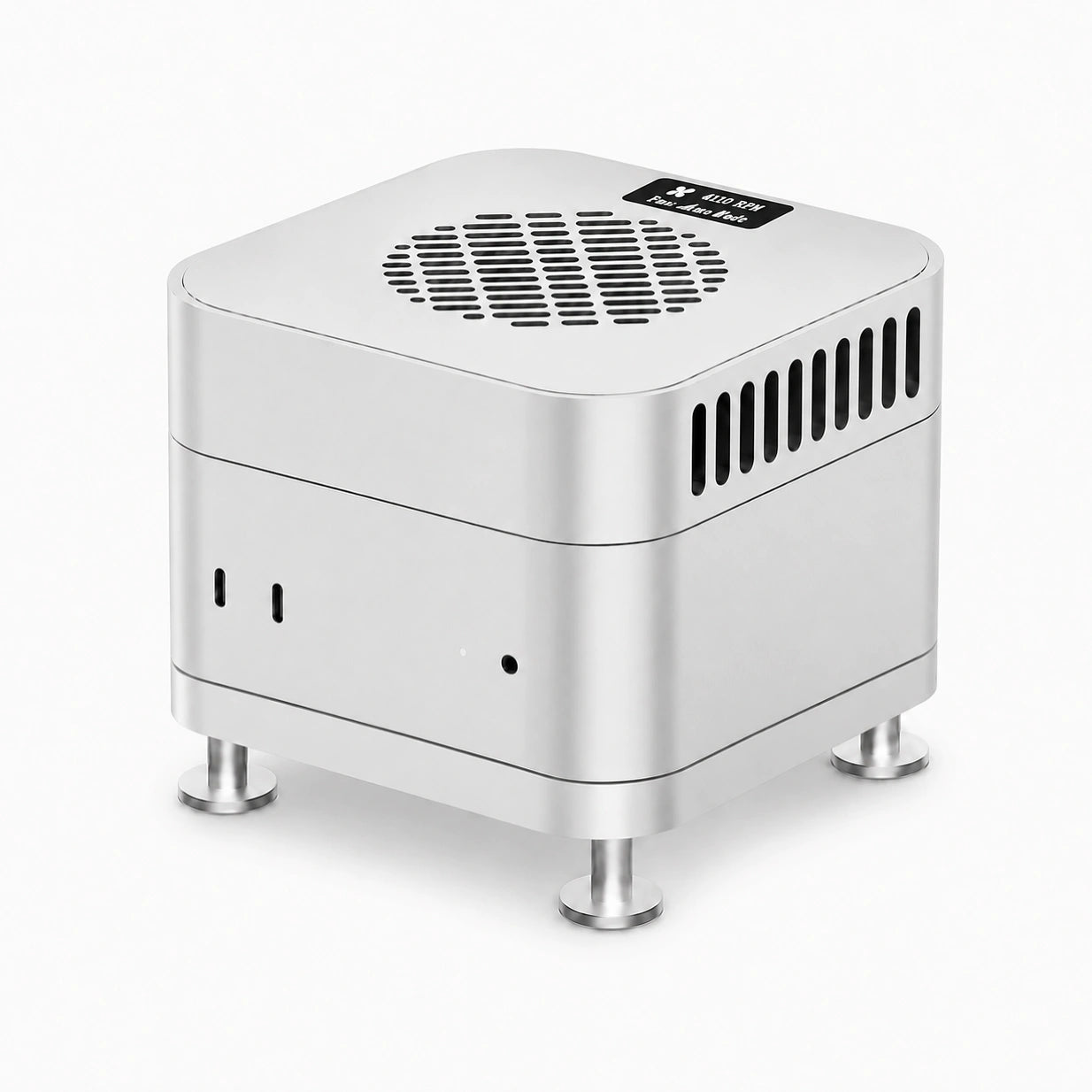
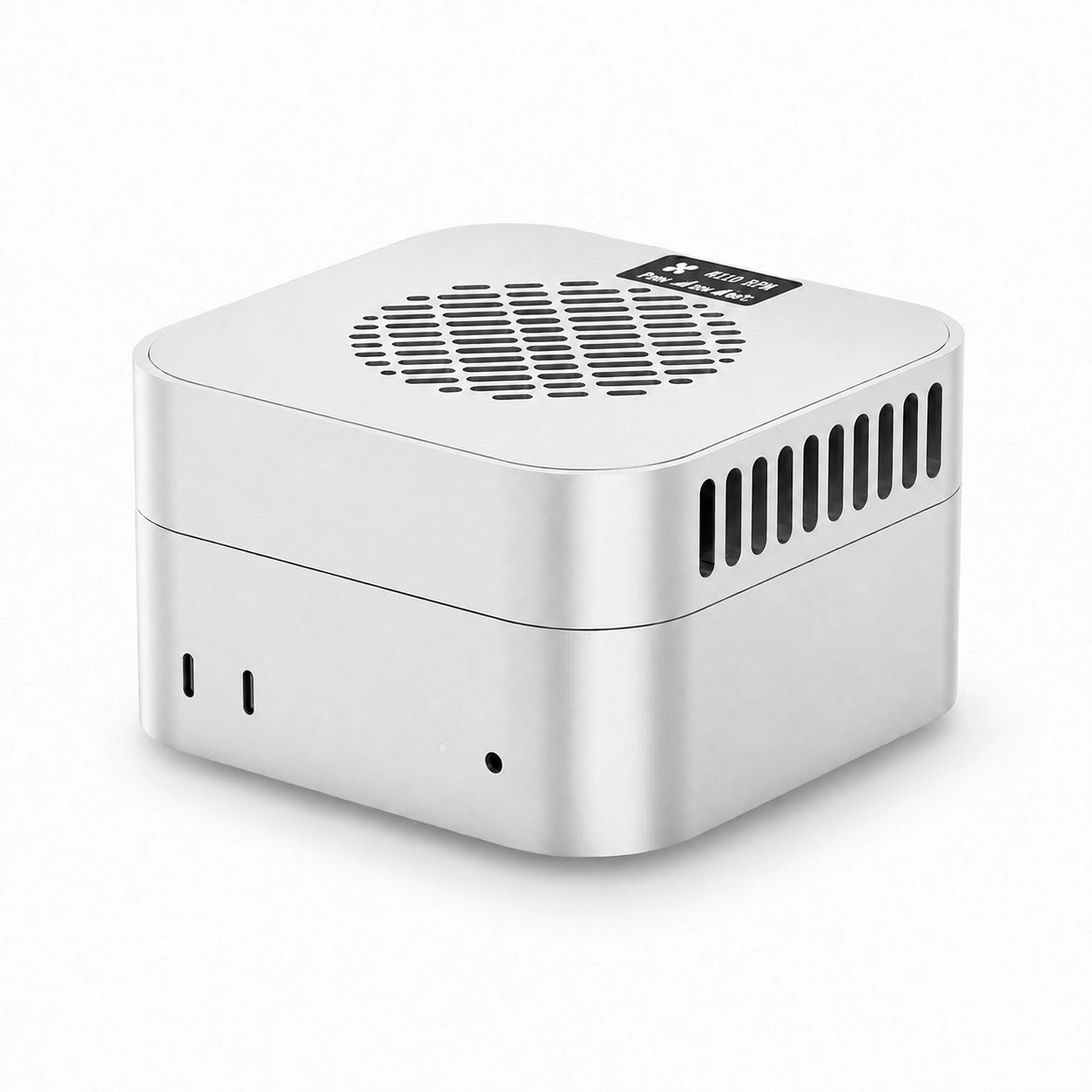
For the surrounding workstation, our Mac mini stand, case and cooler setup guide covers placement options. MacFrost Pro is designed for the Mac mini’s thermal needs; it does not directly cool an external SSD controller or repair an unstable storage connection.
7. Check whether the SSD is disconnected or simply unmounted
Open Disk Utility and choose View > Show All Devices. If the physical SSD appears but its volume is gray, select the volume and try Mount. Unlock it if macOS or the vendor utility requests the drive’s password.
If the volume is already mounted but missing from Finder, open Finder > Settings and check external-disk visibility under General and Sidebar. A hidden Finder entry does not mean the hardware disconnected.
For another clue, hold Option while opening the Apple menu, choose System Information and check USB or Thunderbolt/USB4. If the device disappears there as well during the failure, investigate the cable, power, enclosure and port.
These observations help separate a device-connection problem from a volume-access problem. A device remaining listed does not prove that its storage media is healthy.
8. Run First Aid after securing a backup
Close apps using the disk. In Disk Utility > View > Show All Devices, run First Aid on each volume, then each container where present, and finally the physical storage device.
Apple says First Aid checks formatting and directory-structure errors and cannot detect or repair every disk problem. A successful result does not rule out a bad cable, unreliable power or an enclosure fault. Apple’s First Aid instructions.
If errors cannot be repaired or the disk drops out during the check, preserve the remaining data and seek help. Repeated repair attempts are not a substitute for recovering your files.
9. Cross-test the hardware before reformatting or replacing it
Try the affected SSD on another computer with a known-good cable. Then test a different, known-good SSD directly on the Mac mini. Keep the workload comparable.
- The affected SSD fails on both computers: focus on its cable, enclosure, firmware or the SSD itself.
- It works directly but fails through one dock: focus on that dock, its power supply and upstream cable.
- Multiple known-good SSDs fail directly on the Mac: ask Apple Support to investigate the Mac’s ports and software.
- Only one port consistently fails: document the result and request a hardware assessment.
If failures began after installing drive-security, NTFS or backup software, check that software’s compatibility and vendor instructions. Pause one relevant background task at a time to test; avoid disabling security features broadly.
A repeatable cross-test gives support a more useful starting point than the notification alone. Include your macOS version, hardware models and the shortest sequence that reproduces the failure.
Should you reformat the external SSD as APFS?
Consider reformatting only after verifying a separate backup and establishing a stable connection. Erasing the drive deletes its contents. It will not repair an unreliable cable, dock or enclosure.
Choose the format for your workflow
APFS: a sensible choice for an SSD used with modern Macs. Apple says APFS is optimized for flash/SSD storage and supports external direct-attached drives.
exFAT: useful when the same drive must transfer files between Mac and Windows. Keep a separate backup and safely eject it on either computer.
A supported exFAT drive should not be assumed faulty just because of its format. If file-system corruption remains after the connection is stable, reformatting may be appropriate. For Final Cut Pro, Motion and Compressor storage, Apple specifically recommends APFS. See Apple’s file-system guide and Apple’s pro-app storage guidance.
How to keep external storage dependable in daily use
Keep the SSD cable supported rather than hanging under tension. Leave its enclosure ventilated and keep a second copy of important projects on a different storage device.
Before disconnecting, close apps that use the SSD, wait for copies and backups to finish, and eject it in Finder. If an app prevents ejection, close the app and retry; do not pull the cable during an active write.
Before returning the SSD to production work, confirm that normal transfers complete, copied files open correctly and the drive behaves reliably across the sleep-and-wake pattern you actually use. One successful benchmark is not enough.
For a broader workstation plan, see our Mac mini M6 and M5 Pro accessories guide.
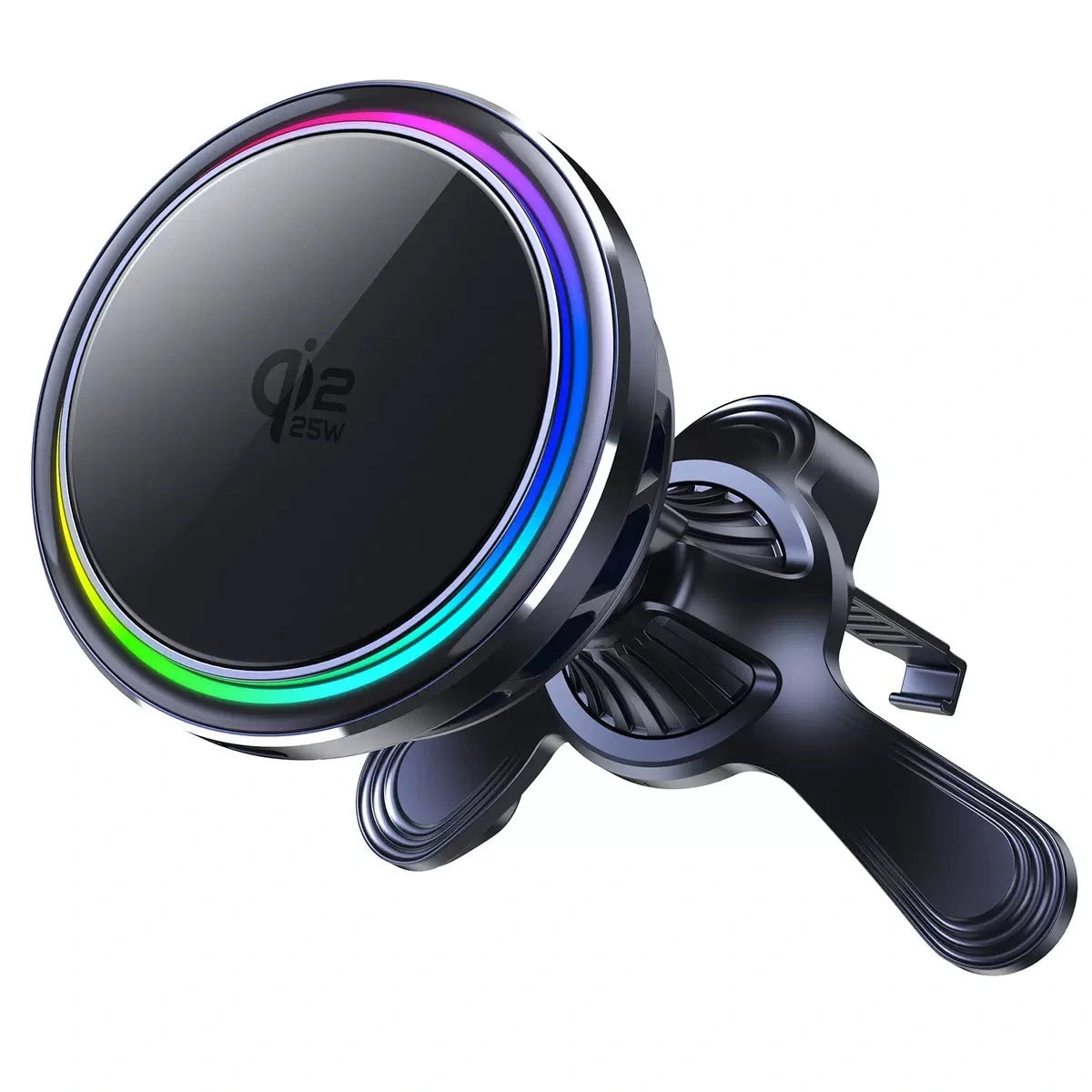
Complete your Apple setup: the following iPhone case and car-charging modules are optional accessory recommendations, separate from the SSD troubleshooting steps.
Related Mac mini guides
- Mac mini M6 monitor not waking after sleep: 9 fixes
- Best Mac mini M6 and M5 Pro accessories
- Mac mini aluminum stand, case and cooler setup
- Mac mini M6 for local AI: 16GB vs 24GB vs 32GB
- Mac mini M6 memory buying guide
- Mac mini M6 specifications and buying guide
FAQ
Can an unexpected SSD ejection corrupt files?
Yes, especially if files or file-system metadata were being written when the connection dropped. It does not mean every file is damaged. Check recent work and protect the files you cannot replace.
Why is the SSD still visible after “Disk Not Ejected Properly”?
The drive may have disconnected briefly and reconnected before you looked. The warning can refer to the earlier interruption; its current presence does not explain what caused it.
Does every SSD need a Thunderbolt enclosure for Mac mini M6?
No. A compatible USB SSD can work on the Mac mini. Choose an enclosure for your required protocol, sustained workload and sleep compatibility; Thunderbolt branding alone is not a reliability guarantee.
Will switching from exFAT to APFS stop random disconnects?
Only if the problem involves the existing file system and the connection is otherwise sound. APFS cannot fix power interruptions, damaged cables or a failing enclosure. Back up before erasing.
Is a Mac mini cooler a fix for external SSD ejections?
No established fix follows from adding a Mac mini cooler. Troubleshoot the external drive’s cable, power, enclosure and airflow separately.
When should I request a replacement SSD or contact Apple?
Contact the drive maker if the same SSD repeatedly fails across computers with known-good connections. Contact Apple if several known-good drives fail directly on the Mac, or one port consistently fails comparative tests.