Quick Answer
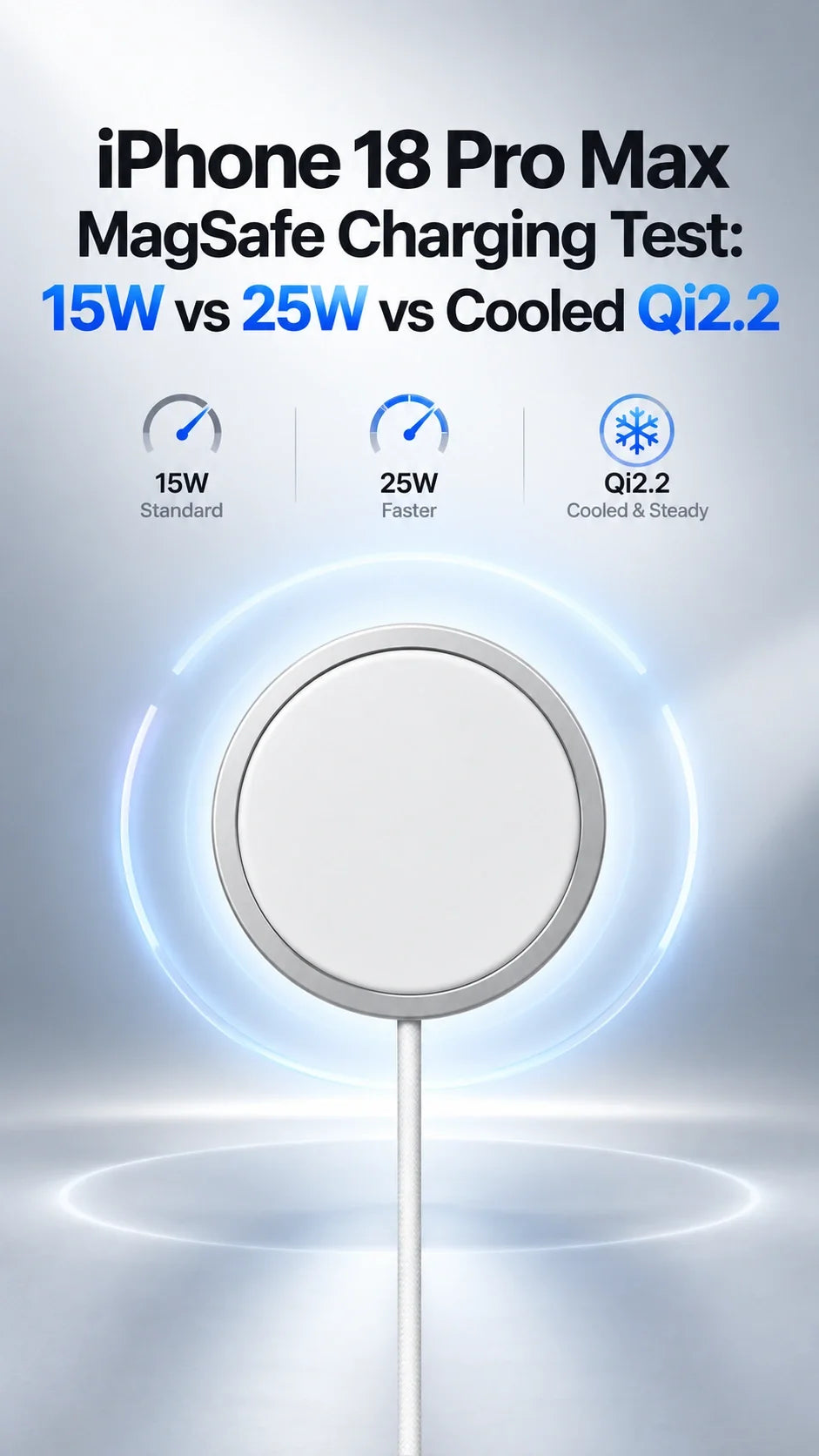
In ZEERA's 25°C iPhone 18 Pro Max test, the 15W MagSafe charger reached 50% in about 53 minutes and a full charge in 2 hours 34 minutes.
The US 25W Apple MagSafe charger reached 50% in about 29 minutes and finished in 1 hour 39 minutes.
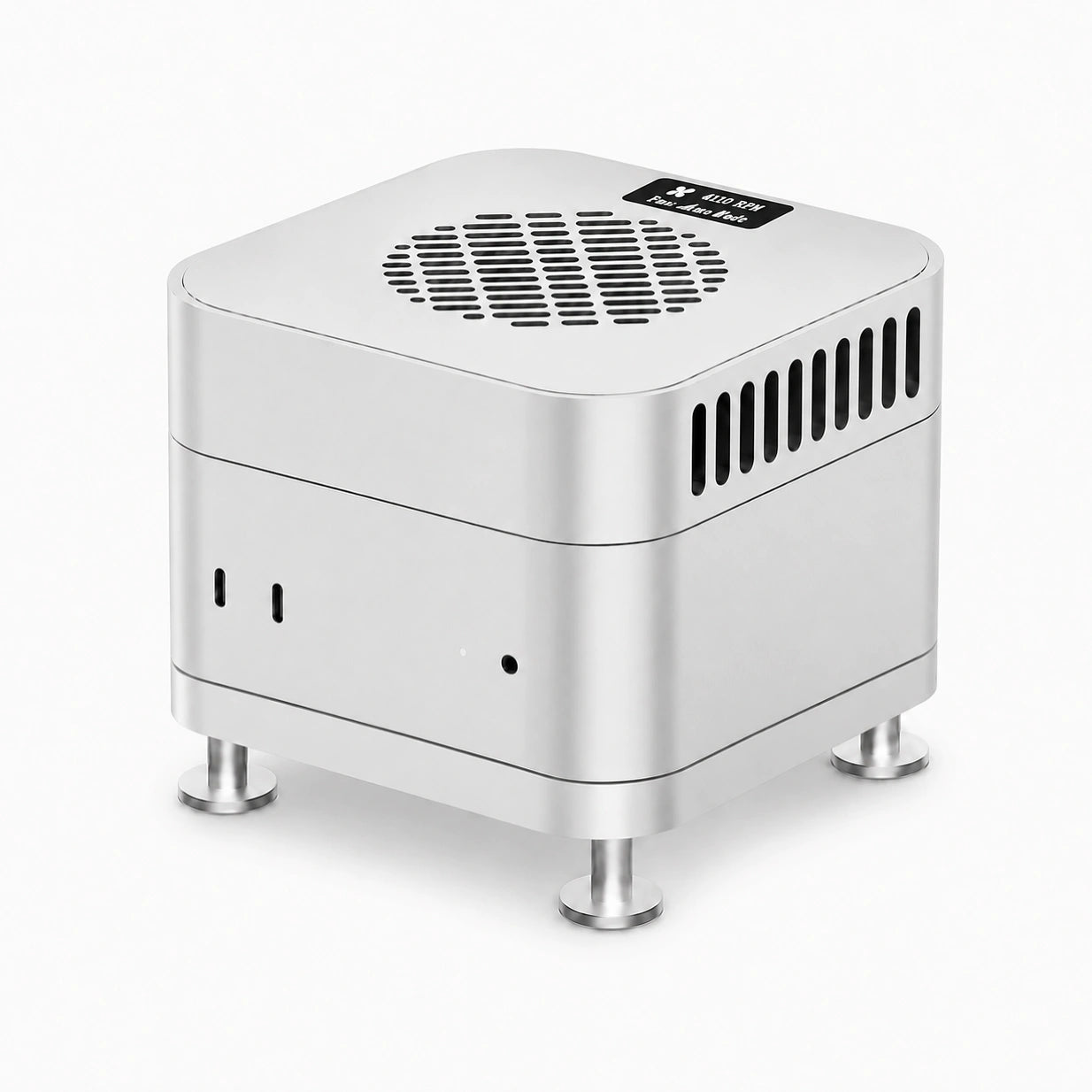
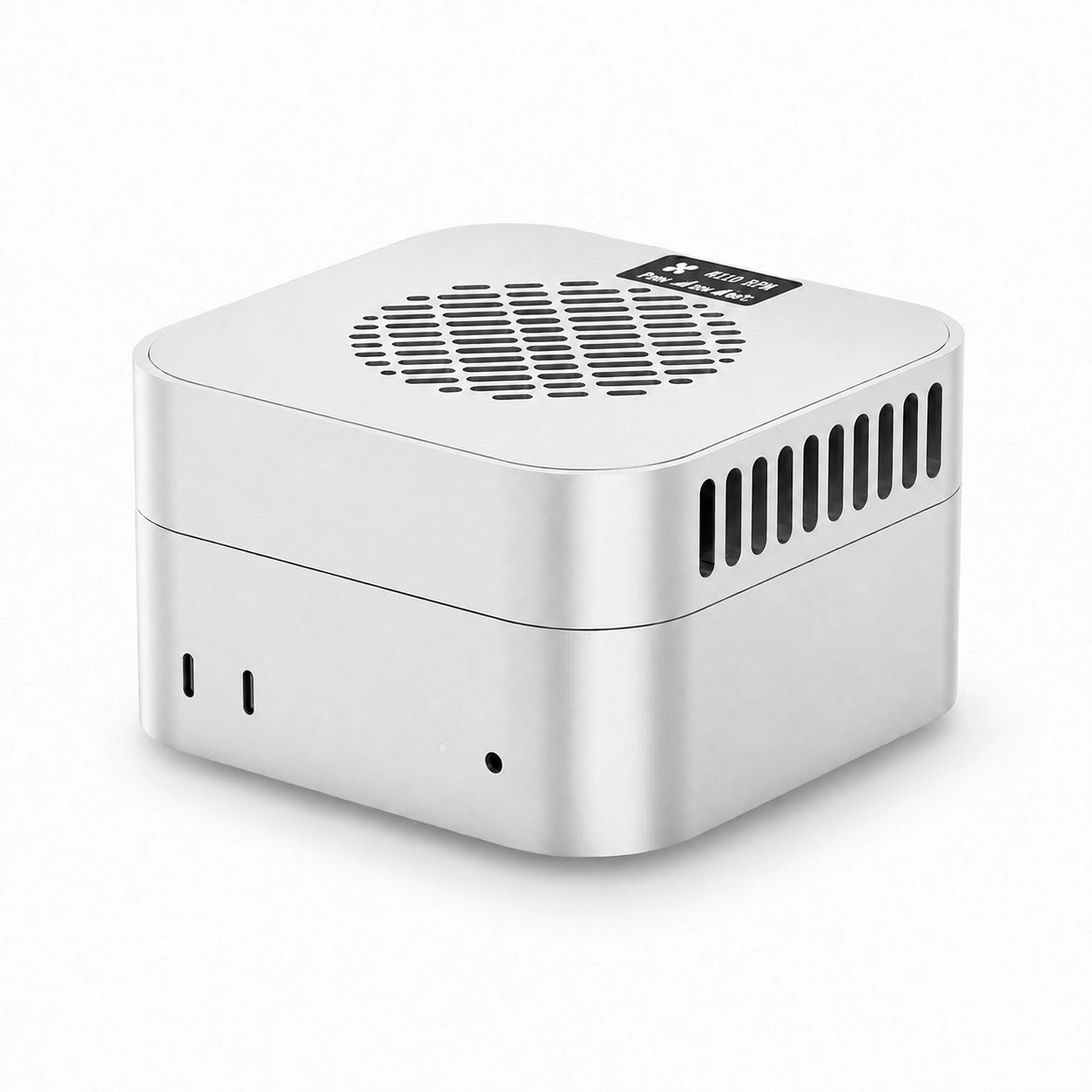
A ZEERA SuVolt 25W Qi2.2 charger with semiconductor cooling reached 80% in 56 minutes and finished in 1 hour 37 minutes.
Its roughly 35W USB input peak includes the cooler and losses; it does not mean the iPhone received 35W wirelessly.
iPhone 18 Pro Max MagSafe charging times: 15W vs 25W vs cooled Qi2.2
ZEERA recorded complete charging sessions, rather than quoting a peak wattage from the first few minutes. The most useful differences appear before 80%: the US Apple 25W setup reached half charge about 24 minutes earlier than the 15W setup. SuVolt’s 50% timestamp needs confirmation, so this comparison uses its 80% and full-charge results.
ZEERA test results. Times are elapsed times in these sessions, not guaranteed speeds for every phone, room or battery condition.
The session notes for SuVolt's 50% checkpoint contain an incomplete minute value. We have left that number out rather than treating “3 minutes” as a valid 50% result. The same notes conflict on a few exact voltage-transition times in the US MagSafe trace, so those timestamps are not used here.
How ZEERA measured the wireless charging curves
The room was held at 25°C (77°F). A PowerZ meter sat at the USB input of each magnetic charger and logged the voltage and power drawn from the adapter. An Apple 70W adapter supplied sufficient power for the comparison. The phone's displayed battery percentage supplied the 20%, 50%, 80%, 90% and 100% checkpoints. These are the reported single-session results; the supplied notes do not document repeated runs, case configuration or a phone-temperature series.
This measurement point matters. PowerZ sees what the MagSafe or Qi2.2 accessory takes in, including wireless conversion losses. For the SuVolt cooler, it also includes the power used by active cooling. Input watts are therefore not the wireless watts delivered to the iPhone, and input voltage is not the iPhone battery voltage.
The adapter's 70W rating did not force 70W into any of these chargers. Apple says its compatible MagSafe charger can reach up to 25W on supported iPhones with a suitable 30W or greater adapter that provides at least 15V/2A; a higher-rated adapter alone does not raise the iPhone's wireless charging limit. See Apple's MagSafe power guidance.
What the 15W MagSafe session looked like
The 15W configuration, of the type used in some markets including mainland China, drew around 18W at the USB input at its peak and remained on the 9V input profile in ZEERA's log. That 18W figure is consistent with a charger drawing more than its nominal wireless output; it is not evidence of 18W arriving at the phone.
Input power stayed near 18W for roughly the first 45 minutes. It was around 16W at one hour, 15W at 1 hour 18 minutes and above 14W until the iPhone approached 80%. The trace then eased toward 13W at 1 hour 46 minutes, entered a roughly 2W finishing stage around 2 hours 7 minutes, and ended at 2 hours 34 minutes.
For a short top-up, the 21-minute result to 20% and roughly 53 minutes to 50% were the practical limitation. If you mostly charge overnight, the slower curve may matter less; if you frequently leave home with only half an hour to spare, it matters much more.
What changed with US 25W Apple MagSafe
The US 25W setup negotiated a 15V input profile and briefly peaked at 32.5W at the USB input. ZEERA's trace held close to that peak for about eight minutes, stepped through roughly 30W and 27W, then spent a substantial early stretch around 24W before tapering later.
The percentage checkpoints tell the clearer story: 20% in 10 minutes, about 50% in 29 minutes, about 80% in 53 minutes and full in 99 minutes. ZEERA also observed two brief interruptions in this particular input trace. Their cause was not established, so this session alone does not show that all Apple 25W MagSafe chargers behave that way.
Compared with the 15W run, the 25W setup saved about 24 minutes to 50%, 36 minutes to 80% and 55 minutes to full. Apple's US listing describes up to 25W and around 30 minutes to 50% for compatible iPhone 18 Pro models, which is broadly consistent with this observed half-charge time.
Did ZEERA's actively cooled Qi2.2 charger beat MagSafe?
The SuVolt 25W Qi2.2 test unit also used a 15V input profile. Its PowerZ trace rose to roughly 35W input and stayed near that level through much of the first 47 minutes, then moved to a lower-power stage near 17W. The log showed about 12W around 1 hour 3 minutes, followed by a final taper.
ZEERA recorded 20% in 13 minutes, 80% in about 56 minutes, 90% in 72 minutes and full in 97 minutes. Active semiconductor cooling is a plausible contributor to the sustained input plateau, but without synchronized phone-temperature data or repeated trials we cannot isolate its effect or claim a quantified temperature advantage.
SuVolt finished two minutes before the US Apple MagSafe session. That is a close result, not a robust proof that SuVolt always charges faster. The more defensible finding is that this cooled Qi2.2 setup stayed competitive with 25W MagSafe throughout the session, while the 15W setup was substantially slower.
Which MagSafe or Qi2 charger should you use?
Check the iPhone's regional charging specification first. Apple lists up to 25W MagSafe and Qi2 charging on its US iPhone 18 Pro Max specifications. Its mainland China specifications list up to 15W for both. These are device specifications, so do not assume that importing a US 25W puck, or buying any 25W Qi2.2 charger, will remove a 15W limit on a mainland China model.
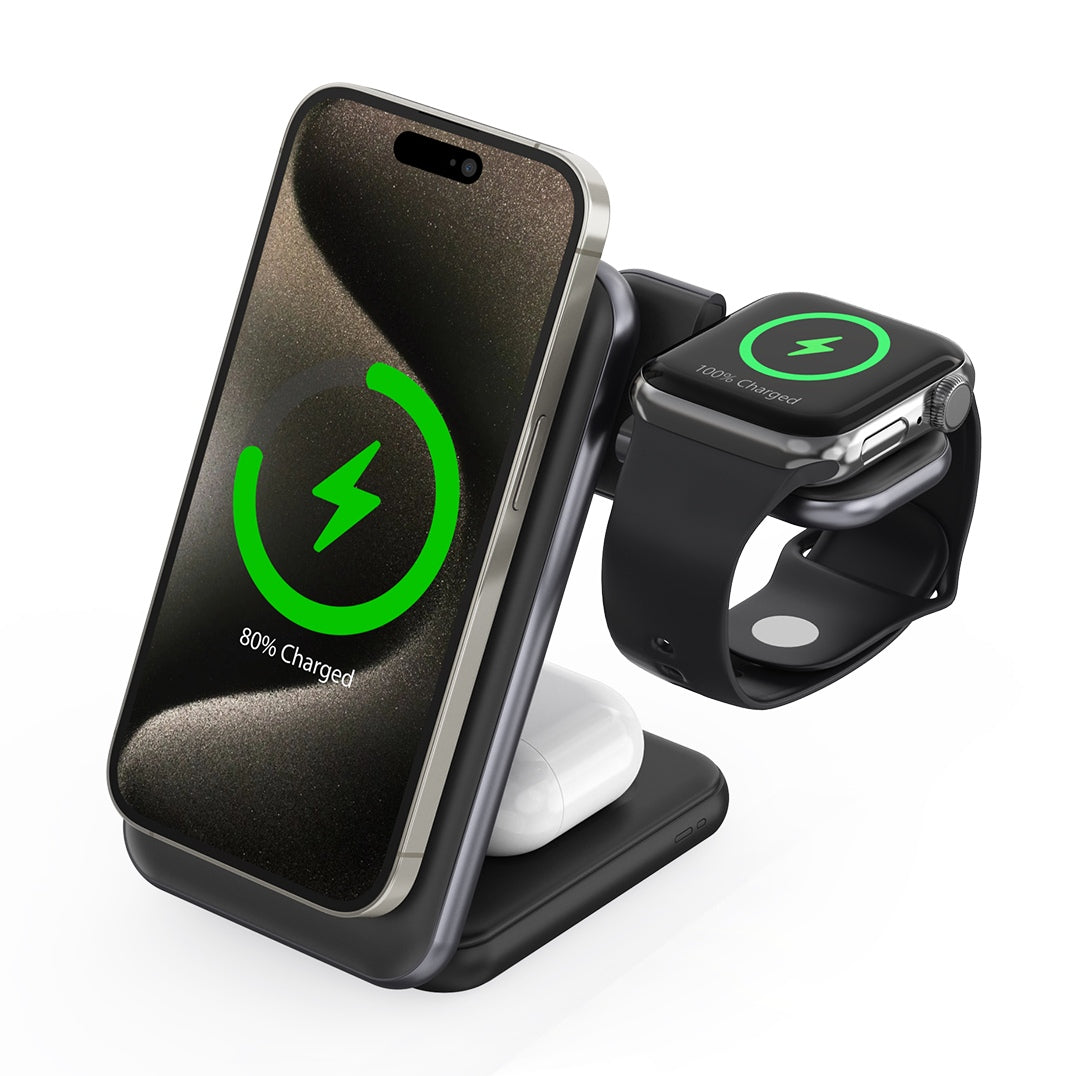
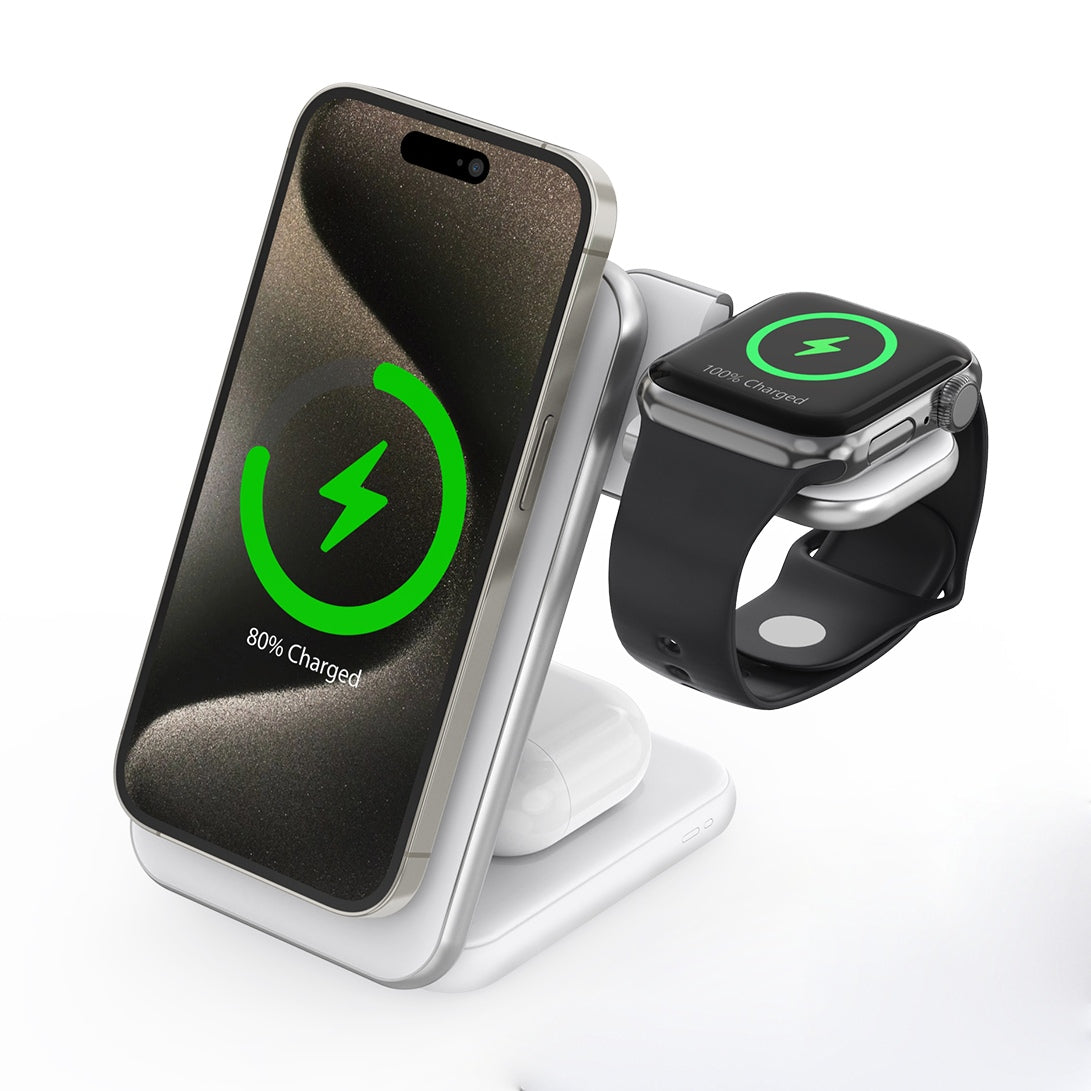
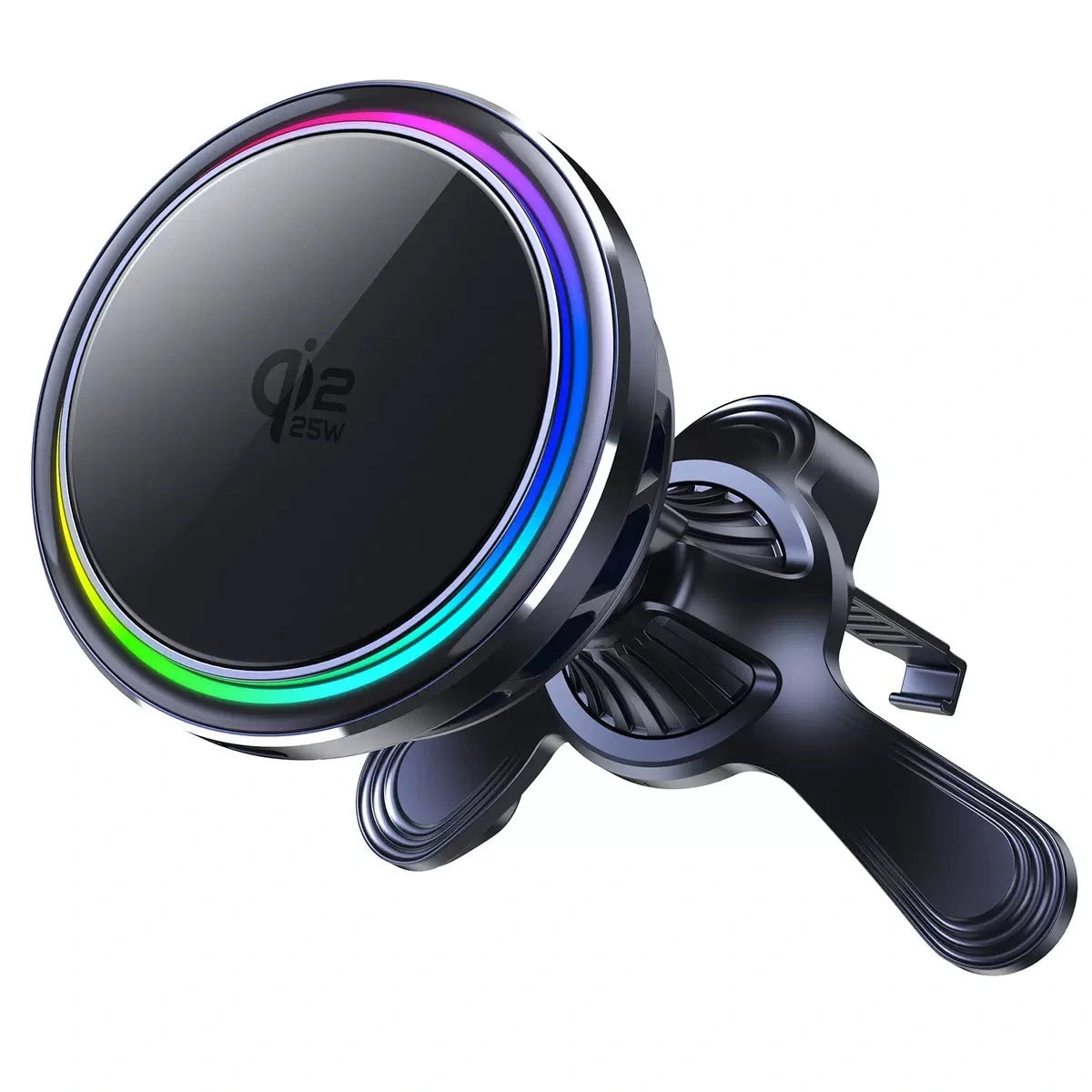
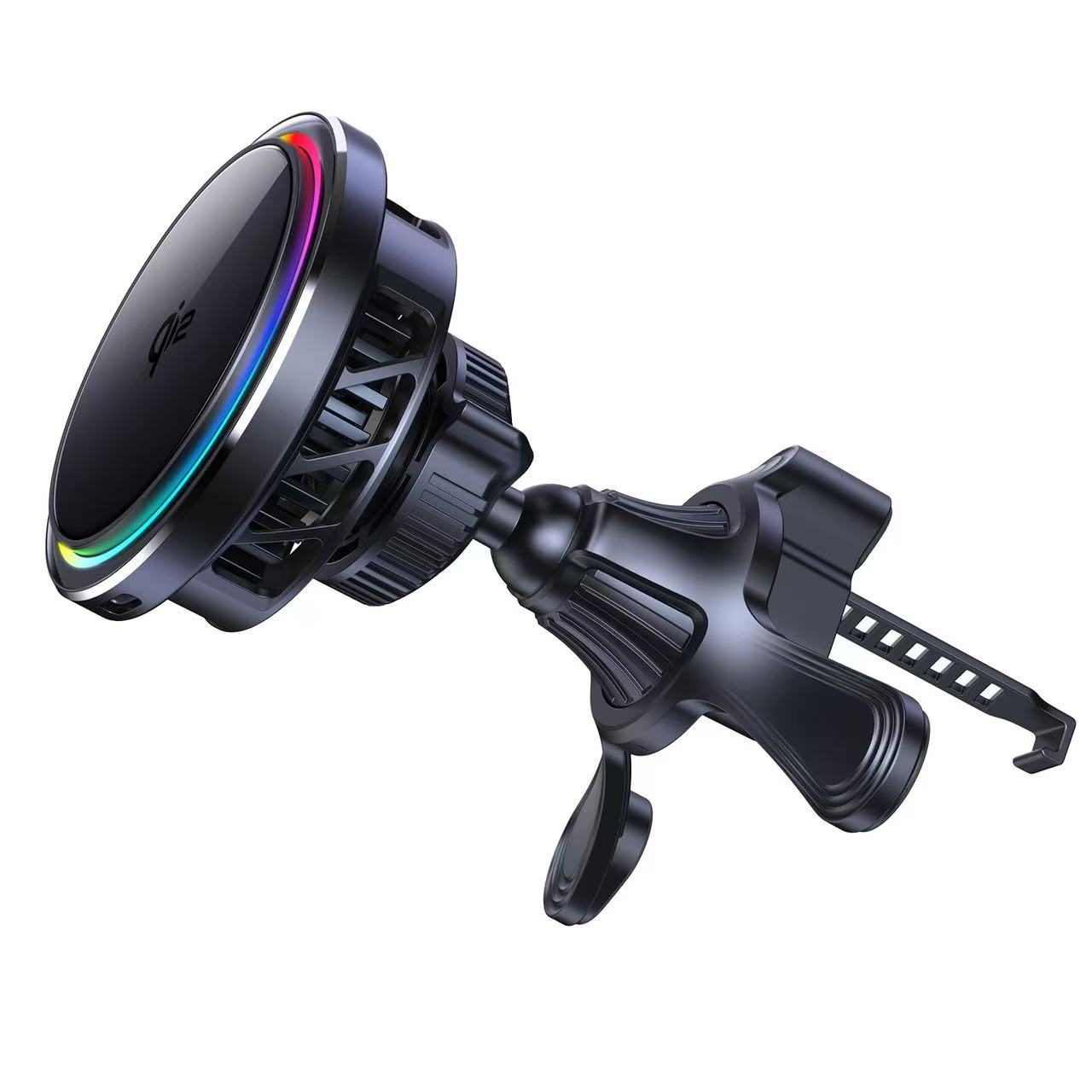
For a compatible 25W-capable iPhone, Apple's MagSafe puck delivered the fastest measured 20% and 50% checkpoints here. ZEERA's cooled SuVolt test unit was close at 80% and at full charge. Choose a compatible 25W accessory based on where you use it and its real power requirements; the SuVolt Gen5 car mount and MagTri Gen2 desk/travel stand serve different setups, and the separate SuVolt result above should not be treated as a test of every product variant.
Keep the charging surface aligned, remove a wallet or metal accessory between the phone and puck, and avoid a hot environment. If iOS reports a pause, follow the iPhone 18 Pro Max “Charging On Hold” guide before changing adapters. For the fastest short top-up overall, wired AVS charging is a separate comparison.
FAQ
Why did a 25W MagSafe charger show 32.5W on PowerZ?
PowerZ measured electricity going into the charger. Wireless transfer and charger electronics use some power, so the meter reading is not the power delivered to the iPhone.
Does the SuVolt's 35W peak mean 35W Qi2.2 charging?
No. The approximately 35W reading includes the cooler's power use and conversion losses. The tested wireless charging class was 25W Qi2.2.
Can I get 25W by using a 70W wall adapter with a 15W MagSafe charger?
No. Sufficient adapter output prevents a power shortage; it cannot override the wireless charger and iPhone's supported limits. Check your device's regional specifications and the charger's actual version.
Is the two-minute full-charge advantage repeatable?
This was the difference in the sessions ZEERA provided. Two minutes is small enough that further runs under the same conditions would be needed to establish a consistent winner.
Related reading
- iPhone 18 Pro Max Charging On Hold: causes and fixes
- Do older MagSafe and Qi2 chargers work with iPhone 18 Pro Max?
- iPhone 18 Pro charger guide: 20W, 30W, 60W, AVS and Qi2
- 140W PD vs 60W AVS: ZEERA's wired charging comparison
- Best MagSafe stands for iPhone 18 Pro Max
- How to protect iPhone 18 Pro Max battery health
- Best magnetic car mount charger for iPhone 18 Pro Max