Quick Answer
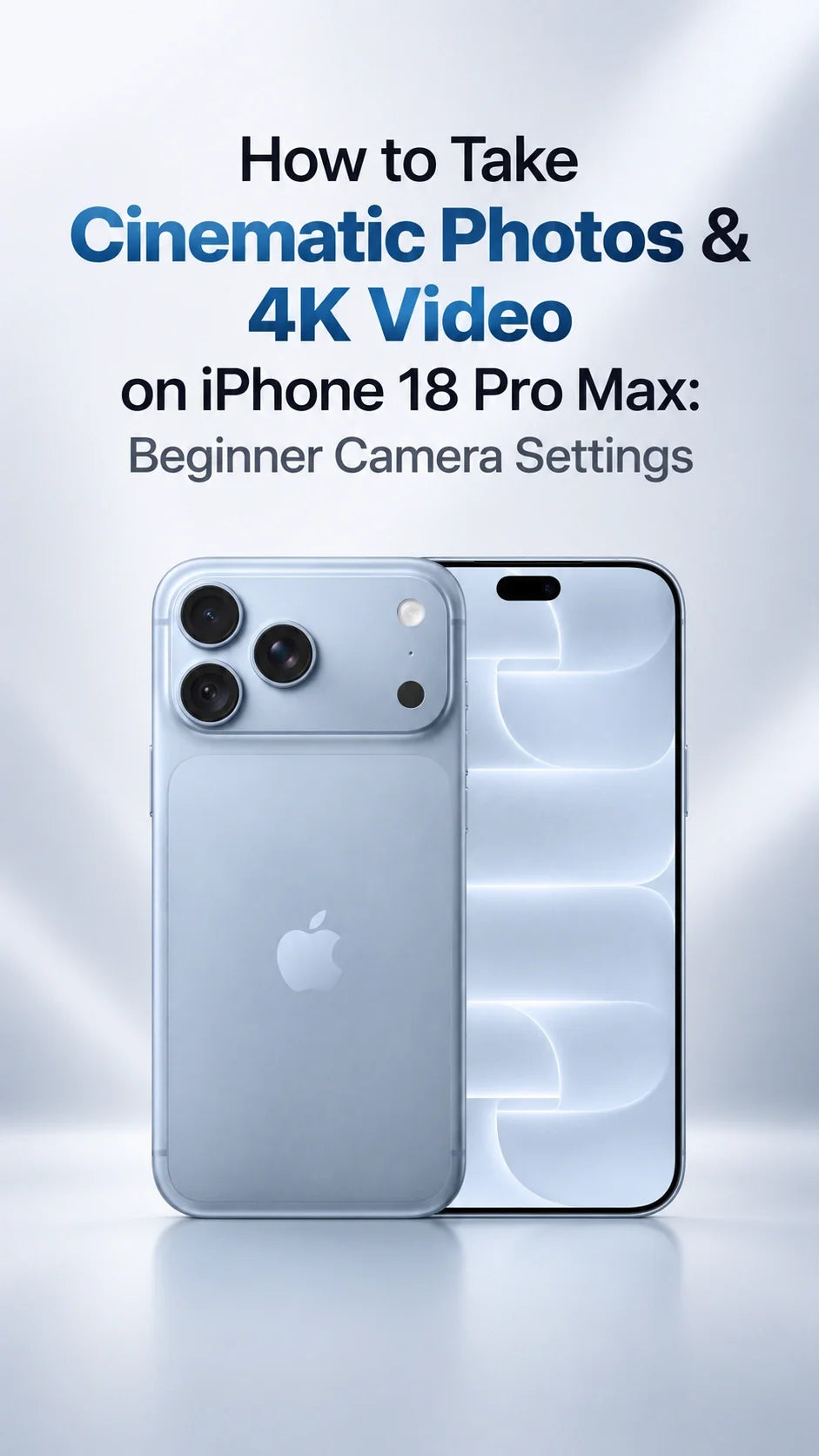
Want better iPhone 18 Pro Max photos and cinematic video? Start with your Camera settings.
Use 24MP for everyday shots; switch to HEIF Max 48MP when detail and cropping matter.
Choose ProRAW Max for photos you intend to edit seriously, not every snapshot.
Set Video to 4K at 60 fps for crisp movement, and use 4K at 24 or 30 fps when the light or desired look calls for it.
Turn on Grid and Level, clean the lenses, then control focus and exposure before recording.
Many new owners leave the camera on its everyday presets and never check the photo format or video frame rate. The iPhone 18 Pro Max has three 48MP rear cameras and advanced manual controls, but the best-looking image comes from choosing the right setting for the shot—not using the largest file every time.
1. Change These iPhone 18 Pro Max Camera Settings First
Open the Settings app once and work through these six cards. The exact on-screen controls may vary slightly by iOS version and the shooting mode you select.
PHOTO DEFAULT
Keep everyday photos at 24MP
Settings > Camera > Formats > Photo Mode > 24 MP
Choose 24MP as a practical daily default: detailed photos without saving every casual shot at the largest available size.
PHOTO QUALITY
Enable 48MP and ProRAW controls
Settings > Camera > Formats > ProRAW & Resolution Control > On
In Camera, open the resolution/format control and select HEIF Max for high-detail, smaller files or RAW Max when you plan to edit. Check the available options and saved resolution: lens choice, light, zoom and shooting modes can change the result.
COMPOSITION
Turn on Grid and Level
Settings > Camera > Grid: On; Level: On
Use the grid to place your subject off-center and the level to straighten horizons, buildings and tabletop shots.
VIDEO
Enable reliable video settings
Settings > Camera > Record Video > 4K at 60 fps
Keep HDR Video on if you want Dolby Vision and your editing/sharing workflow supports HDR. Turn on Lock White Balance to avoid visible color shifts within one clip.
CINEMATIC MODE
Set Cinematic mode separately
Settings > Camera > Record Cinematic > 4K at 24 or 30 fps
Use Cinematic for intentional focus transitions and software background blur. iPhone 18 Pro models also support Cinematic at 4K/60 fps, but 24 or 30 fps is a simpler starting point for a film-like look.
AVOID ACCIDENTAL HUGE FILES
Save only the controls you actually use
Settings > Camera > Preserve Settings
Preserve ProRAW/resolution or Exposure Adjustment if you want them to stay selected. If you often forget RAW is on, leave that toggle off so the phone returns to your everyday format.
Storage check: ProRAW files can be many times larger than HEIF. Also check the free space before a long 4K recording; turning up quality does not improve shaky framing or poor light.
2. Shoot Better Photos: Pick a Lens, Then Set Focus and Light
You do not need to master every manual control. ZEERA’s practical approach is to start in Auto, change just one setting, then compare the shots. For a deeper look at aperture trade-offs, see our iPhone 18 Pro Max variable-aperture guide.
PEOPLE
Portraits and people
Start: 2x or 4x for a tighter composition; 1x when space or light is limited. Tap an eye to focus. Use Portrait mode only when you want adjustable background blur.
Pro option: Try Auto or ƒ/1.8 on the Main camera; use ƒ/1.48 in dim light. Avoid forcing a narrow aperture indoors.
TRAVEL
Landscapes and city streets
Start: 1x for balanced detail, or 0.5x for a truly wide scene. Try HEIF Max 48MP in good light when you expect to crop later. Keep the horizon level.
Pro option: In bright light, compare ƒ/2.8 with Auto on the Main camera when you need more depth.
CLOSE-UPS
Food and products
Start: 2x from a comfortable distance, with soft side light from a window. Tap the front edge of the subject to focus, then move the exposure slightly down if white plates blow out.
Pro option: ƒ/2.8 can help keep more of a close subject sharp when light is plentiful.
LOW LIGHT
Night scenes
Start: 1x, Night mode/Auto, a steady grip and a clean lens. Keep moving subjects still if possible. Try a second frame at a slightly darker exposure to retain signs and lamps.
Do not assume 48MP, ƒ/4 or a long exposure will be cleaner in the dark.
REFLECTIONS
Windows, water and reflective cars
Start: Change your angle and wipe the glass. A rotating CPL can help cut certain polarized surface reflections; it will not reliably eliminate lens ghosting from a bright light pointed toward the camera. See our camera glare troubleshooting guide.
Fast exposure trick: Tap your subject and drag the small sun icon down slightly if highlights look too bright. For a fixed composition, press and hold for AE/AF Lock. On iPhone 18 Pro, the Camera Controls menu also provides manual aperture, shutter speed, white balance and a histogram; beginners can leave those on Auto until the scene needs them.
3. Record Cinematic-Looking 4K Video Without Complicated Gear
In Camera, switch to Video and check the resolution and frame-rate labels at the top. A 4K/60 file is smoother than 4K/24, but 60 fps does not automatically look more cinematic. Match the rate to light and motion.
SMOOTH MOTION
4K at 60 fps
Use for: walking tours, kids, pets, travel action and handheld movement. Bright light helps preserve clean frames. If you want consistently 60 fps, check Settings > Camera > Record Video > Auto FPS; supported low-light automation can lower the actual frame rate.
EVERYDAY
4K at 30 fps
Use for: everyday indoor videos, talking-to-camera clips and flexible travel footage. It generally allows more exposure time per frame than 60 fps in dim scenes.
FILM-LIKE CADENCE
4K at 24 fps
Use for: deliberate cinematic movement in suitable light. Move the phone slowly to avoid choppy-looking pans. For artificial depth blur, set Record Cinematic separately.
ADVANCED ONLY
4K at 120 fps or ProRes
Use for: planned slow motion or an advanced editing workflow, not normal daily clips. High-frame-rate options depend on camera and mode. ProRes/Log workflows require substantial storage and intentional editing; some high-end formats need supported external storage.
Optional pro technique: In bright daylight, users who manually set a 1/120-second shutter for 60 fps or around 1/50 second for 24/25 fps may need an ND filter to avoid overexposure. This is a creative starting point, not a rule for every shot. Auto shutter is easier for beginners.
Keep HDR Video on for suitable HDR workflows, but check a test clip on your intended editing app and social platform. If an SDR-only workflow gives unwanted results, you can disable HDR in Settings > Camera > Record Video.
4. Five Simple Moves That Make iPhone Footage Look Expensive
1. Find good light
Face a window or shoot near sunrise/sunset. Avoid mixed lighting and harsh overhead light when possible.
2. Stabilize before recording
Use two hands, tuck in your elbows, or rest the phone on a stable surface. Enhanced Stabilization can help but crops the picture slightly.
3. Pick one subject
Choose a clear foreground, background and direction of movement. Use 1x for the establishing shot, then a closer detail shot instead of constant zooming.
4. Lock focus and color
Tap to focus or track a supported moving subject. Lock white balance for consistent color; use Lock Camera if automatic lens switches distract during recording.
5. Capture three short clips
Record a wide shot, a medium shot and a close-up, each around five to ten seconds. Keep the beginning and end steady for easier editing.
5. Edit in Photos: A Clean Look in Under One Minute
Open a photo in Photos > Edit. Start small: lower Highlights to recover bright areas, lift Shadows only as needed, adjust Warmth for consistent skin tones, and straighten/crop last. For video, trim the shaky start and end before sharing.
Photographic Styles can create a consistent look while shooting. Try a subtle style and keep faces natural rather than applying the strongest preset to every scene.
ZEERA tip: If a photo looks hazy because of flare, compare the original shot and shooting angle before over-editing. More contrast cannot recover detail blocked by an unwanted reflection.
iPhone 18 Pro Max Camera Settings FAQ
Why is my iPhone 18 Pro Max not shooting 48MP?
Enable ProRAW & Resolution Control, then select HEIF Max or RAW Max in Camera. Actual saved resolution can change with lens, zoom, night conditions and shooting mode; check the photo’s information panel.
Is HEIF Max better than ProRAW Max?
HEIF Max is simpler and smaller for high-detail photos you will share. ProRAW Max preserves more editing flexibility but creates much larger files. Neither guarantees a better composition.
Should I always use 4K/60 fps?
No. It is great for smooth motion in good light. Use 4K/30 in many everyday and lower-light situations, or 4K/24 for intentional film-like motion.
How do I stop my videos from changing color?
Turn on Lock White Balance in Settings > Camera > Record Video, then avoid filming through several different light sources in one take.
Does a CPL filter fix every iPhone lens flare?
No. It can reduce some polarized reflections from glass, water and painted surfaces. Internal lens flare from a bright source may require cleaning the lens or changing the angle.
Can I get cinematic footage without ProRes or Apple Log 2?
Yes. Good lighting, steady shots, clear composition and carefully selected 4K frame rates matter more for a beginner than professional recording formats.
Related ZEERA Guides
Technical references: Apple iPhone 18 Pro Max technical specifications · Apple Camera video settings · Apple ProRAW guide.