Quick Answer
Removing the iPhone Duo's nano-texture matte cover layer reveals a glossy screen that looks clearer in this comparison.
The trade-off is stronger reflections, with water-like ripples more visible at an angle and with the screen off.
The layer was removed after heating, leaving no visible adhesive residue in the supplied demonstration.
ZEERA has learned that third-party accessory makers have begun developing glossy protective films for Duo.
U.S. cover-layer service is $19 with eligible AppleCare+ coverage or $49 without it; this is separate from inner-display repair.
What Changes When You Remove the iPhone Duo's Matte Layer?
The most obvious change is the finish: the open screen goes from matte to glossy. Reflections become sharper, while the displayed image looks less hazy in the side-by-side shots.
This comparison focuses on what that means in practice: the removal itself, the exposed surface, an angled view, and matching left-versus-right comparisons with the screens off and on.
Watch: iPhone Duo Nano-Texture Layer Removal and Screen Comparison
The supplied demonstration shows the matte layer being peeled away after heating, followed by glossy-versus-matte comparisons. Watch the reflected light as the phone moves; it reveals more than a straight-on view alone.
Video: watch the full removal and screen comparison on YouTube.
1. The removal process
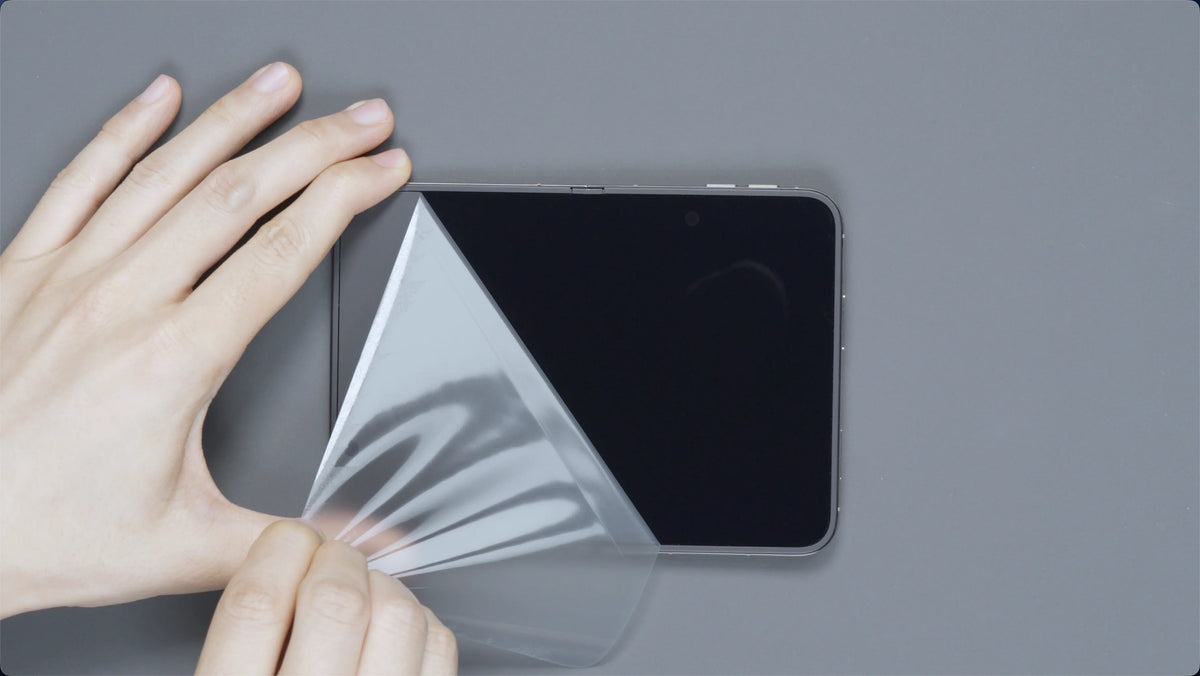
The first image catches the cover layer partway through removal. It lifts as a sheet, revealing a dark, reflective surface underneath. The visible material being removed is the surface cover layer.

2. The screen after complete removal
With the layer fully removed, there is no visible glue residue in the demonstration. The surface looks clean from this front-facing angle, but tilting it toward a light reveals a very different appearance.

Side View: Why Does the Exposed Screen Show Water-Like Ripples?

The angled shot makes the change particularly clear. The edge of the reflected light bends into a wavy outline across the screen, giving the surface a water-ripple appearance.
What the reflection reveals
A glossy surface makes reflected shapes easier to follow. Small changes in surface angle distort those shapes, exposing unevenness that a matte finish can make less conspicuous. This image shows that optical effect; it does not measure the physical depth of the crease.
Screen Off: Glossy Ripples vs a More Uniform Center Crease

Left: nano-texture layer removed. The strong reflected boundary bends and varies along the folding area, making the surface look uneven.
Right: original matte layer intact. Reflections are more subdued, and the fold appears as a more uniform vertical line through the center.
This fits the optical explanation in ZEERA's earlier iPhone Duo crease analysis: reducing the reflections that reveal a fold can make it much less distracting. The matte layer is an important part of how the finished screen looks.
Screen On: The Glossy Display Looks Clearer, the Matte Display Looks Grayer

Once the screens light up, the appeal of the glossy finish becomes easier to understand. The left display looks more transparent, with less of a veil over the icons and wallpaper. The intact matte screen on the right has a slightly grayer, hazier appearance in this shot.
That is a comparison of appearance in the supplied footage, rather than a measured gain in brightness, resolution or color accuracy. The phones also show different home-screen layouts.
Which finish looks better?
Glossy: the more transparent-looking image is attractive if the matte finish feels too muted to you. Sharper reflections also make surface ripples easier to see.
Factory matte: reflections look quieter and the central fold looks more even in the screen-off comparison. The on-screen image has a softer appearance under these conditions.
Third-Party Glossy Protective Films for iPhone Duo Are in Development
ZEERA has learned that third-party accessory makers have already begun developing glossy protective films for the iPhone Duo. The interest is easy to understand: some owners would prefer a clearer-looking surface while still having a protective layer over the folding screen.
Development is the current status. There is no confirmed product name, retail price or release date to share here. The important distinction for any eventual product will be whether it replaces the factory cover layer or sits on top of it; those are different installations.
A glossy finish alone will not establish suitability for Duo. A finished film needs to accommodate repeated folding, maintain touch response, and resist lifting or bubbling around the crease. Its installed appearance may also differ from the exposed-screen result shown above.
How Much Does iPhone Duo Cover-Layer Replacement Cost?
ZEERA previously covered the service in iPhone Duo Inner Screen Scratched? The Cover Layer Costs $19 or $49 to Replace. The U.S. prices for cover-layer damage are:
| Coverage | Service price |
|---|---|
| Eligible AppleCare+ cover-layer-only service | $19 |
| Cover-layer service without AppleCare+ | $49 |
Apple's U.S. AppleCare fee schedule lists the $19 cover-layer-only fee. The $49 out-of-coverage estimate is documented in ZEERA's linked service guide. Prices depend on the assessed damage and local service terms; tax may apply.
These amounts cover the surface-layer service. They are separate from the $999 U.S. out-of-warranty inner-display estimate in our full iPhone Duo repair-price guide. They also do not establish a price for a cosmetic conversion to a third-party glossy film.
For a damaged or lifting cover layer, arrange an assessment with Apple or an Apple Authorized Service Provider. Heating and peeling the factory layer yourself can damage the folding display, and the cover-layer-only price should not be assumed to cover any resulting damage.
FAQ
Would putting a glossy protector over the original matte layer give the same result?
Do not assume so. This demonstration removes the matte cover layer. Adding a glossy film above it creates a different optical stack, and the result depends on the film and adhesive. Wait for a Duo-specific product with clear installation and folding-compatibility information.
Does residue-free removal prove the screen is safe to use long term?
No. A clean-looking surface immediately after removal does not show how it will resist scratches or perform through repeated folding. The demonstration establishes the visual difference, rather than long-term durability of the exposed screen.
Related Articles
- iPhone Duo Nano-Texture Film Peeled Off: The Crease-Hiding Secret Revealed
- iPhone Duo Inner Screen Scratched? The Cover Layer Costs $19 or $49 to Replace
- iPhone Duo Crease: Still There, Just Harder to See
- iPhone Duo Replaceable Cover Layer: Cost, Crease & Screen Protection Guide
- Official iPhone Duo U.S. Repair Prices: Cover Layer, Inner Screen and More
- iPhone Duo Inner-Screen Scratch Test: Pencil Hardness Explained
- iPhone Duo Inner Screen Protector: Should You Use One?
- iPhone Duo Review Hub: Specs, Problems & Real-World Tests